🔧
ROADSIDE ASSISTANCE
How Much Does On-Demand Roadside Assistance Cost Without a Membership?
On-demand roadside assistance apps typically charge $49–$150 per incident, with price driven by service type and distance.
Cost Breakdown by Service
- Jump start or lockout: Averages $55–$75.
- Tow (up to five miles): Runs $75–$125.
- Additional tow distance: Beyond the base, expect $2.50–$7.00 per additional mile, which can add up quickly for longer hauls.
Compare that to AAA membership costs: Classic runs $60–$89/year, Plus runs $109–$129/year, and Premier tops out around $170/year.
📊 Quick Fact: If you use a roadside app twice in one year for two jump starts at $65 each, you've spent $130—more than a AAA Classic membership. If you break down more than twice annually, a traditional membership often becomes the more cost-effective choice.
Understanding Surge Pricing
Both Honk and Urgently have disclosed that demand-based pricing applies during peak periods.
⚠️ Warning: On Memorial Day weekend 2024, anecdotal reports from users showed tow prices running 20–35% above normal in high-traffic corridors. Neither app publishes a surge multiplier cap, so factor that in for holiday travel or busy periods.
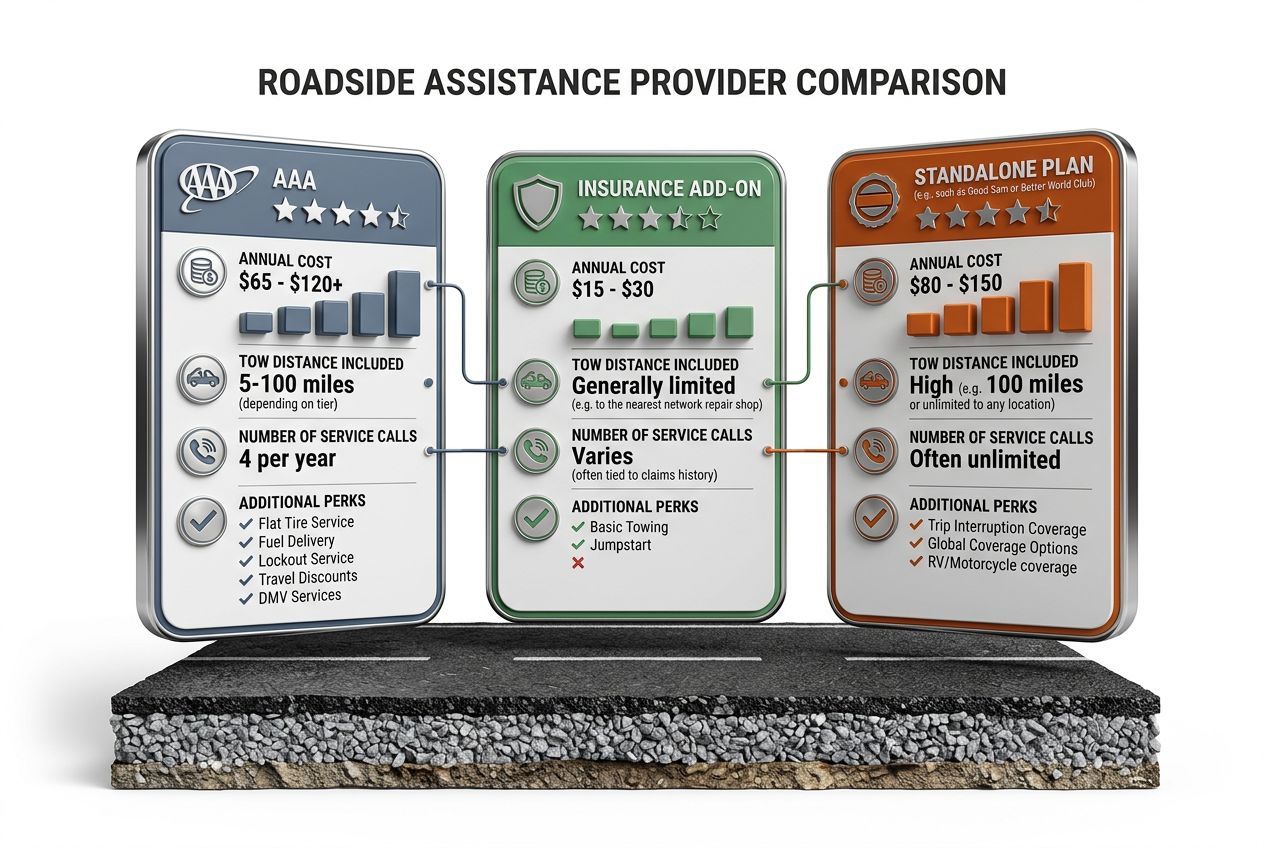
Also worth knowing: some drivers already have roadside help buried in their existing coverage. Your insurance roadside vs. AAA comparison is worth a look before you pay out of pocket.
🛡️
ROADSIDE ASSISTANCE
Is the Honk Roadside App Reliable?
The Honk roadside app is reliable in most metro and suburban areas, operating across all 50 states with a network of 75,000+ service providers. Honk partners directly with major insurers and OEM manufacturers—that institutional integration is a credibility signal that matters. Average Honk response times run 30–45 minutes, per their published service data, which tracks with AAA's reported 30–60 minute window according to AAA's own member data.
💡 Key Takeaway: Honk's extensive network and partnerships with insurers make it a highly reliable option for roadside assistance in most populated areas, with response times comparable to or faster than traditional services.
Rural Coverage Limitations
Honk has an honest weak point: rural coverage. In counties with fewer than one provider per 50-square-mile radius, Honk's algorithm sometimes can't find a match within a reasonable timeframe. The app will tell you "no providers available" or quote an unusually long ETA.
⚠️ Warning: In remote areas like rural Wyoming or the Nevada desert, the independent tow operator market is thin. In these situations, a traditional membership through AAA or your state's motor club may be more dependable than a pay-per-use app. We cover that gap in detail over at car broke down, no AAA.
📋
ROADSIDE ASSISTANCE
Can a Tow Truck App Get Help Faster Than Calling AAA?
In urban and suburban areas, yes—a tow truck app typically dispatches faster than calling AAA. GPS auto-location and routing algorithms eliminate the 5–10 minutes of call-center intake time. Honk and Urgently report average dispatch-to-arrival times of 30–40 minutes versus AAA's reported range of 30–60 minutes. That 20-minute ceiling difference matters when you're on the shoulder of a busy highway.
✅ Pro Tip: If you're frequently driving in dense urban or suburban environments, a roadside assistance app can often get you help faster by cutting down on call-center wait times and leveraging precise GPS dispatching.
During extreme weather events—ice storms in Minneapolis, freezing rain in Dallas—both systems slow equally. According to NHTSA data, breakdown calls spike 40–60% during severe weather. That demand surge hits every network simultaneously, app or phone call. Apps don't carry a speed advantage when every provider in a 30-mile radius is already dispatched.
For context on what different tow trucks can and can't do once they arrive, our types of tow trucks guide explains flatbeds vs. wheel-lifts and why it matters for AWD and all-wheel-drive vehicles.

⚙️
ROADSIDE ASSISTANCE
What Services Do Roadside Assistance Apps Cover?
Roadside assistance apps cover five core services: towing, battery jump starts, flat tire changes (spare swap, not repair), fuel delivery, and lockout assistance. Some platforms—Honk included—also offer winch-out for vehicles stuck in mud, snow, or a ditch. A small number of apps now connect users with mobile mechanics for minor diagnostics.
Understanding Coverage Limits
Coverage limits are where the fine print gets important:
- Tow distance: Most apps include 5–10 miles in the base price. Beyond that, expect $2.50–$7.00 per mile.
- Vehicle eligibility: Standard passenger cars and light trucks are universally covered.
- Motorcycles? Only limited support through Honk.
- RVs, trailers, and commercial vehicles? Nearly always excluded by pay-per-use apps.
- Fuel delivery: Apps deliver 1–3 gallons of gas, enough to reach a station. If you drive diesel and need delivery, confirm before you commit—several apps carry only gasoline.
⚠️ Warning: If you drive an RV, a motorcycle, or regularly tow a trailer, a purpose-built membership plan will serve you better than any on-demand app. Most pay-per-use platforms explicitly exclude these vehicle types.
Our guide to manufacturer roadside programs covers factory-backed alternatives worth checking.
🚛
ROADSIDE ASSISTANCE
How Do You Choose the Right Roadside Assistance App for Your Situation?
The best roadside assistance app for you comes down to four variables: where you drive, what you drive, how often you break down, and what you're willing to pay upfront. There's no single right answer, but the decision tree is simple.
How to Decide: Apps vs. Memberships
- Drive mostly in cities or suburbs? Honk or Urgently are strong contenders. Dense provider networks typically mean fast responses and competitive pricing. Always check app reviews specifically filtered to your metro area, as response time consistency can vary by location.
- Drive frequently through rural corridors? Consider pairing a pay-per-use app with a traditional membership as a backup. Per AAA's published network data, AAA has contracted service in virtually every county in the U.S.—a level of coverage no app has matched yet.
- Drive an unconventional vehicle? If you're on a motorcycle, pulling a boat, or driving an RV, verify vehicle eligibility explicitly before downloading any app. Most on-demand platforms will decline the service request at dispatch if your vehicle doesn't qualify. Our best roadside assistance programs overview includes options built specifically for specialty vehicles.
- Break down rarely (e.g., once every 18 months)? Pay-per-use often wins on the math. One incident at $90 every 18 months beats a $129 annual membership easily.
- Break down more than twice a year? Run the numbers with our roadside assistance cost guide. Membership almost always comes out ahead on a per-incident basis at that frequency.
And if you want to see how the whole AAA membership value equation stacks up before committing, that's a useful read before you decide.


