🔧
TOWING COSTS
How Much Does a Tow Truck Charge Per Mile?
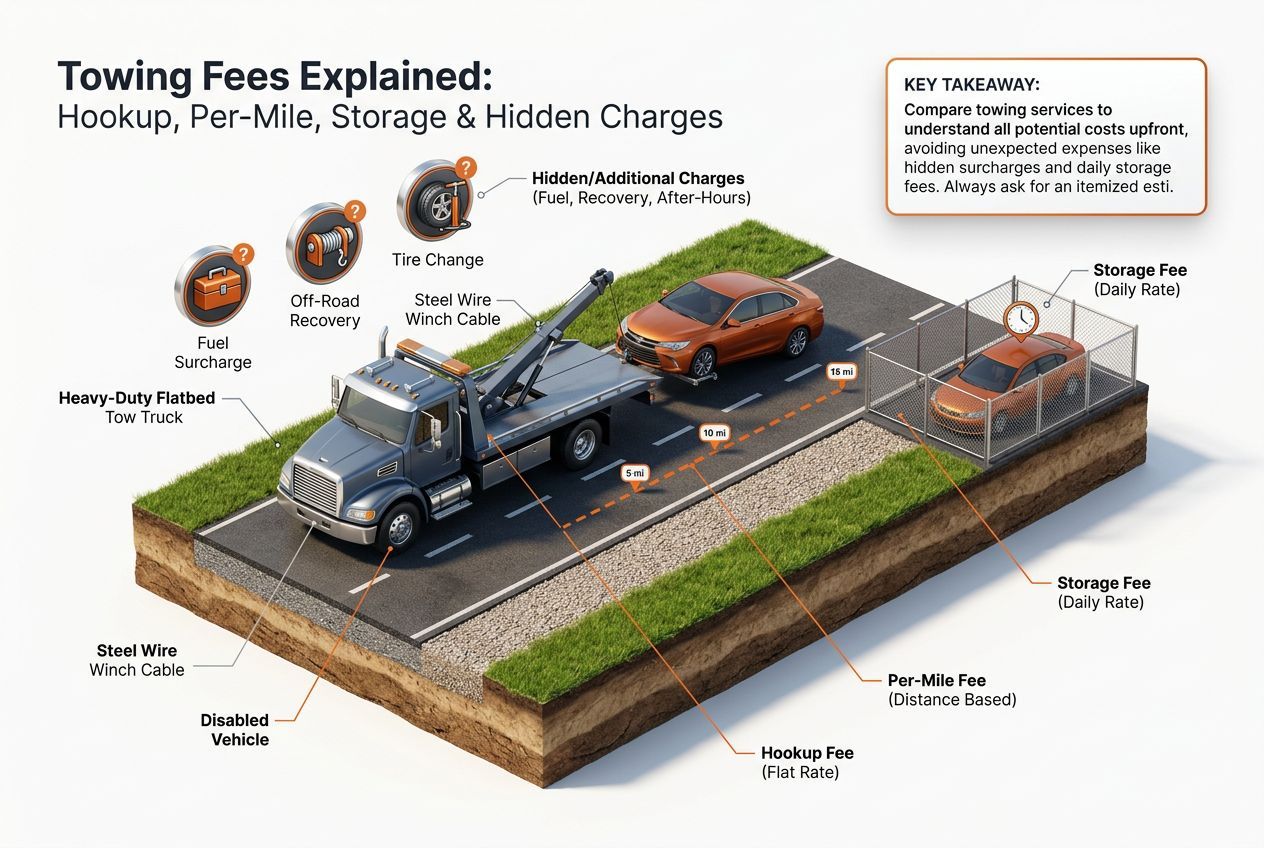
Most tow truck companies charge $2–$7 per mile after the initial hookup fee, with the national average landing around $3–$4/mile for standard light-duty vehicles. Per-mile towing rates rise significantly for heavy-duty vehicles, long-distance runs, and after-hours calls. Understanding the per-mile rate is how you verify whether your final invoice math adds up.
Here's the breakdown by vehicle class, according to industry rate data and figures consistent with NHTSA vehicle classification standards:
How Much Does a Tow Truck Charge Per Mile? — data table
| Vehicle Type |
Hookup Fee |
Per-Mile Rate |
Avg. 10-Mile Total |
| Sedan / Compact |
$35–$100 |
$2–$4 |
$75–$140 |
| SUV / Pickup (2WD) |
$50–$100 |
$3–$5 |
$80–$150 |
| AWD / 4WD (flatbed required) |
$65–$120 |
$3–$5 |
$95–$170 |
| Motorcycle |
$50–$100 |
$2–$4 |
$70–$140 |
| Heavy-Duty (RV / Semi) |
$250–$500 |
$5–$15 |
$300–$650 |
Sources: National towing industry rate surveys, AAA membership data, state DOT published rate schedules. Ranges reflect standard consent tows; non-consent and impound rates may differ.
One thing most people miss: some companies calculate mileage from their garage to your location, not just from your breakdown point to the destination. That's called "deadhead mileage" and it's legal in most states unless explicitly prohibited. In a rural area, this can add 10–20 miles to your bill before the truck even touches your car.
✅ Pro Tip: Always ask: "Do you charge from dispatch, or from my location?" This simple question can save you unexpected mileage costs.
For long-distance tows specifically — say, getting a car home after a breakdown 80 miles from home — the long-distance towing cost guide covers rate structures and how to compare quotes across companies.
🛡️
TOWING COSTS
How Much Do Towing Companies Charge for Storage Per Day?
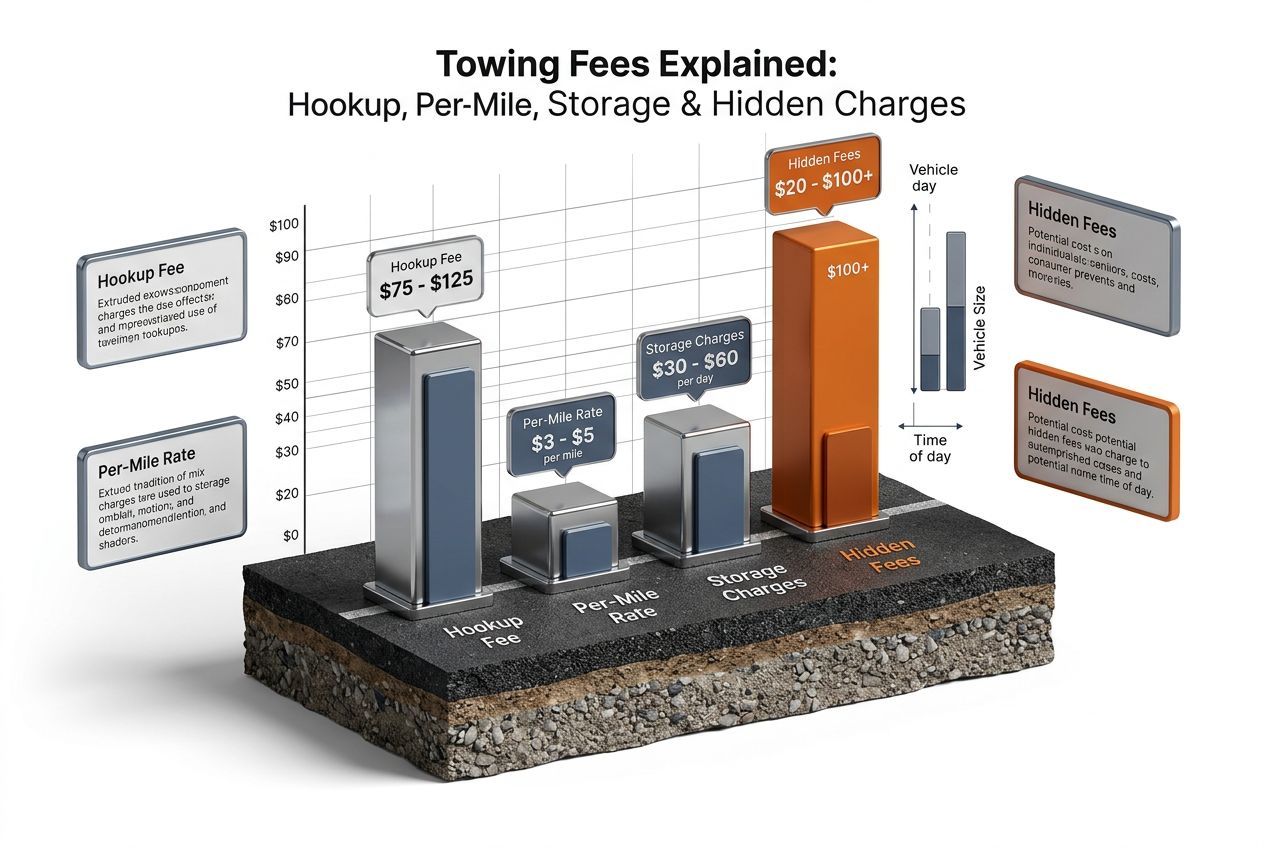
Tow truck storage fees generally range from $20 to $75 per day, depending on facility location, vehicle size, and indoor versus outdoor storage. Most companies offer a 24-hour grace period before daily charges begin, but that window isn't guaranteed — some municipal impound lots charge from the moment the vehicle arrives. Towing storage fees accumulate fast and are where many people get blindsided.
Consider a real-world scenario: your car is towed on a Friday afternoon after a fender-bender. The body shop is closed until Monday. You need two days to sort out your insurance. By the time you retrieve the car on Wednesday, that's potentially five days of storage:
- Storage fee: $45/day × 5 days = $225
- Gate/release fee: $35
- Storage-related total: $260 — on top of the original tow
Storage fees tend to be highest in urban areas where lot space is expensive. In Los Angeles or New York City, $75/day for outdoor storage isn't unusual. In a smaller city in the Midwest, $20–$30/day is more common.
Important Considerations for Storage Fees
- Indoor vs. outdoor: Indoor storage typically costs $10–$25/day more but may be required for certain vehicles at some facilities.
- Release fees: Many impound lots charge a separate gate or administrative release fee ($25–$75) just to process your retrieval paperwork.
- Title/lien issues: If there's a dispute over ownership or an outstanding lien, the lot can hold the vehicle longer — and charge for every additional day.
- Abandoned vehicle threshold: Most states allow a company to begin lien-sale proceedings after 30–45 days of unpaid storage.
📊 Quick Fact: A single week of impound fees can easily add $200–$500 to your towing bill, making prompt retrieval crucial.
If you're dealing with an impound situation specifically, check towing costs by state — several states publish maximum daily storage rates for non-consent tows.
📋
TOWING COSTS
What Hidden Fees Can Towing Companies Charge?
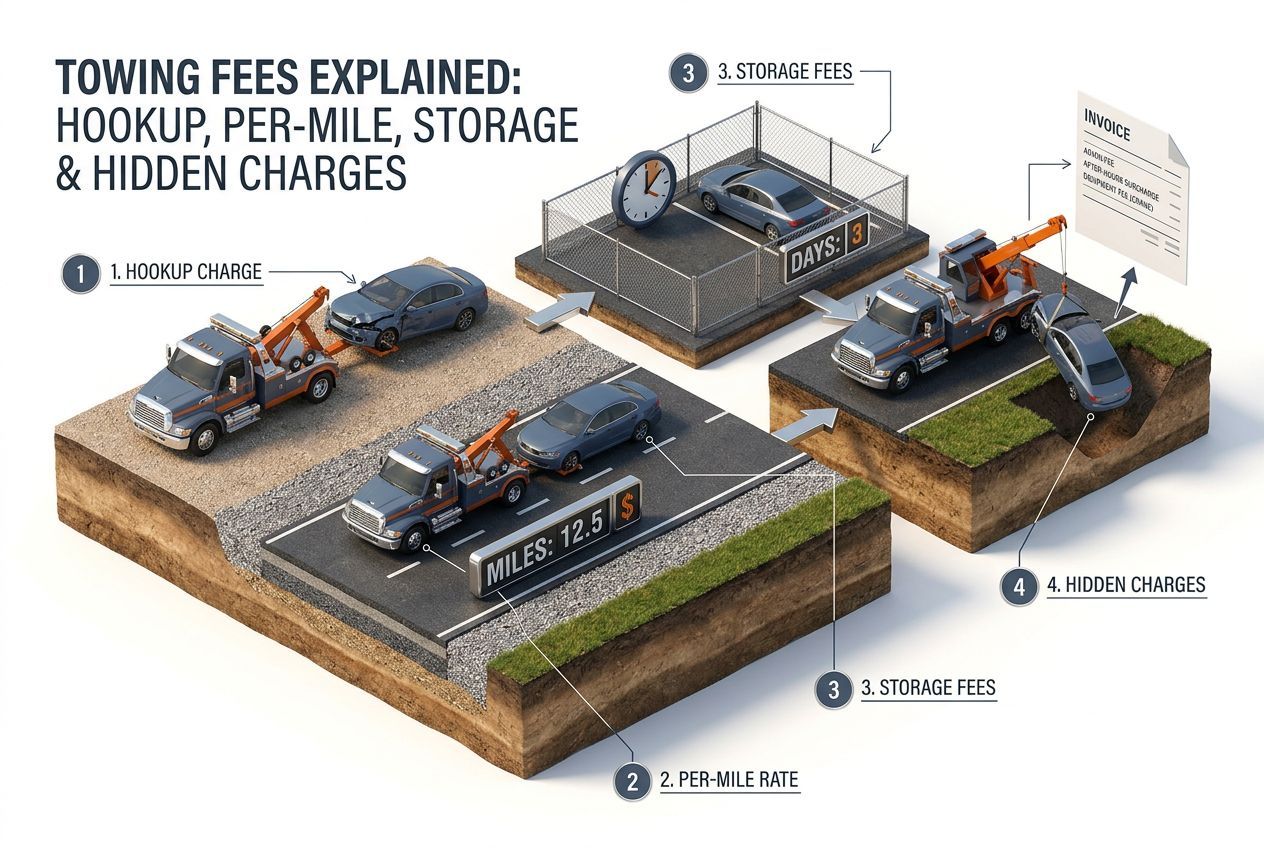
Hidden towing charges are notorious for inflating bills and can include after-hours surcharges ($50–$150), winching fees ($50–$250+), fuel surcharges, administrative fees, gate fees, and mileage calculated from the dispatch point. These charges can easily double an initial quote and rarely get mentioned until the invoice arrives. Always ask for a full itemized estimate before authorizing any tow.
Here's a breakdown of the most common hidden charges and what's behind each one:
- After-hours surcharge ($50–$150): Most companies define "after hours" as evenings (typically after 6–8 p.m.), weekends, and holidays. This isn't a scam — driver overtime, reduced staff availability, and higher risk all cost money. But the amount varies wildly, so ask upfront.
- Winching / recovery fee ($50–$250+): If your vehicle is off the road surface — in a ditch, off an embankment, in a snowbank — the driver uses a winch to extract it before the tow begins. This is billed separately from the hookup fee. Deep ditches or technical extractions can push this above $250.
- Fuel surcharge ($10–$30): Common when fuel prices spike. Some companies roll this into the hookup; others line-item it separately. Either way, it's legitimate — just make sure it's disclosed before authorization.
- Administrative / gate fee ($25–$75): Charged at impound lots for processing release paperwork. This is different from storage — this fee applies even if you retrieve the car the same day.
- Dolly fee: If a wheel-lift tow is used but your car requires a dolly on the rear wheels to prevent drivetrain damage, expect an additional $25–$50 for the equipment.
- Mileage from dispatch: As covered above, some companies meter from the garage. In rural areas, this can add $40–$80 to a bill without touching your actual route.
⚠️ Warning: Always ask for a full, itemized estimate before agreeing to a tow to avoid surprises from these additional charges.
For a detailed breakdown of how all these charges stack up on a real invoice, see the towing fees breakdown guide.
⚙️
TOWING COSTS
Does Insurance Cover Towing Fees?
Many auto insurance policies cover towing fees if you carry roadside assistance or comprehensive coverage, typically reimbursing $50–$100 per incident on basic plans. AAA memberships cover towing up to 3 miles (Classic) or 100+ miles (Premier), depending on tier. Without coverage, you pay all tow truck fees out of pocket — and most people don't check their policy until they're already on the roadside.
What Each Coverage Type Provides
- Roadside assistance add-on (insurance): Usually $5–$15/year added to your premium. Covers one or more tows per year up to a dollar limit ($50–$100 typical). Some policies reimburse rather than dispatch, meaning you pay upfront and submit a claim.
- Comprehensive coverage: Doesn't directly cover towing in all policies — check your declarations page. Some carriers include it; others treat it as a separate endorsement.
- AAA membership tiers (per AAA):
- Classic: 3–7 miles of free towing per call, depending on the club
- Plus: Up to 100 miles free
- Premier: One tow of up to 200 miles free per year (other tows up to 100 miles)
- Credit card roadside assistance: Some Visa, Mastercard, and Amex cards include roadside assistance as a benefit. Coverage limits typically range from $50–$100 per incident and require you to call the card's dedicated number, not 911 or a random tow company.
The comparison between membership programs and insurance add-ons is worth doing before you need it — the AAA roadside assistance guide walks through which option makes more financial sense for different drivers.
🚛
TOWING COSTS
Are Towing Companies Allowed to Overcharge?
Towing companies face different rules depending on whether the tow is a consent tow (you called them) or a non-consent tow (your car was moved without your direct authorization, like a parking lot removal). Most states regulate non-consent towing rates with published caps — consent tows have far less price oversight.
States with published non-consent tow rate caps include California, Florida, Texas, Virginia, and Illinois. California's Vehicle Code §22658 limits private property tow charges to the local law enforcement agreement rate or the CHP-approved rate; Florida Statute §713.78 governs vehicle storage and towing at impound facilities; Texas Occupations Code Chapter 2308 covers booting and towing from private property, and TDLR caps a light-duty nonconsent tow at $272.
Conversely, states like Wyoming, Montana, and several others have minimal regulation — towing companies there can legally charge whatever the market allows on consent tows.
What Counts as Overcharging vs. Just Expensive
It's important to distinguish between a high price and an illegal charge:
- Potentially illegal: Charging more than the state-posted maximum on a non-consent tow.
- Potentially illegal in regulated states: Adding fees not disclosed before towing.
- Likely fraud: Mileage inflation (charging 22 miles when GPS confirms 14).
- Illegal in many jurisdictions: Refusing to provide an itemized invoice.
What You Can Do If You Suspect Overcharging
If you believe you've been overcharged, here are actionable steps:
- Request a full itemized invoice before paying.
- Cross-reference mileage against your own route data (Google Maps, GPS history).
- File a complaint with your state attorney general's consumer protection division.
- Dispute the charge with your credit card company if paid by card.
The towing laws by state tool lets you look up your specific state's rate caps and consumer protections in under a minute.
📝
TOWING COSTS
How to Read and Verify Your Towing Invoice
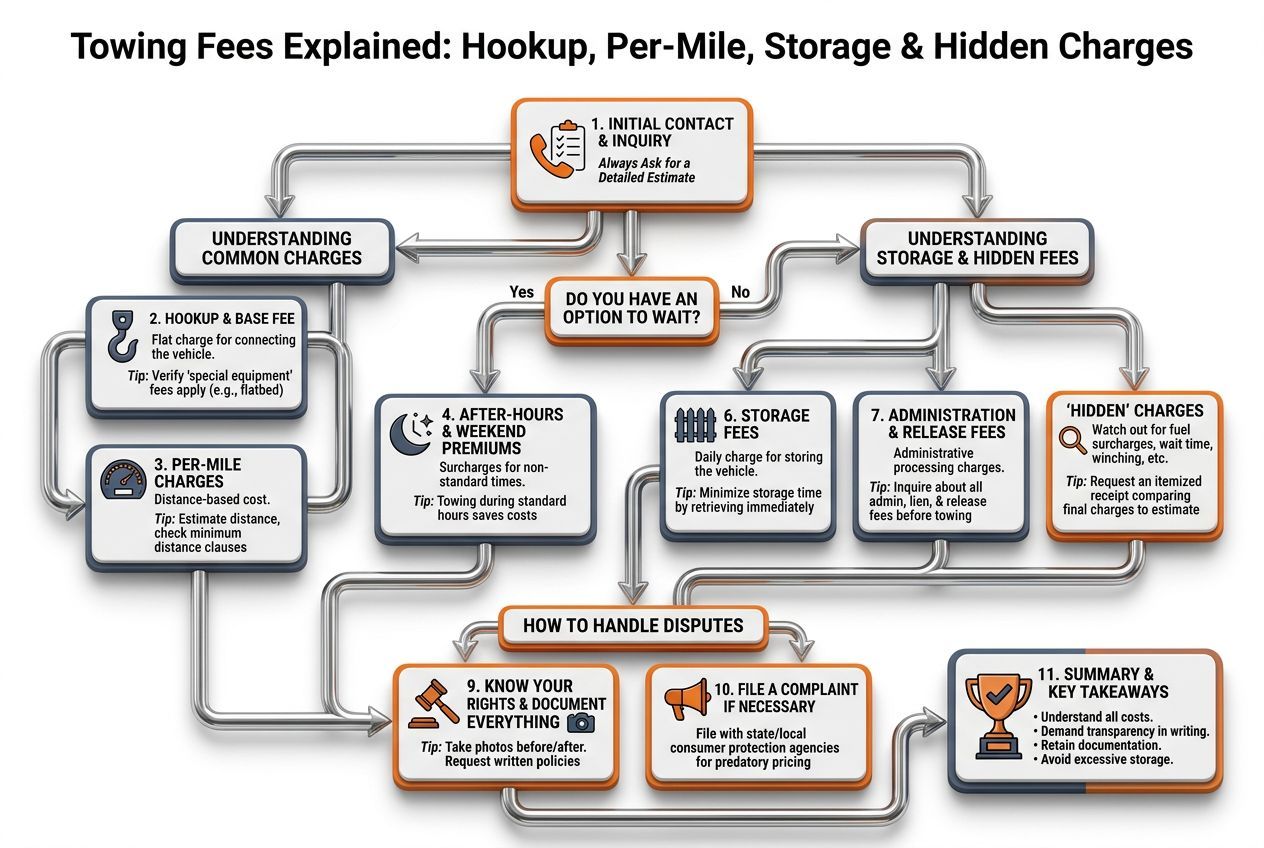
You shouldn't need a lawyer to review a tow bill, but you do need to know what to look for. Here's a practical checklist to ensure you're paying a fair and legitimate price:
Key Steps to Verify Your Invoice
- Verify the mileage: Ask the driver where the mileage starts. Pull up Google Maps and confirm the route distance. If the bill shows 18 miles and Maps shows 11, ask for an explanation in writing.
- Identify every line item: A legitimate invoice will clearly show: hookup fee, per-mile charge (with mileage stated), any surcharges (after-hours, fuel, winching) labeled separately, and storage if applicable. A vague "service fee" with no description is a red flag.
- Check the rate card: In regulated states, towing companies are required to post their rate schedules. Ask to see it. If they can't produce one, that's worth noting in any complaint.
- Pay by credit card when possible: This gives you dispute rights under the Fair Credit Billing Act if the charges turn out to be fraudulent or unauthorized.
- Don't release your vehicle under duress: Some impound lots pressure you to sign a waiver before releasing your car. You're not required to waive dispute rights as a condition of vehicle release in most states. If pressured, pay under protest and dispute afterward.
✅ Pro Tip: A clearly itemized invoice with transparent charges is a sign of a reputable towing service. Don't settle for less.
For situations where cost is the main concern and you need options, cheap towing near me covers how to compare quotes before authorizing — even from the roadside.