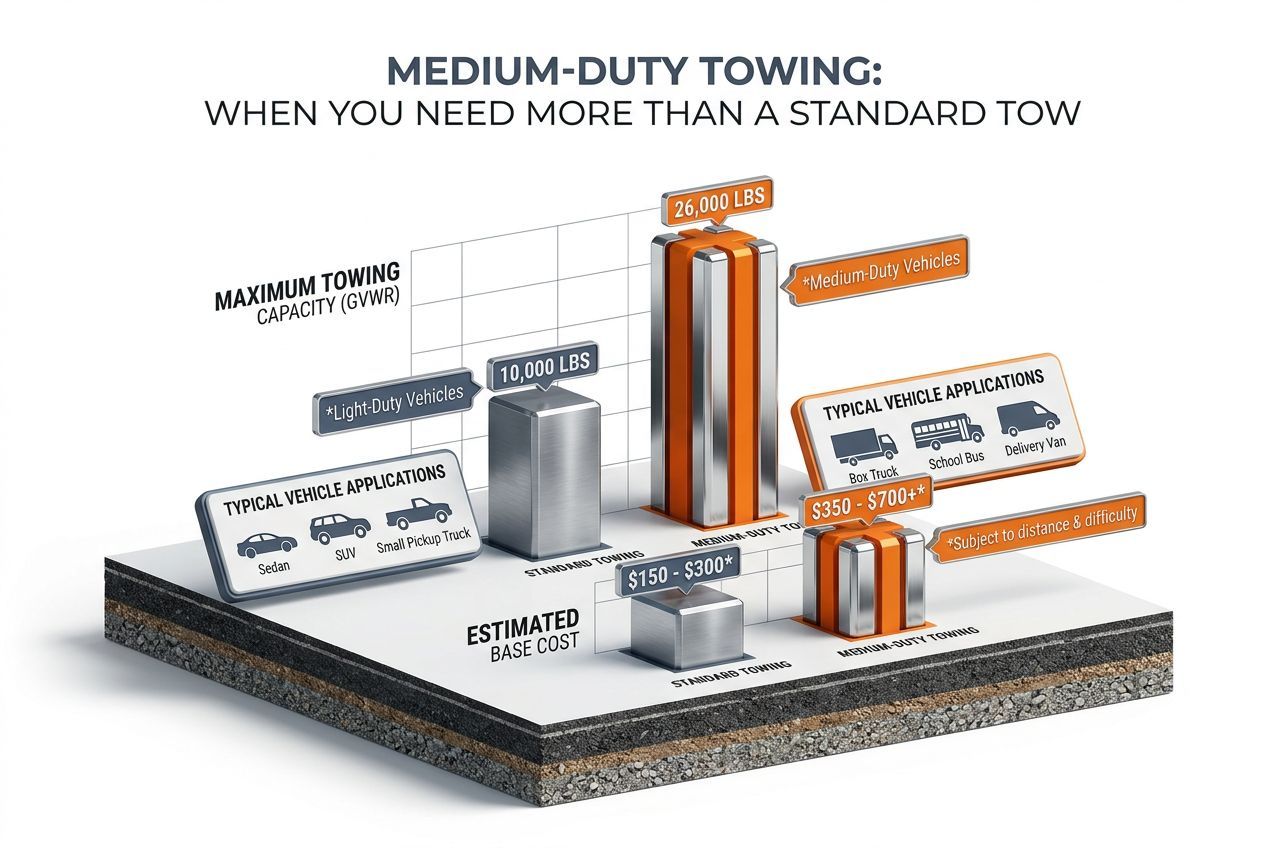
- Medium-duty towing covers FHWA Class 3–6 vehicles (10,001–26,000 lbs GVWR), including box trucks, delivery vans, and Class B/C motorhomes.
- Base hookup fees typically run $150–$500, with per-mile charges of $5–$10; a 20-mile tow averages $250–$600 total.
- Flatbed rollback carriers are preferred for AWD commercial vehicles and RVs to prevent drivetrain damage.
- Commercial auto insurance usually covers medium-duty towing; standard personal policies and most AAA tiers do not.
- Always verify a provider carries at least $750,000 in commercial liability insurance and employs WreckMaster or TRAA-certified operators.
What Is Medium-Duty Towing and How Is It Different From Standard Towing?
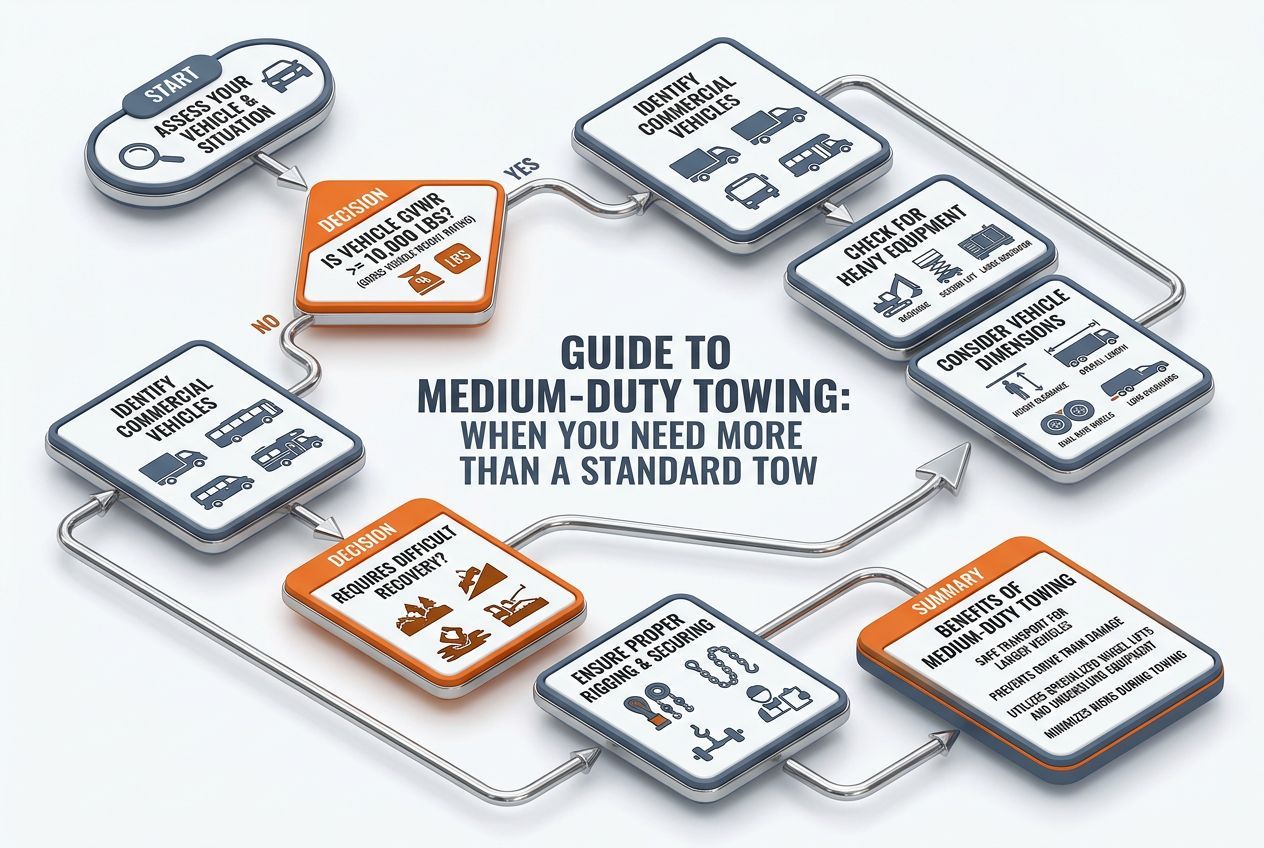
Medium-duty towing specifically caters to Class 3–6 vehicles, which have a GVWR between 10,001 and 26,000 pounds. This category is entirely out of reach for light-duty tow trucks, which are engineered for passenger cars and light pickups. Attempting to tow a heavy vehicle like a 16,000-lb Freightliner Sprinter-based step van with a standard wrecker poses serious risks, including snapped chains, damage to the tow truck, and significant liability issues.
Understanding GVWR Classification
The Federal Highway Administration (FHWA) classifies vehicles by their Gross Vehicle Weight Rating (GVWR), which serves as the legal benchmark every tow operator uses for dispatching the correct equipment. You can typically locate your vehicle's GVWR on its door-jamb certification label. This figure represents the maximum allowable loaded weight of the vehicle itself, not any attached trailers or towed loads.
⚠️ Warning: Attempting to tow an overweight vehicle with insufficient equipment is extremely dangerous and can lead to equipment failure, road damage, and serious liability claims.
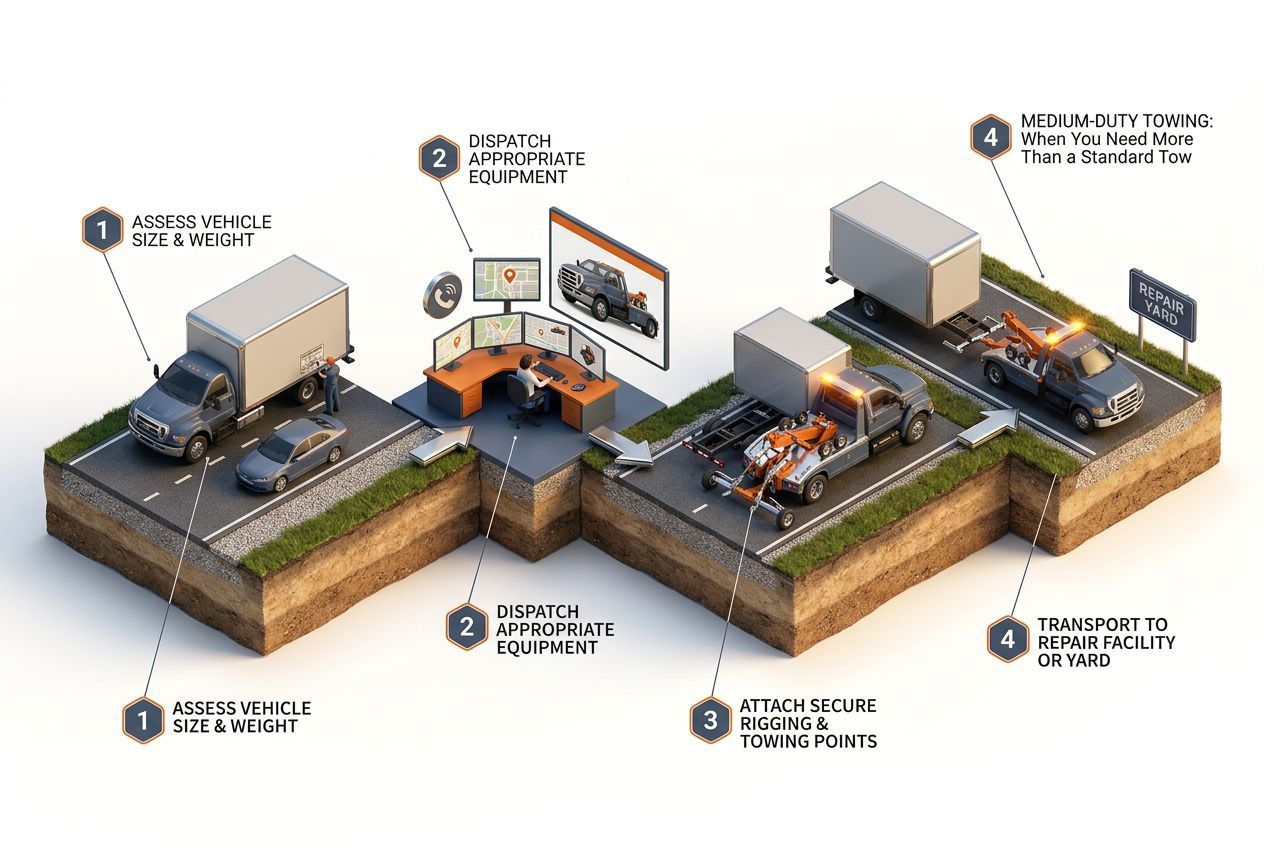
Consider this real-world scenario: An Isuzu NPR box truck (Class 4, GVWR 14,500 lbs) breaks down on a major highway. If the nearest roadside service dispatches a standard flatbed rated for only 10,000 lbs, that truck cannot legally or safely load the NPR. The result is a frustrating delay, forcing the driver to wait for a second, correctly rated medium-duty dispatch, adding 45–90 minutes to the breakdown.
💡 Key Takeaway: Knowing you require medium-duty service before you call can save significant time and prevent unnecessary complications during a breakdown.
For a broader look at how towing classes scale up from passenger cars to semi-trucks, see our commercial towing services overview.
What Types of Vehicles Require Medium-Duty Towing?
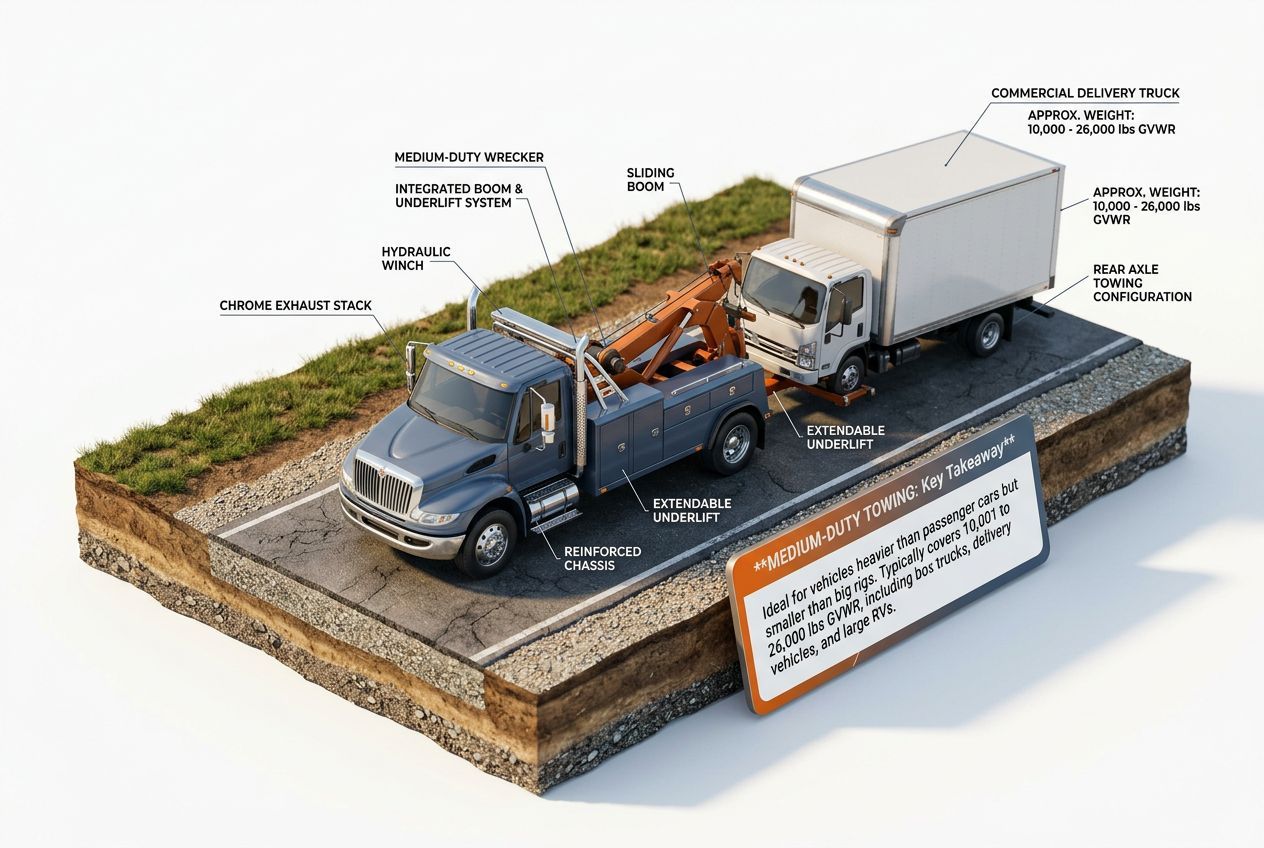
Any vehicle with a GVWR above 10,000 lbs but below 26,001 lbs falls into medium-duty territory. This broad category includes a wide range of commercial and recreational vehicles.
Common Medium-Duty Vehicles
The most common candidates for medium-duty towing services include:
- Box Trucks: Various sizes used for deliveries and moving.
- Delivery Vans: Such as FedEx and Amazon step vans.
- Commercial Trucks: Hino 195 and 258 delivery trucks.
- Motorhomes: Class B+ and Class C recreational vehicles.
- Buses: Shuttle buses and small school buses.
Construction equipment on trailers can also quickly push a combined GVWR past 10,000 lbs, placing the entire rig into the medium-duty bracket. For example, a Bobcat S76 skid steer (operating weight ~8,100 lbs) hauled on a tandem-axle trailer often exceeds this threshold.
📊 Quick Fact: According to FHWA Highway Statistics data, there are approximately 6.5 million Class 3–6 vehicles registered in the U.S. Commercial fleet vehicles average roughly 2.4 roadside breakdowns per vehicle per year, making specialized medium-duty towing a high-demand service in every major metro.
It's crucial to understand medium-duty towing has a hard ceiling. If your vehicle or rig has a GVWR of 26,001 lbs or higher, you're squarely in heavy-duty territory. This Class 7 or 8 scenario demands a specialized rotator or heavy-duty underlift. A medium-duty wrecker, typically rated for 12–14 tons, cannot safely recover a loaded semi-truck. Misidentifying the needed service can lead to equipment failure and significant road damage. See our semi-truck towing cost guide if you're in that weight range.
For quick equipment matchup, the tow vehicle matchmaker tool can confirm which tow class your vehicle falls into based on GVWR.
How Much Does Medium-Duty Towing Cost?
Medium-duty towing typically ranges from $150–$500 for the base hookup fee, with an additional $5–$10 per mile after the initial service radius (which is usually 5–10 miles). A 20-mile tow, for instance, could average $250–$600 total, with the final price influenced by factors such as vehicle weight, the time of day, and geographical location.
Use our cost estimator to get a faster read on your situation before you call.