Key Takeaways
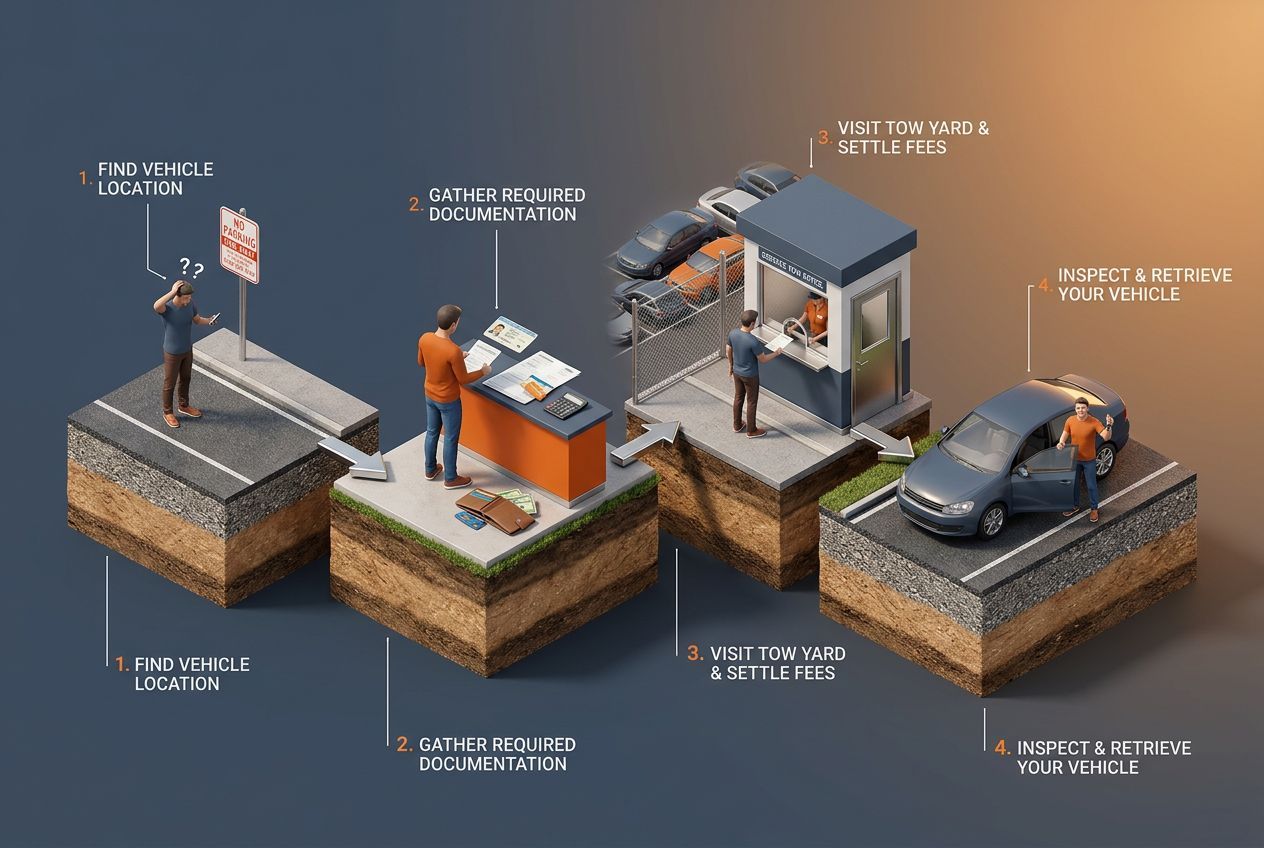
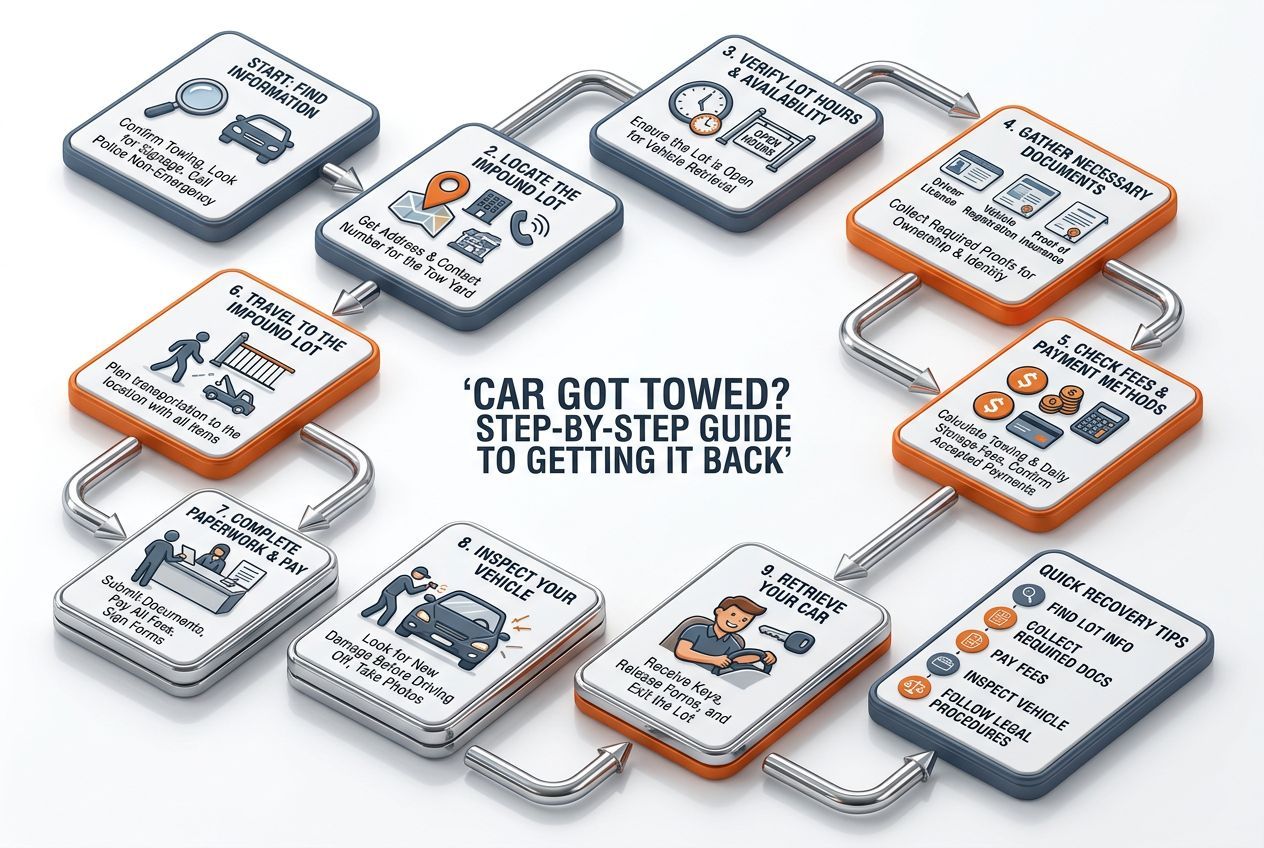
- Call 311 or your local police department's tow lookup first — police tows are logged by license plate and VIN within hours
- Bring your photo ID, vehicle registration or title, proof of insurance, and cash (many lots don't take cards)
- Daily storage fees run $20–$75 per day — waiting 48 extra hours can add $100–$150 to your total bill
- If no tow-away signs were posted at the location, you likely have grounds to dispute the tow and recover your fees
- Private property tows and police tows follow different rules — your pickup process and legal options depend on which type you're dealing with
💰
VEHICLE SAFETY & RECOVERY
How Do I Find Out Where My Towed Car Is?
Start with your local authorities. Call 311 — the municipal non-emergency line available in most U.S. cities — and provide your license plate number. Police-ordered tows are logged in a municipal database by plate and VIN, usually within one to two hours of the tow. If 311 doesn't return a result, check your city's online tow lookup portal (Los Angeles, San Francisco, and New York City all have dedicated tools at their police department websites).
If municipal channels yield no results, return to the scene. Head back to where you parked. Look for a sign — typically posted at eye level near the lot entrance or on a nearby utility pole — listing the towing company's name and phone number. In most states, private property tow-away signage is a legal requirement, not a courtesy.
✅ Pro Tip: No tow-away sign where your car was parked? Take photos immediately; that's your first piece of evidence for a dispute.
Common Missteps When Locating Your Car
A few things that commonly slow people down when trying to find their vehicle:
- Confusing a boot with a tow. Cities like Chicago, Denver, and Philadelphia often boot first for unpaid tickets. If your car is still there but won't move, look for a yellow or orange clamp on the front wheel before assuming it's gone.
- Assuming it was stolen. If your car isn't where you left it and you genuinely don't know why, file a police report first. You want that documented before you call a tow yard.
- Waiting until morning. Most impound lots charge by calendar day, not 24-hour period. A car towed at 11:45 p.m. can accrue a second storage day charge at midnight — just 15 minutes later. Find out how much impound fees typically run in your area before you decide whether to wait.

📊
VEHICLE SAFETY & RECOVERY
What's the Difference Between a Police Tow and a Private Tow?
Understanding the tow type is crucial. A police tow is ordered by law enforcement — for illegal parking, abandoned vehicles, post-accident clearance, or DUI arrests — and is logged in a municipal database with a regulated fee schedule. A private tow is initiated by a property owner or manager, typically from apartment complexes, strip malls, or business parking lots, and isn't logged with the city.
The practical implications are significant. Police tows go to a city-contracted impound yard, and fees are set by municipal ordinance. Private tows go to whatever lot the towing company uses, and rates vary widely — especially in states like Texas where private tow fees are lightly regulated at the county level.
Consider this real scenario: You park in a strip mall lot while grabbing food, leave your car there after the restaurant closes, and a private tow company hired by the property manager hauls it at 2 a.m. That's a private tow. The company isn't required to notify the city, so you won't find your car in a 311 database. Your only clues are the tow-away signs posted in the lot — which is why photographing those signs the moment you suspect a private tow protects you later.
For help sorting out your rights under each scenario, our guide to car accident towing rights covers the legal framework in more detail. And if you're worried about being overcharged, read up on common tow truck scams before you hand over any money.
🔧
VEHICLE SAFETY & RECOVERY
What Do You Need to Bring to Pick Up a Towed Car?
Prepare your identification and ownership documents. Bring a valid government-issued photo ID, proof of vehicle ownership (your title or current registration), and proof of auto insurance in the vehicle owner's name. Missing any of these documents typically means the lot won't release the car — even if you're ready to pay in full.
Essential Items for Vehicle Release
Most impound lots also require the following:
- Cash or debit card. Always call ahead to confirm payment methods. Many tow yards are cash-only operations, and the ones that accept cards often add a 3–5% processing fee. An ATM run before you arrive saves a second trip.
- Notarized authorization letter if you're picking up on behalf of the registered owner. Some lots accept a signed letter with a copy of the owner's ID; others require full notarization. Confirm these requirements before you go.
- Lien holder documentation if the vehicle is financed and the title is held by a bank. This situation is rare but does come up — typically if registration lapsed and the vehicle was towed for that reason.
⚠️ Warning: If you're picking up a vehicle that was towed after a DUI arrest, many jurisdictions impose a mandatory hold period — often 30 days in California under Vehicle Code §14602.6 — during which the registered owner cannot retrieve the car regardless of what documents they bring. That hold is firm; no paperwork combination unlocks it early.
For the full step-by-step process once you're ready to go, our dedicated guide on how to get your car out of impound walks through each stage at the lot.
🛡️
VEHICLE SAFETY & RECOVERY
How Much Does It Cost to Get a Towed Car Back?
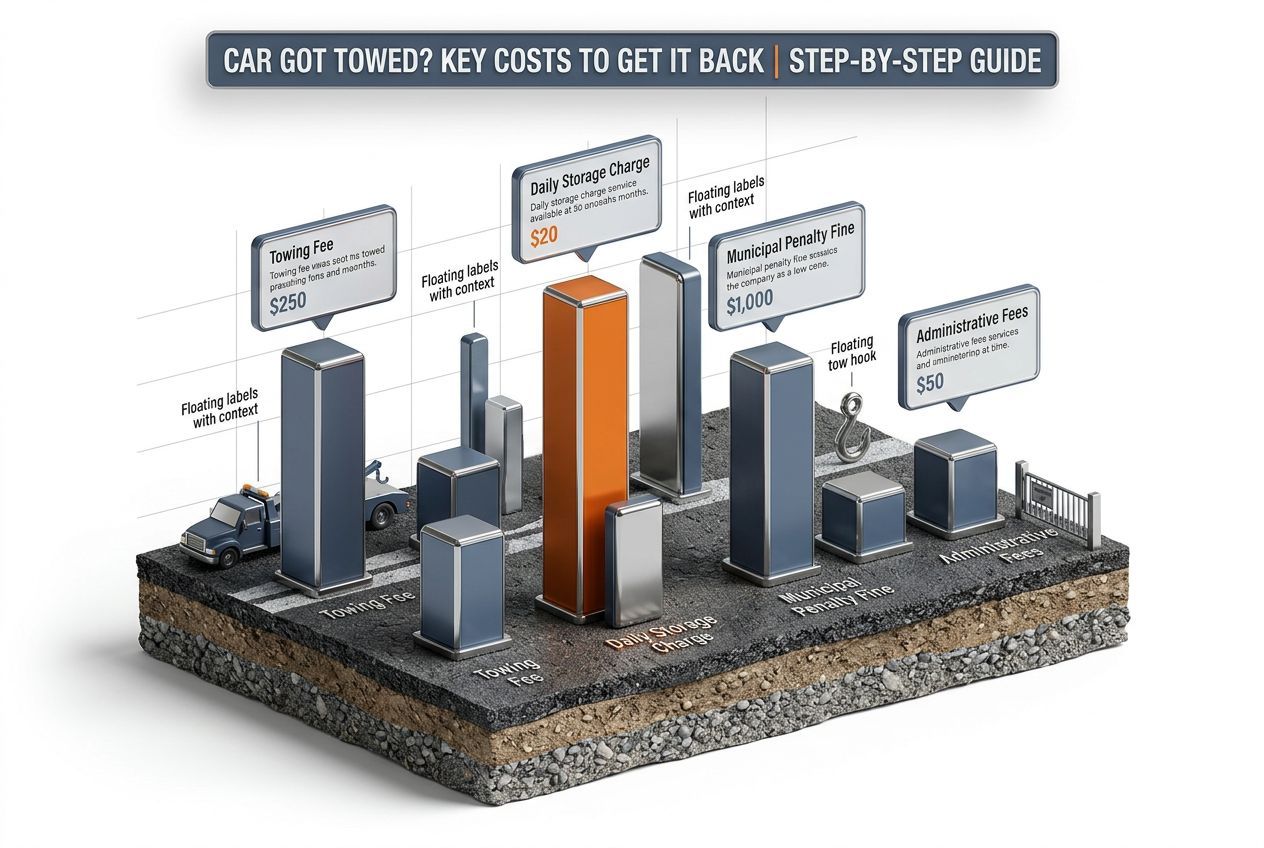
Towing fees can vary significantly. The average cost to retrieve a towed car ranges from $150 to $500+, depending on your city, the type of tow, and how long the vehicle sat in storage before you claimed it. Base charges typically break down into three buckets: a towing fee, a daily storage fee, and an administrative or gate release fee.
How Much Does It Cost to Get a Towed Car Back? — data table
| Fee Type |
Typical Range |
Notes |
| Base tow fee |
$100–$350 |
Higher for SUVs, trucks, or AWD vehicles |
| Daily storage fee |
$20–$75/day |
Charged per calendar day in most states |
| Gate/admin release fee |
$25–$75 |
One-time charge at pickup |
| After-hours release |
$50–$150 extra |
Nights, weekends, holidays |
| Heavy-duty surcharge |
$50–$200 extra |
Applies to large trucks, oversized vehicles |
Sources: AAA towing cost data; municipal fee schedules for Los Angeles, New York City, and Chicago.
Consider this worked example: Your sedan gets towed on a Friday night. You find it Saturday afternoon — that's already two calendar days of storage in most jurisdictions.
- Base tow fee: $200
- Two days storage at $45/day: $90
- Gate fee: $50
- Total before taxes or processing fees: $340.
If you wait until Monday morning, add two more storage days ($90), and your total reaches $430 before you've even argued about the gate fee.
For trucks and SUVs towed on a flatbed, expect the base fee to run $50–$100 higher due to equipment requirements. Use our towing cost calculator to estimate what you're likely facing based on your city and vehicle type.
📋
VEHICLE SAFETY & RECOVERY
What Are Your Rights After Your Car Is Towed?
You have fundamental rights as a vehicle owner. You have the right to know where your vehicle was taken and to retrieve it during reasonable business hours — and in many states, tow companies must operate a 24/7 phone line. According to the Federal Trade Commission and various state consumer protection statutes, you're also entitled to an itemized receipt listing every charge applied to your vehicle.
State laws vary significantly on what specific protections apply. Use the tool below to look up the towing laws in your state before you pay anything.
Enter your state to see towing fee caps, signage requirements, and your rights at the impound lot.