Key Takeaways
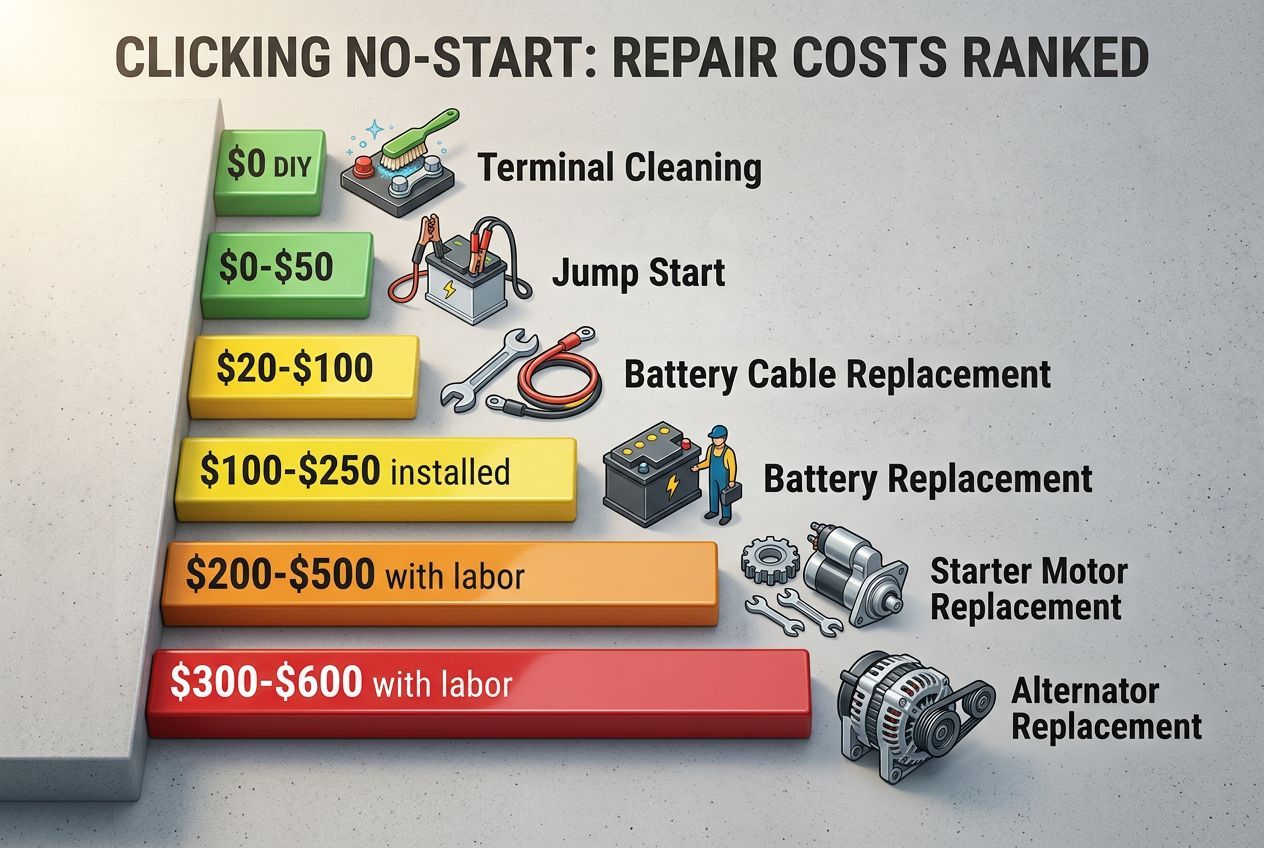
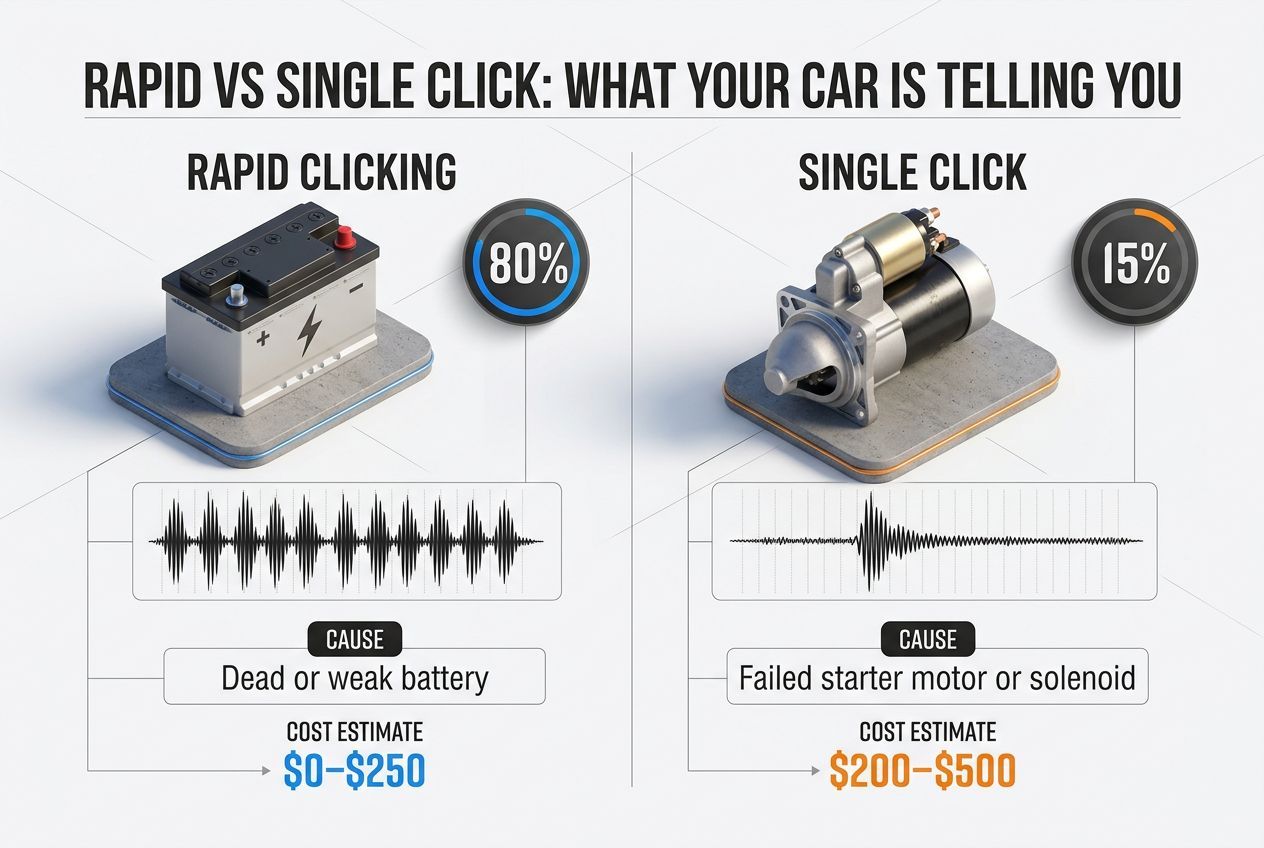
- Rapid clicking = dead or weak battery — the most common cause, $0-$250 to fix
- Single loud click = starter motor or solenoid failure — $200-$500 to replace
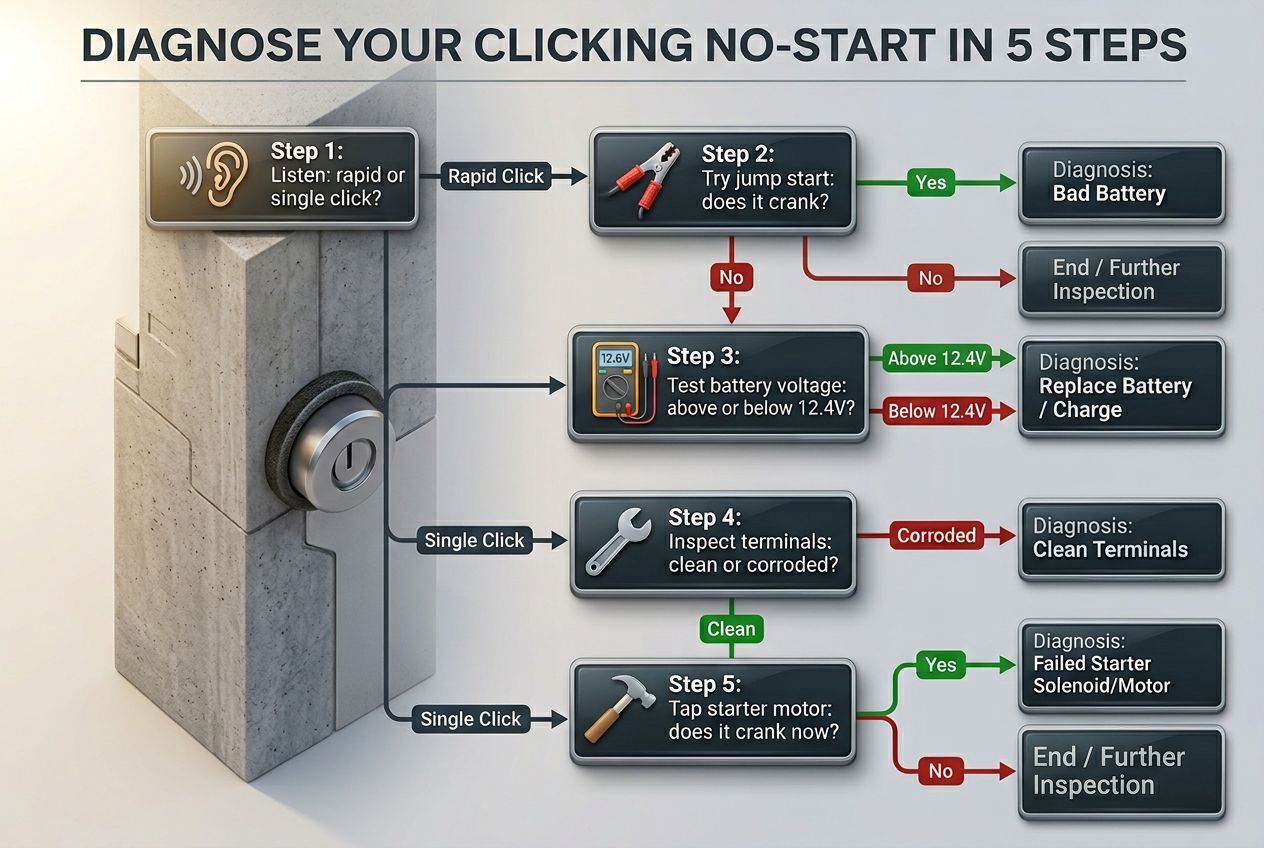
- A jump start test is the fastest way to diagnose — if it starts, the battery is the problem
- Corroded battery terminals cause clicking in roughly 30% of cases — free fix with a wire brush
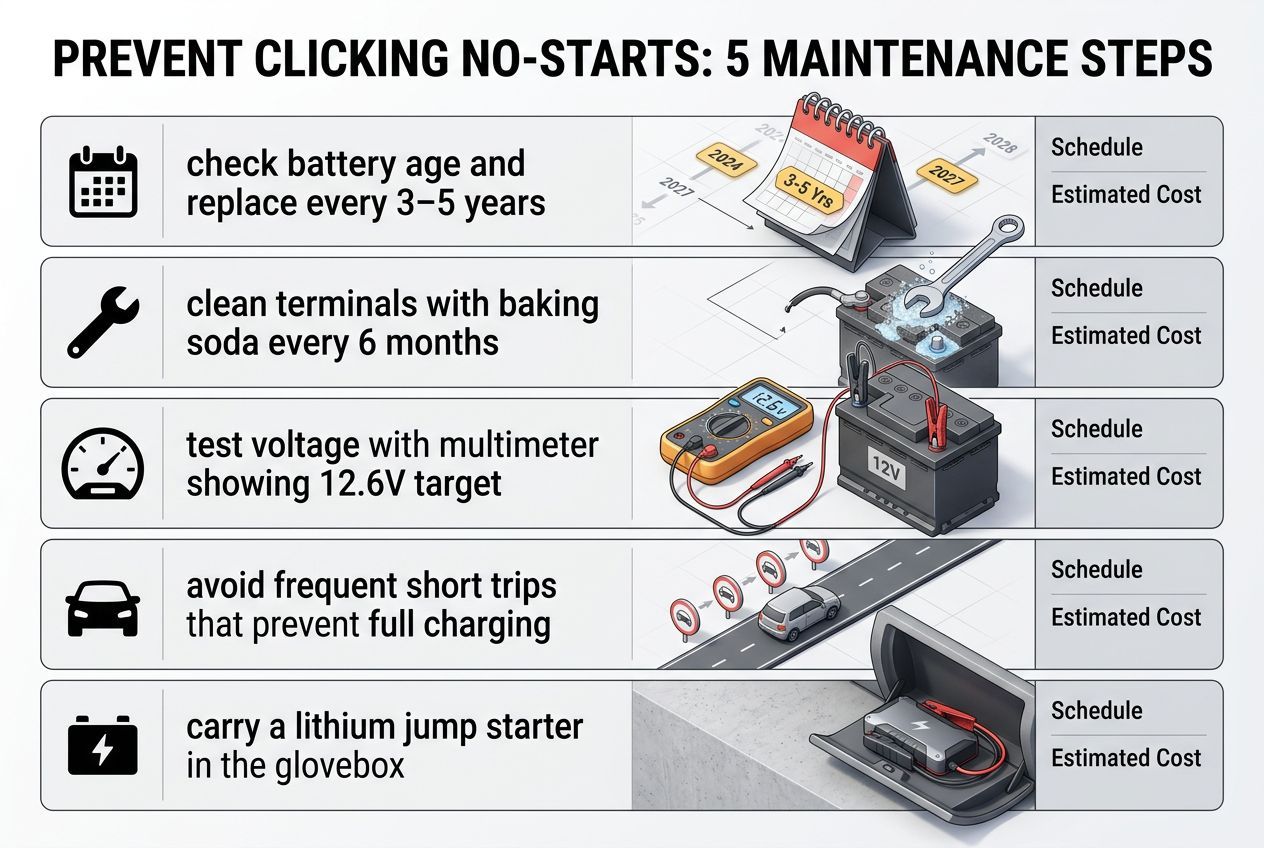
- Average car battery lasts 3-5 years — replace proactively before it fails
The clicking noise when you turn the key (or press the start button) is the starter solenoid engaging. It's receiving an electrical signal from the ignition switch and trying to connect the starter motor to the engine's flywheel. The click means the electrical circuit is working up to that point — the problem is downstream. Either the battery can't deliver enough current to spin the starter, or the starter itself can't turn.
This is the single most common roadside breakdown cause — AAA responds to more dead battery calls than any other service request. The good news: most clicking-no-start situations are resolved in 15-30 minutes without a tow.
What Does Rapid Clicking Mean When Your Car Won't Start?
Rapid clicking — a machine-gun-like click-click-click-click when you turn the key — means the battery has some charge but not enough to engage the starter motor. The solenoid tries to connect, draws power, drops the voltage, disconnects, then tries again. This cycle repeats many times per second, creating the rapid clicking pattern.
Why this happens:
The starter motor draws 100-300 amps of current in the fraction of a second it takes to spin the engine. A healthy 12V battery delivers this easily. A weak battery (11.5V or below under load) can power the solenoid (which draws only 5-10 amps) but collapses when the starter tries to pull its full current.
Most common causes of a weak battery:
- Battery age — average life is 3-5 years; performance degrades gradually
- Leaving lights or accessories on overnight
- Short trips that don't fully recharge the battery
- Extreme cold — battery capacity drops 30-50% at 0°F compared to 80°F
- Failed alternator that stopped charging the battery while driving
- Parasitic drain from a faulty module or aftermarket accessory
Pro Tip: Before anything else, check the dashboard lights when you turn the key to "on" (before cranking). If the lights are dim or don't come on, the battery is dead or the terminals are disconnected. If dashboard lights are bright but you get rapid clicking when cranking, the battery has some charge but not enough for the starter — a jump start should work.
What Does a Single Click Mean When Your Car Won't Start?
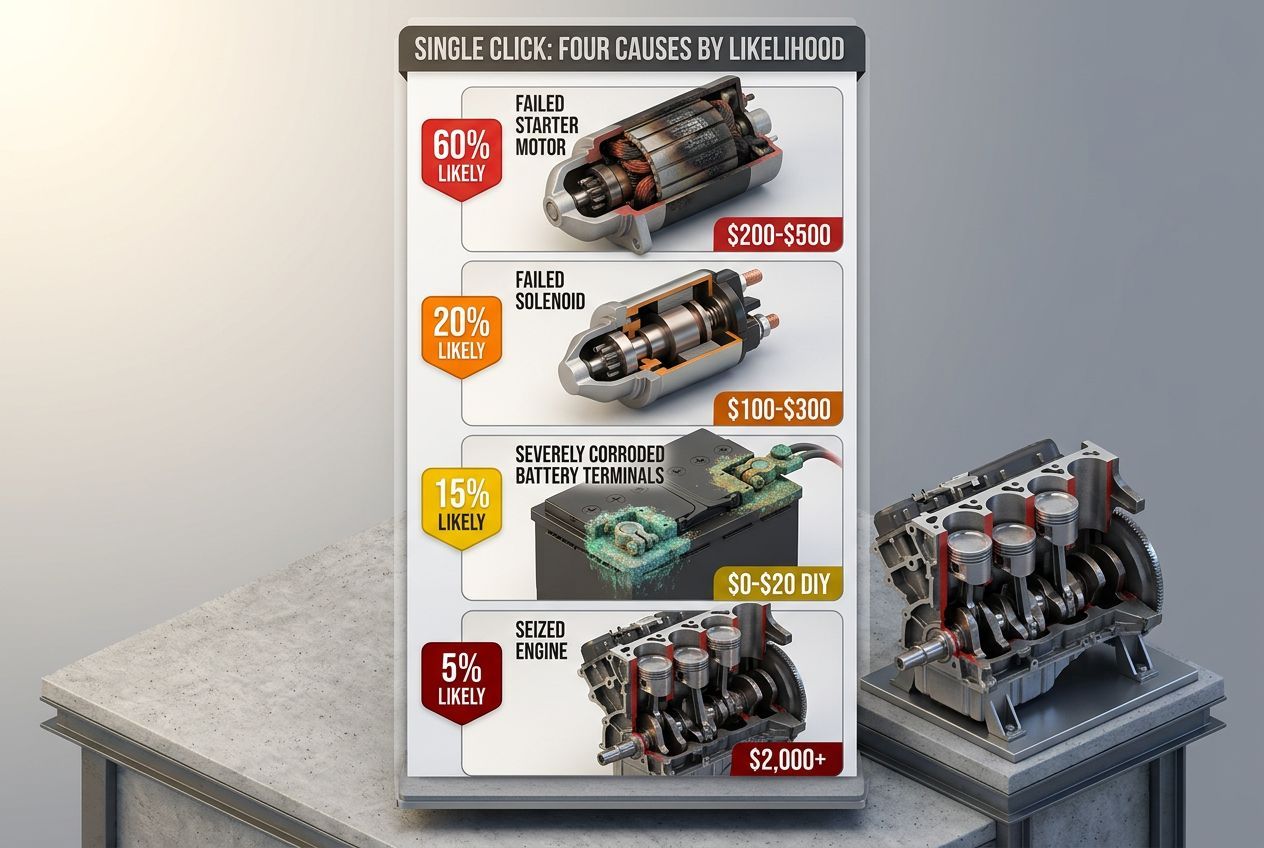
A single loud click — or a single click followed by silence — points to a different problem than rapid clicking. The battery has enough power to energize the solenoid once, but the starter motor doesn't spin. This usually means the starter motor itself has failed.
Common causes of single-click no-start:
-
Failed starter motor — Internal brushes are worn, windings are damaged, or the armature is seized. The solenoid engages (click) but the motor can't turn. This is the most common cause of single-click failure.
-
Failed starter solenoid — The solenoid engages mechanically (click) but doesn't pass current to the motor. Some vehicles have the solenoid integrated into the starter; others have a separate solenoid on the fender.
-
Severely corroded or loose battery cables — If the battery terminals or ground cable are heavily corroded, they can pass enough current for the solenoid but not the 100+ amps the motor needs. This mimics a starter failure but costs nothing to fix.
-
Engine mechanical lock — Extremely rare, but a seized engine (due to lack of oil or internal failure) prevents the starter from turning the engine. The starter motor engages but the engine can't physically turn over.
The tap test: If you get a single click, have someone hold the key in the start position while you tap the starter motor with a wrench or hammer. If the car starts, the starter's internal brushes are worn and making intermittent contact. This is a temporary fix — replace the starter soon.
Key Insight: On some vehicles, a failed ignition switch or neutral safety switch (automatic transmission) or clutch interlock switch (manual transmission) can prevent the starter from engaging, producing either a single click or no sound at all. If the battery and starter test fine, these switches are the next diagnostic step.