Skip to content
🛡️ VEHICLE SAFETY & RECOVERY

Impound Lot Fees by State: How to Minimize Your Costs

Published · Updated · 12 min read
MarkUpdated Sep 18, 2026California Vehicle Code §22850.5

💡 Key Takeaway:

  • Daily impound storage fees for passenger vehicles typically run $20–$75, but these costs can effectively double by day three if no action is taken.
  • California, New York, and Illinois generally have the highest impound fees, while rural Southern states tend to offer more affordable rates.
  • You may be able to dispute excessive charges or request a fee waiver, particularly if the impoundment was due to an error or involves a stolen vehicle.
  • Before heading to the lot, gather essential documents: your ID, vehicle title or registration, proof of insurance, and a police release form. Missing any of these could mean paying for another day of storage.
  • Standard auto insurance usually doesn't cover impound fees, but comprehensive coverage may reimburse towing costs after a theft.
💰
VEHICLE SAFETY & RECOVERY

How Much Does It Cost to Get a Car Out of Impound?

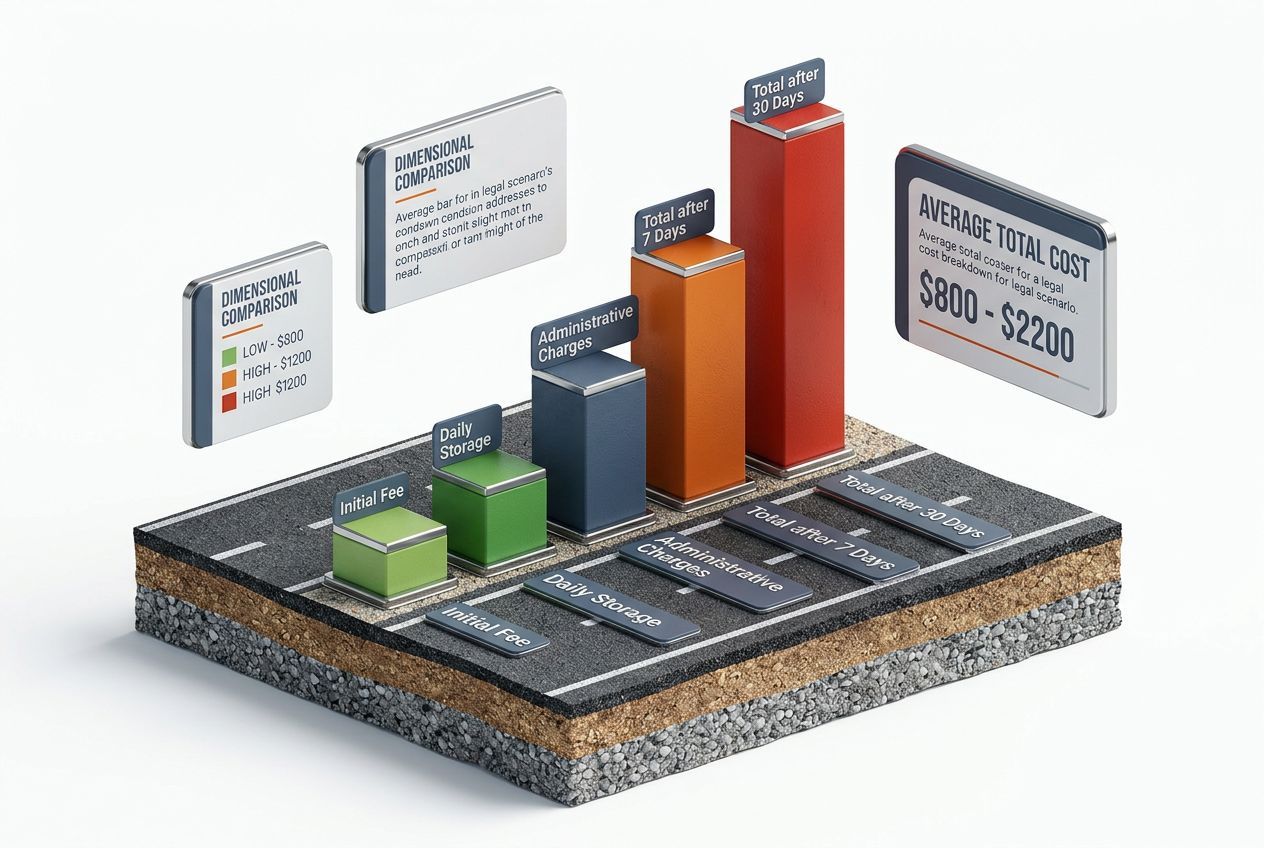
Retrieving your car from impound typically costs $300–$700 for a standard 3-day hold. This bill is usually divided into three main categories: a base towing fee, an administrative or release fee, and daily storage charges that continue to accrue every 24 hours. The longer your car remains at the lot, the higher the total cost will be. Additionally, some lots may charge an after-hours release surcharge, which can add $50–$150 to your bill.

Consider this real-world example: Imagine your car is towed in Los Angeles on a Friday night, and you can only retrieve it on Monday morning. Your estimated costs could break down as follows:

  • Base tow fee: ~$250
  • Administrative release fee: ~$75
  • Three days of storage at an estimated $65/day: ~$195
  • After-hours release surcharge (e.g., if attempting pickup on Saturday): ~$75

Total Estimated Cost: ~$595 before Monday morning. It's important to note that this is a conservative estimate for an urban area like LA.

For a complete overview of what towing itself costs before storage fees even begin, consult our towing cost guide.

3D scene depicting the legal aspects of impound lot fees by state: how to minimize your costs
📊
VEHICLE SAFETY & RECOVERY

How Much Do Impound Lots Charge Per Day for Storage?

Daily impound lot storage costs generally range from $20 to $75 for standard passenger vehicles, with most falling within the $35–$50/day range. This rate can increase significantly for larger vehicles:

  • Trucks and full-size SUVs: Often cost $60–$100/day.
  • RVs and commercial vehicles: Can run $150–$500/day in major metropolitan areas.
  • Motorcycles: Typically cost $10–$25/day, offering a small silver lining in the fee schedule.

Important nuances to understand:

  • Billing Commencement: Most lots start charging after the initial 24 hours, but some may begin immediately.
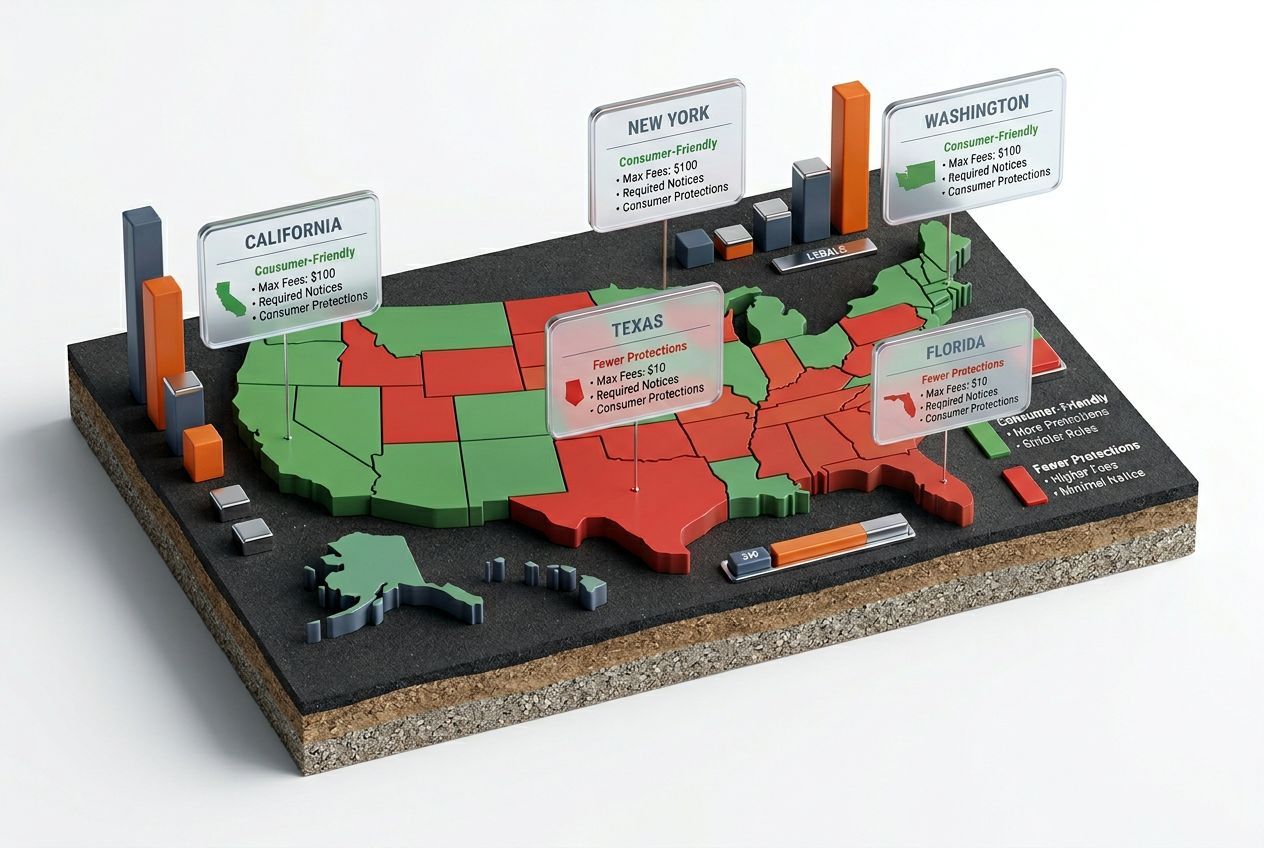
  • Regulated vs. Unregulated States: States like California (CA Vehicle Code §22850.5), Texas (TX Occupations Code §2308), and Florida publish official fee schedules. Conversely, states without rate caps allow private operators to set their own prices, which can lead to wide variations.
  • Municipal vs. Contracted Private Lots: City-run impound facilities typically charge less than private tow yards operating under a police contract. In some cities, a contracted private lot may legally charge 30–40% more than a city-operated lot.

⚠️ Warning: Impound storage fees generally do not stop accumulating while you are disputing charges. Even if you've filed a hearing request, most lots will continue charging daily fees until you physically retrieve the vehicle. This is a crucial financial trap to be aware of.

🔧
VEHICLE SAFETY & RECOVERY

What States Have the Highest Impound Lot Fees?

Impound fees vary dramatically by state, turning a minor inconvenience into a major crisis depending on your location. California, New York, and Illinois consistently report the highest impound fees. In contrast, rural states such as Mississippi, Arkansas, and West Virginia tend to be among the most affordable.

The table below provides representative impound costs across several key states. It's important to remember that significant within-state variation exists, with urban areas consistently costing more than rural counties.

What States Have the Highest Impound Lot Fees? — data table
State Base Tow Fee Daily Storage Typical 3-Day Total Fee Cap?
California $250–$350 $50–$75/day $600–$1,000+ Yes (§22850.5)
New York (NYC) $185 $20/day (city lot) $225–$400 Partial (city-set)
Illinois (Chicago) $200–$300 $50–$60/day $450–$680 No statewide cap
Texas $150–$250 Up to $22.85/day (25 ft or less) $220–$320 Yes (§2308; TDLR caps)
Florida $125–$225 $25–$45/day $275–$450 Yes (§713.78)
Mississippi $75–$125 $15–$25/day $150–$250 No statewide cap

Sources: CA Vehicle Code §22850.5; TX Occupations Code §2308 and TDLR storage fees; FL Statute §713.78; NYC Department of Finance; state municipal fee schedules.

For a state-by-state breakdown of towing laws, including whether your state has specific non-consent tow regulations, refer to our guide on car accident towing rights.

Step-by-step process for navigating impound lot fees and minimizing total costs
🛡️
VEHICLE SAFETY & RECOVERY

How Much Do Impound Lot Fees Cost by State?

Utilize our interactive tool below to quickly look up towing and impound fee caps for your specific state. This includes details on daily storage limits, lien sale timelines, and vehicle release requirements.

Use the tool below to check your state's official impound fee schedule and regulated limits in seconds.
Try Our Free State Towing Law Lookup

If you're unsure about your state's fee caps — or whether it caps fees at all — the /tools/towing-laws-by-state tool provides current rate data for all 50 states.

📋
VEHICLE SAFETY & RECOVERY

Can You Negotiate or Get Impound Fees Waived?

Yes, it is possible to get impound fees reduced or even waived, but this is typically only under very specific circumstances and requires swift action. The window for disputing charges is often quite narrow.

Situations Where a Waiver or Reduction May Be Legitimate:

  • Clerical Error: If the impoundment was a result of a clerical error (e.g., the wrong vehicle was towed, or paperwork was mistakenly identified as expired).
  • Stolen Vehicle Recovery: If your vehicle was stolen and subsequently impounded by police during its recovery. In these cases, some comprehensive auto insurance policies may cover towing and partial storage fees. Review your "other than collision" provisions carefully.
  • Financial Hardship: If you qualify for a documented financial hardship program. Several cities, particularly in California, and Chicago offer formal hardship waiver applications.
  • Inaccessible Lot: If the impound lot was closed on days for which it billed storage fees. Many states legally require lots to waive fees for days the facility was inaccessible to vehicle owners.

How to Start the Process:

  1. Contact Law Enforcement: Reach out to the impounding law enforcement agency within 24 hours of the tow, not the impound lot directly.
  2. Request Itemized Invoice: Ask the impound lot for a detailed, itemized fee invoice in writing.
  3. Inquire About Hearings: Specifically ask if a fee reduction hearing is available in your jurisdiction.
  4. Document Everything: Keep thorough records, including photos, timestamps, and call logs of all your communications.

If you suspect the tow itself was unauthorized or predatory, our guide on tow truck scams outlines your rights in detail. You can also use our towing cost calculator to benchmark whether the fees you're being charged fall within normal ranges for your area.

Typical impound fees by state: tow charge, daily storage, and administrative costs
⚙️
VEHICLE SAFETY & RECOVERY

How Long Before an Impound Lot Can Sell Your Car?

Most states require impound lots to hold a vehicle for 30–90 days before they can initiate a lien sale, but this minimum period can vary significantly by state.

  • California typically requires a 30-day hold with certified notice provided to the registered owner.
  • New York allows lien sales on vehicles valued below a certain threshold in as few as 10 days, making it one of the shortest windows in the country.

The financial reality often works against vehicle owners. Once the accumulated impound storage fees exceed the vehicle's market value, the lot has a strong incentive to pursue a lien sale to recover its costs. For example, a car worth $2,500 with $35/day storage could become a lien-sale candidate in approximately 70 days, well before a typical 90-day holding window might close.

📊 Quick Fact: Industry estimates compiled by AAA suggest that roughly 10–15% of impounded vehicles are never claimed. In many of these situations, owners calculate that the fees outweigh the car's value and choose to walk away.

If you find yourself nearing this threshold, consider selling the vehicle outright before the lien sale is finalized; you may walk away with more than nothing. For a more detailed look at the full recovery process, our step-by-step guide on how to get your car out of impound covers the lien sale timeline by state.

🚛
VEHICLE SAFETY & RECOVERY

What Documents Do You Need to Retrieve a Car from Impound?

To successfully retrieve your vehicle, you will need at least four essential documents: a valid government-issued photo ID, proof of ownership (either the title or current registration), proof of active auto insurance, and the official impound release form from the law enforcement agency that authorized the tow.

Common Requirements That Can Catch People Off Guard:

  • Valid Driver's License vs. Any Photo ID: Some states, including California and Illinois, specifically require a valid, non-suspended driver's license, not just any photo ID. If your license was suspended due to the incident that led to impoundment, you might need a licensed driver to accompany you and sign the release paperwork.
  • Third-Party Pickup: If you are not the registered owner, most impound lots will require a notarized authorization letter from the registered owner. Verbal permission is typically not sufficient.
  • Lienholder Vehicles: If you are still making payments on your vehicle, the title is legally held by the lender. You will need a letter from your bank or finance company authorizing the release. Call your lienholder the same day your car is impounded.

✅ Pro Tip: Every missing document can result in another day of storage fees. To avoid this, gather all necessary paperwork meticulously before you head to the impound lot.

If you're unsure what actions to take immediately after a tow, our guide on what to do if your car is towed walks you through the exact sequence of steps.

State-by-state comparison of impound lot fee caps and consumer protection regulations
📝
VEHICLE SAFETY & RECOVERY

Does Insurance Cover Impound Lot Fees?

Generally, standard auto insurance policies — including liability, collision, and even full coverage — do not cover impound lot fees. Impoundment is typically treated as a consequence of a violation or an uninsurable event. This is the short answer that applies to the vast majority of situations.

Exceptions Worth Knowing:

  • Stolen Vehicle Recovery: If your car was stolen and later impounded by the police during its recovery, your comprehensive coverage (the "other than collision" portion of your policy) may reimburse the initial towing fee and some storage costs. It's crucial to file the claim immediately, as most policies have strict reporting windows.
  • Roadside Assistance Add-ons: Some roadside assistance plans, whether through providers like AAA or bundled with your primary insurance policy, will cover the tow itself. While they typically don't cover daily storage, this can still save you $100–$350 off your total bill.
  • GAP Insurance: This type of insurance does not apply to impound fees. GAP insurance covers the difference between your vehicle's value and your loan balance if the vehicle is totaled, not storage costs.

If you're evaluating whether a roadside assistance plan is a worthwhile addition, our review of AAA roadside assistance breaks down exactly what is and isn't covered. Before any tow occurs, reading our explainer on whether towing can damage your car is highly recommended, especially if you drive an AWD or electric vehicle.

Sources & Methodology

  1. 1.
    California Vehicle Code §22850.5 — Governs maximum storage fees for towed vehicles in California. Referenced via state legislative database. https://www.transportation.gov
  2. 2.
    Texas Occupations Code §2308 — Regulates non-consent towing fees in Texas; TDLR sets the maximum fees. statutes.capitol.texas.gov
  3. 3.
    Florida Statute §713.78 — Sets lien and storage fee limits for towing operators. Referenced via Florida Legislature online.
  4. 4.
    NYC Department of Finance — Published tow and storage fee schedule for city-operated impound facilities. https://www.transportation.gov
  5. 5.
    AAA — Industry estimates on unclaimed impounded vehicles and consumer towing guidance. https://www.aaa.com

Methodology: Fee ranges were compiled from state statutory fee schedules, municipal rate ordinances, and published impound lot rate sheets. Where official caps exist, we cite the applicable statute. Where no cap exists, ranges reflect reported market rates from urban and rural operators.

TowingServiceHub is reader-supported: we may earn money from ads and from some links on this page. See our editorial policy.

Mark — Founder & Editor

Mark

Founder & Editor

Mark is the founder and editor of TowingServiceHub, which he launched in 2026 after struggling to find clearly sourced towing costs and truck specs. He works in enterprise technology and tows his own boats, trailers, and equipment, so he knows the questions drivers actually ask.

Read full bio →

Need a tow truck right now?

Browse vetted local providers in your area. Real Google ratings, verified business info, free to use.

Or browse all 50 states from our directory

Frequently Asked Questions

The average impound storage fee for a standard passenger vehicle is $35–$50 per day. When you combine this with a base tow fee ($100–$350) and an administrative release fee ($50–$200), your first-day total typically ranges from $185–$600, depending on your specific state and city.

Yes, another person can pick up your impounded car, but strict requirements apply. The impound lot will generally require a notarized authorization letter from the registered owner. This letter must be accompanied by a copy of the owner's photo ID, proof of insurance in the owner's name, and the official release form from the impounding agency. Verbal permission alone will not be accepted, and missing documentation will likely result in an additional day of storage fees.

If you cannot afford to retrieve your impounded car, it's crucial to act quickly. Contact the impounding agency (usually law enforcement) immediately to inquire about any financial hardship waiver programs available. Some jurisdictions, especially in California and Illinois, have formal reduction hearings you can request. If the accumulated fees exceed your vehicle's market value, you might consider a voluntary lien sale. This can help you avoid an ongoing debt for a vehicle you cannot recover.

Generally, no, impound lot fees do not automatically stop accruing on weekends or holidays. However, several states have laws that require impound lots to waive storage fees for any days they were completely closed or otherwise inaccessible to vehicle owners for release. It's advisable to request an itemized invoice and carefully check each line item against the lot's posted operating hours to identify any potentially waivable charges.

Yes, there is a significant difference between a police impound and a private impound. * Police Impound: This occurs when law enforcement authorizes the tow, typically due to a traffic violation, accident, or criminal investigation. Retrieving your vehicle from a police impound almost always requires an official release form from the authorizing police agency before the lot will release it. * Private Impound: These are common in private parking lots and are initiated by the property owner or management, not law enforcement. Private tows are regulated differently by state and local laws and are often more susceptible to predatory towing practices, making it even more important to understand your rights and dispute unauthorized charges.

Related Articles

Explore More Towing Guides

Browse all 157 expert guides and 10 free tools.