Skip to content
🚐 RV & BOAT TOWING

Setting Up a Toad (Dinghy) Vehicle Behind Your RV

Published Β· Updated Β· 12 min read
MarkUpdated Mar 2, 2026Federal Motor Carrier Safety Administration (FMCSA)
Key Takeaways
  • Not every vehicle can be flat towed β€” always verify your specific model year in the manufacturer's dinghy towing guide before purchasing.
  • Five components are non-negotiable: tow bar, baseplates, supplemental braking system, safety cables, and a lighting harness.
  • Most U.S. states require supplemental brakes on any toad over 1,500 lbs β€” the Jeep Wrangler 4-door weighs ~4,400 lbs, so you're always in that category.
  • EVs and most hybrids are not flat-towable β€” regenerative braking and electric motor drag cause real drivetrain damage.
  • Flat towing beats a tow dolly or car trailer for most RVers because it's lighter, shorter, and faster to hook up daily.

πŸ’°
RV & BOAT TOWING

What Is a Toad Vehicle and Why Do RVers Flat Tow One?

Understanding a Toad Vehicle: A toad β€” also called a dinghy β€” is a secondary vehicle towed four-wheels-down behind a motorhome. The RV toad setup offers several key advantages for travelers:

  • Local Transportation: Provides a normal-sized car for exploring areas around each campsite.
  • No Separate Trailer Needed: Eliminates the need for a dedicated car hauler.
  • Reduced Rig Length: Keeps your overall motorhome-plus-towed-vehicle length shorter.
  • Lower GCWR: Contributes less to your Gross Combined Weight Rating compared to a trailer.
  • Vehicle Choice: Most Class A and Class C owners opt for a compact SUV or a Jeep, as many models are factory-approved for four-down towing.

Practical Convenience: The practical case is simple: park your 40-foot Class A at a campground in Moab, unhook the Jeep in five minutes, and go explore narrow canyon roads that would be impassable in the motorhome. When you return, you back the Jeep up to the tow bar, click in the pins, plug in the wiring harness, and you're done. That daily efficiency is why flat towing has become the dominant method among full-time RVers.

For a broader look at RV towing strategy β€” including GCWR math and how your toad affects your motorhome's weight budget β€” see our RV towing guide.


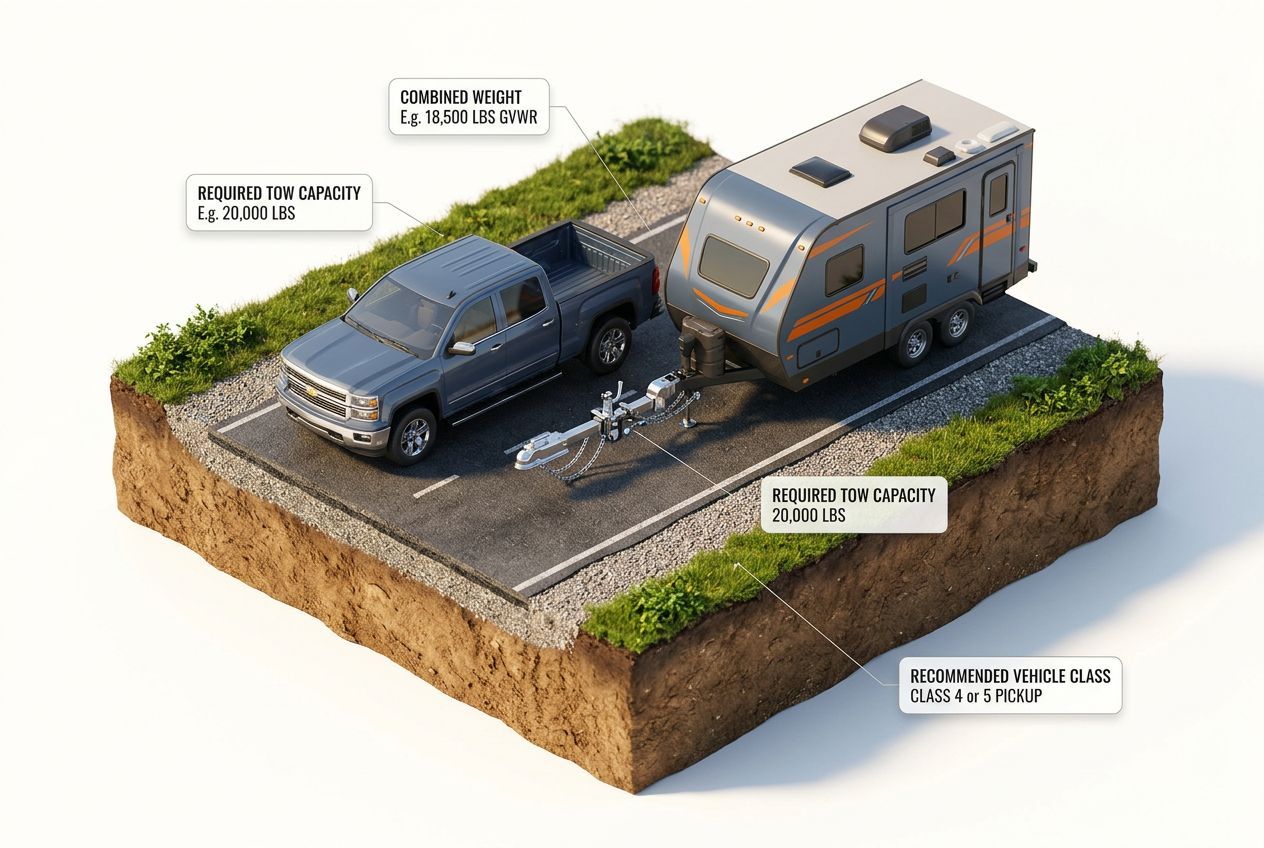
3D isometric scene of a truck towing setup for setting up a toad (dinghy) vehicle behind your rv
πŸ“Š
RV & BOAT TOWING

What Equipment Do You Need to Flat Tow a Vehicle Behind an RV?

A complete toad vehicle setup has five core components, and skipping any one of them creates a safety or legal problem. Here's what you actually need:

  1. Tow Bar: This component mounts to the motorhome's Class III or IV hitch receiver. Tow bars are rated by gross trailer weight (GTW), with most residential flat-tow bars rated between 5,000–10,000 lbs. Blue Ox and Roadmaster are the two dominant brands. Always look for the GTW rating stamped on the head casting, not just printed in the manual.
  2. Vehicle-Specific Baseplates: These plates bolt securely to the toad's frame (not the bumper) and provide the two essential attachment points where the tow bar arms connect. These are not universal; a Jeep Wrangler baseplate, for instance, will not fit a Chevrolet Colorado. Roadmaster, Blue Ox, and Demco all manufacture model-specific kits, which typically cost $300–$600 for the hardware alone.
  3. Supplemental Braking System: This is a critical safety and legal component, which we will detail further in its own section below. Budget approximately $500–$1,200 for this system.
  4. Safety Cables: You'll need two cross-connected cables running between the tow bar and the motorhome hitch. These cables must be rated to the toad's Gross Vehicle Weight Rating (GVWR) and serve as your last-resort connection if the primary tow bar disconnects. FMCSA regulations at fmcsa.dot.gov require breakaway capability for towed vehicles; safety cables satisfy this requirement in combination with a breakaway switch in most states.
  5. Wiring Harness: This harness powers the toad's tail lights, brake lights, and turn signals, drawing electricity from the motorhome's 7-pin connector. More details on wiring requirements are provided further below.

Here's a cost breakdown by component:

What Equipment Do You Need to Flat Tow a Vehicle Behind an RV? β€” data table
Component Entry-Level Mid-Range Premium Notes
Tow Bar $400 $700 $1,100+ Self-aligning heads cost more but connect faster
Baseplates (installed) $450 $650 $900+ Price varies heavily by vehicle model
Supplemental Braking $500 $750 $1,200 Portable vs. permanent install
Wiring Harness $80 $150 $250 Diode kit vs. magnetic lights
Safety Cables $40 $80 $120 Should be rated to toad GVWR

Sources: Roadmaster, Blue Ox, and SMI published MSRP data; installer quotes compiled by TowingServiceHub editorial team, 2026.

For more detail on what your motorhome's hitch setup needs to look like before any of this gets bolted on, our flat towing guide walks through the motorhome side of the equation.
πŸ”§
RV & BOAT TOWING

Which Vehicles Can Be Flat Towed Behind an RV?

Flat-tow-capable vehicles are specifically approved by their manufacturers for four-wheels-down towing without transmission or transfer case damage. As of the 2024 model year, MotorHome Magazine's annual dinghy guide listed approximately 80 approved models β€” and that number shifts every year as manufacturers update procedures.

Enter your year, make, and model below to check flat-tow compatibility instantly.

Try Our Free Flat Tow Compatibility Checker

Popular Flat-Tow Options:

  • Jeep Wrangler
  • Jeep Gladiator
  • Chevrolet Colorado (with transfer case in neutral)
  • Ford Bronco
  • Honda CR-V (2015 and earlier, with specific transfer case procedure)

The Jeep Wrangler holds the #1 spot in nearly every RV owner poll β€” it's purpose-built for this application, and Jeep explicitly approves four-down towing across virtually every Wrangler trim.

What Won't Work for Flat Towing:

  • Most EVs and Plug-in Hybrids: Towing a Tesla Model 3 or Chevy Bolt four-wheels-down spins the electric motor backward, generating heat it can't dissipate without the cooling system running. The cooling system does not run when the car is off.
  • Toyota RAV4 Hybrid and RAV4 Prime: Toyota explicitly prohibits flat towing these models in their owner's manuals.
  • Rear-Wheel-Drive Automatic Vehicles: Without a neutral-towable transfer case, these generally cannot be flat towed without a driveshaft disconnect, which adds cost and complexity.

⚠️ Warning: Always cross-check the exact model year of your potential toad vehicle. Manufacturer approval for flat towing can disappear between model years if the transmission or transfer case design changes. For example, a 2021 Jeep Cherokee was flat-towable, but the 2022 redesign was not. This kind of change often catches people off guard.


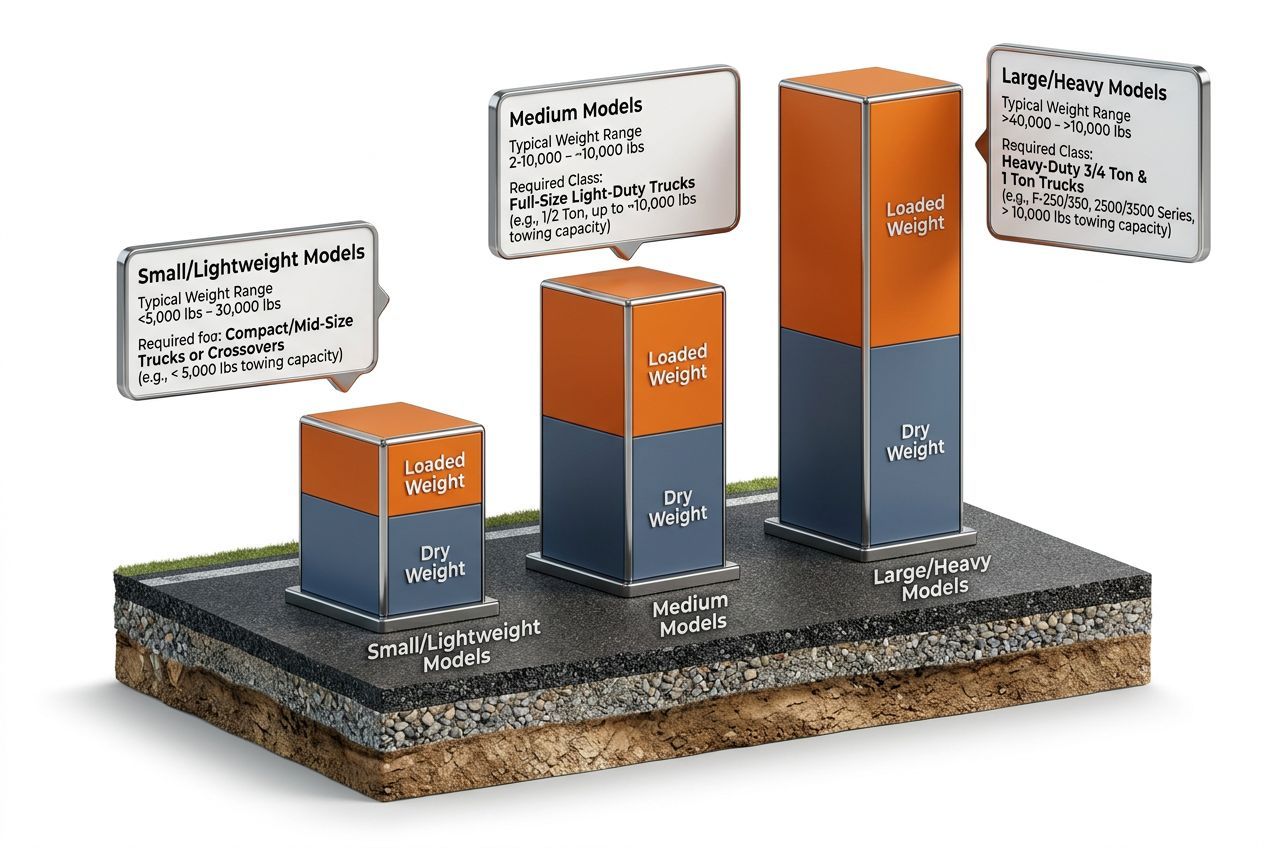
3D chart comparing weight classes and required tow vehicles for RV towing
πŸ›‘οΈ
RV & BOAT TOWING

How Do You Install a Tow Bar and Baseplate System?

Installation starts at the toad, not the motorhome. The baseplates bolt directly to the vehicle's frame rails β€” typically requiring removal of the front fascia or lower grille, drilling new holes in frame brackets, and torquing hardware to spec (usually 40–60 ft-lbs on most light SUVs). This is the step where professional installation pays off most. A misaligned baseplate that's 5mm off-center will bind the tow bar arms under load and wear the attachment points prematurely.

Baseplate Installation on the Toad

βœ… Pro Tip: For a real-world example, when installing Roadmaster baseplates on a Jeep Wrangler JL, you'll remove the lower bumper insert, locate the two factory frame weld-nuts, bolt the receiver pockets into position, reinstall the bumper, and snap the decorative covers over the pockets. This entire job takes about 2.5 hours with a floor jack and basic hand tools. Always follow the torque spec sheet included in the Roadmaster kit exactly.

Tow Bar Connection to the Motorhome

Connecting the Tow Bar: On the motorhome side, first verify your hitch receiver is Class IV, meaning it's rated for 10,000 lbs GTW. You can typically find this rating stamped on the receiver tube near the pin hole β€” look for "Class IV" or "GTW 10,000" in the casting. Next, mount the tow bar to the receiver, connect the arms to the toad's baseplates, insert the pull pins and clips, and finally, attach safety cables in a cross-pattern (right motorhome ring to left toad loop, and vice versa).

πŸ“Š Quick Fact: Professional installation at an RV service center or dedicated towing shop typically runs 3–5 hours total for baseplates plus tow bar. Expect to pay $150–$250/hour for labor, putting the full install job at $450–$1,250 beyond parts.

Towing in mountains changes everything about setup confidence. If you're planning routes through Colorado or West Virginia, read our towing in mountains guide before your first trip.


πŸ“‹
RV & BOAT TOWING

Do You Need a Supplemental Braking System for Your Toad?

πŸ’‘ Key Takeaway: Supplemental braking is almost always legally required and crucial for safety. Most U.S. states require a supplemental braking system on any towed vehicle exceeding 1,500 lbs. Connecticut and Pennsylvania require brakes on any towed vehicle regardless of weight. All Canadian provinces require a supplemental braking system plus a breakaway switch. According to the FMCSA, breakaway protection is federally required for towed vehicles β€” and a properly installed supplemental system with a breakaway cable satisfies that requirement.

Check the specific threshold in your state with our towing laws by state tool.

The two most common systems for dinghy towing are:

  • SMI Stay-IN-Play DUO (~$750 installed): A permanent unit that reads brake light voltage and applies the toad's brakes proportionally. It wires into the toad's brake booster vacuum line, requiring professional installation but is nearly invisible once mounted.
  • Roadmaster InvisiBrake (~$900 installed): A similar permanent install that utilizes the toad's own brake pedal mechanism. It is highly regarded for its proportional response.
  • Portable options (e.g., Brake Buddy Classic, ~$500): This unit sits on the driver's floorboard and physically presses the brake pedal. It works on almost any vehicle but must be installed and removed each time you hook up.

πŸ“Š Quick Fact: A supplemental braking system reduces motorhome stopping distance by up to 45% with a fully loaded toad. This isn't just a marketing claim; it's physics. A 4,400-lb Jeep pushing a 35,000-lb Class A under hard braking without independent toad brakes is a serious problem.


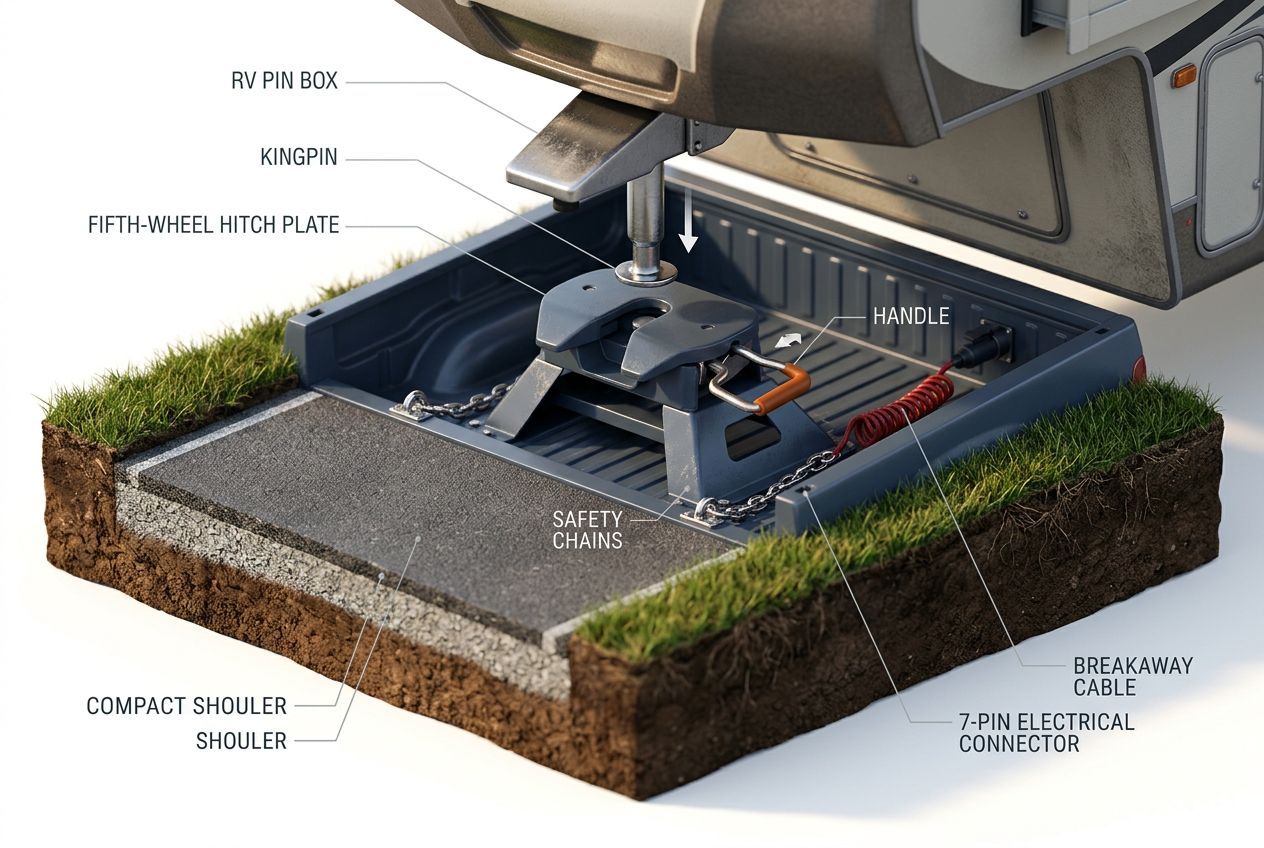
3D detailed view of hitch connection components for RV towing
βš™οΈ
RV & BOAT TOWING

What Are the Wiring and Lighting Requirements for Dinghy Towing?

Federal law and all 50 state vehicle codes require your toad's brake lights, tail lights, and turn signals to function and be visible to traffic behind you. This means you need a wiring harness connecting the motorhome's 7-pin trailer connector to the toad's rear lights.

Two options exist:

  • Magnetic Tow Lights: This is a four-light magnetic kit that attaches to the toad's trunk lid or roof. It plugs into the motorhome's 4-pin connector. These kits are cheap ($60–$100) and work on any vehicle. The main downside is that you have to mount and unmount them each time, and they can blow off at highway speed if not secured properly.
  • Diode-Based Wiring Harness: This kit splices into the toad's factory tail light wiring using diodes to prevent signal backflow into the toad's electrical system. Roadmaster and Blue Ox both make vehicle-specific kits for common toads. This is a one-time install, requiring no daily mounting, and is considered the correct long-term solution for a dedicated toad vehicle.

If your motorhome has a 5th wheel or gooseneck setup rather than a bumper-pull configuration, your hitch setup differs significantly β€” see our towing 5th wheel guide for those specifics.


πŸš›
RV & BOAT TOWING

What's the Difference Between Flat Towing, a Tow Dolly, and a Trailer?

Flat towing (four-down) rolls all four toad wheels on the pavement. A tow dolly lifts the front wheels off the ground, leaving the rear wheels rolling β€” which works for front-wheel-drive vehicles that can't be flat towed. A full car trailer supports all four wheels completely off the ground.

Here's how the three methods compare practically:

What's the Difference Between Flat Towing, a Tow Dolly, and a Trailer? β€” data table
Method Description Key Considerations / Limitations Best Use Cases
Flat Towing All four toad wheels roll on the pavement, connected by a tow bar. - Requires a specifically manufacturer-approved flat-towable vehicle. - Most full-time RVers.
(Four-Down) - Lightest method, shortest overall rig length. - RVers prioritizing convenience and speed of hookup/disconnect.
- Fastest daily hook-up and disconnect. - Popular with Jeep Wrangler/Gladiator, Ford Bronco owners.
Tow Dolly Front wheels of the toad are lifted onto the dolly; rear wheels roll. - Dolly weighs 450–600 lbs, impacting payload and GCWR. - Owners of front-wheel-drive (FWD) vehicles not approved for flat towing.
- Primarily for FWD vehicles (e.g., Honda Civic, Toyota Corolla). - RVers with limited storage for a full trailer.
- May require driveshaft disconnection for some AWD/4WD vehicles.
- Storage of the dolly at campsites can be a nuisance.
Car Trailer Supports all four toad wheels completely off the ground on a dedicated trailer. - Adds 1,000–2,000 lbs of trailer weight, plus car weight. - RVers with a non-flat-towable or EV vehicle.
(Full Four-Wheel) - Increases overall rig length significantly. - Motorhomes with sufficient GCWR budget to handle the extra weight.
- Works for any vehicle, including EVs and non-flat-towable hybrids. - Hauling classic cars or specialized vehicles.

For help deciding which toad matches your specific motorhome's towing capacity, the tow vehicle matchmaker tool can pair your rig with compatible vehicles by GCWR and weight class. And if you're still in the process of selecting your motorhome, our best trucks for RV towing article covers the chassis options worth considering.

Full-time RVers should also factor fuel economy β€” a heavier toad increases your coach's fuel consumption measurably. Our RV towing MPG guide breaks down the real-world impact by toad weight class.


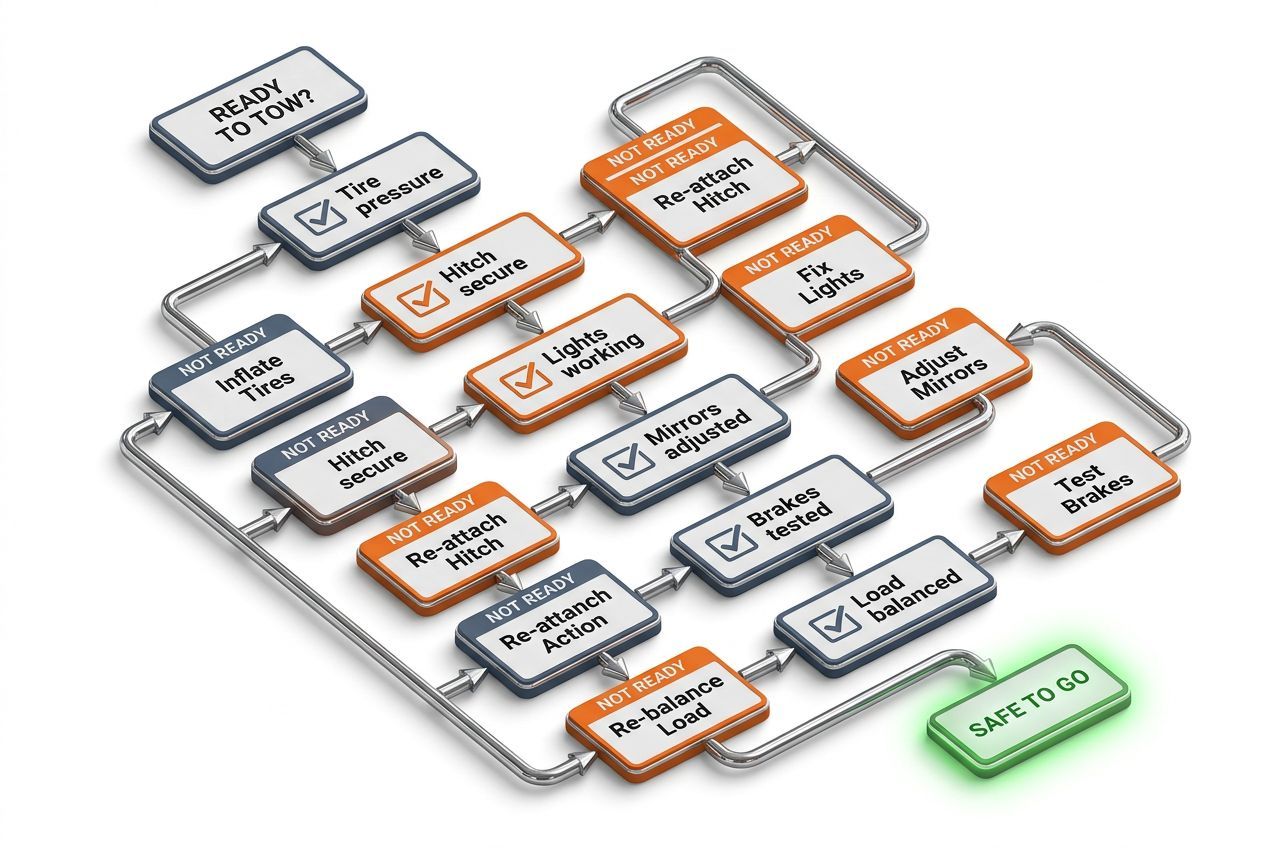
3D flowchart showing pre-trip towing checklist for RV

Sources & Methodology

  1. 1.
    Federal Motor Carrier Safety Administration (FMCSA) β€” fmcsa.dot.gov: Breakaway protection requirements and cargo securement standards for towed vehicles.
  2. 2.
    National Highway Traffic Safety Administration (NHTSA) β€” nhtsa.gov: Vehicle weight specifications, GVWR definitions, and safety equipment standards.
  3. 3.
    MotorHome Magazine Annual Dinghy Towing Guide (2024 edition): Primary source for flat-tow-approved vehicle list (~80 models). Published by RV Business Media Group.
  4. 4.
    Roadmaster, Inc. β€” roadmasterinc.com: Component specifications for tow bars, baseplates, and supplemental braking systems; MSRP data used in cost table.
  5. 5.
    Blue Ox β€” blue-ox.com: Installation specifications, weight ratings, and compatibility data for tow bar and baseplate systems.

TowingServiceHub editorial team compiled cost ranges from installer quotes and published MSRP data in Q1 2026. State braking law thresholds were verified against individual state vehicle codes as of publication date β€” confirm current requirements before travel.

TowingServiceHub is reader-supported: we may earn money from ads and from some links on this page. See our editorial policy.

Mark β€” Founder & Editor

Mark

Founder & Editor

Mark is the founder and editor of TowingServiceHub, which he launched in 2026 after struggling to find clearly sourced towing costs and truck specs. He works in enterprise technology and tows his own boats, trailers, and equipment, so he knows the questions drivers actually ask.

Read full bio β†’

Need a tow truck right now?

Browse vetted local providers in your area. Real Google ratings, verified business info, free to use.

Or browse all 50 states from our directory

Frequently Asked Questions

No. Only vehicles explicitly approved by their manufacturer for four-wheels-down towing can be safely

Related Articles

Explore More Towing Guides

Browse all 157 expert guides and 10 free tools.