Key Takeaways
- The rocking technique frees most stuck cars in 2-5 minutes with no equipment
- Floor mats rubber-side-up under drive wheels provide instant traction
- Turn off traction control to allow controlled wheel spin for momentum building
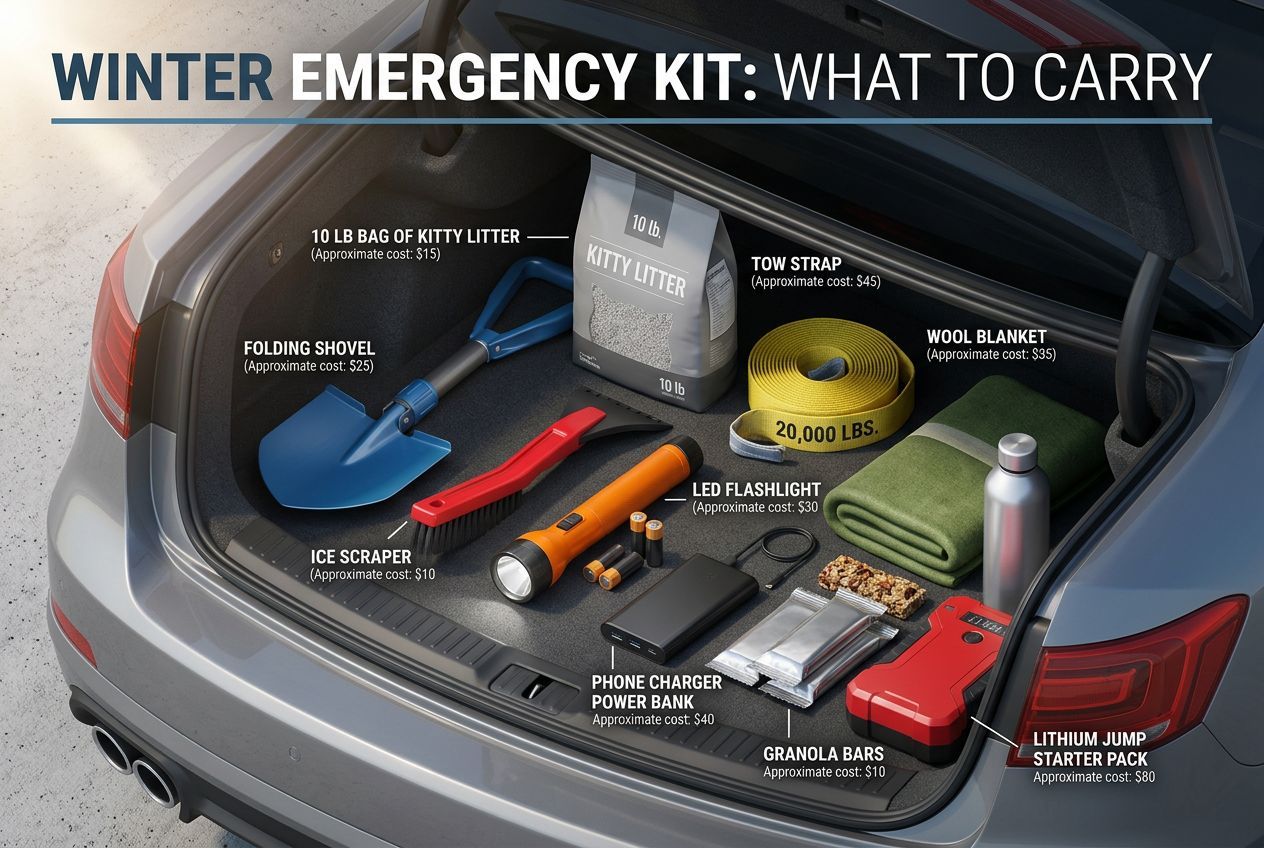
- Carry a winter kit: kitty litter, small shovel, tow strap, blanket
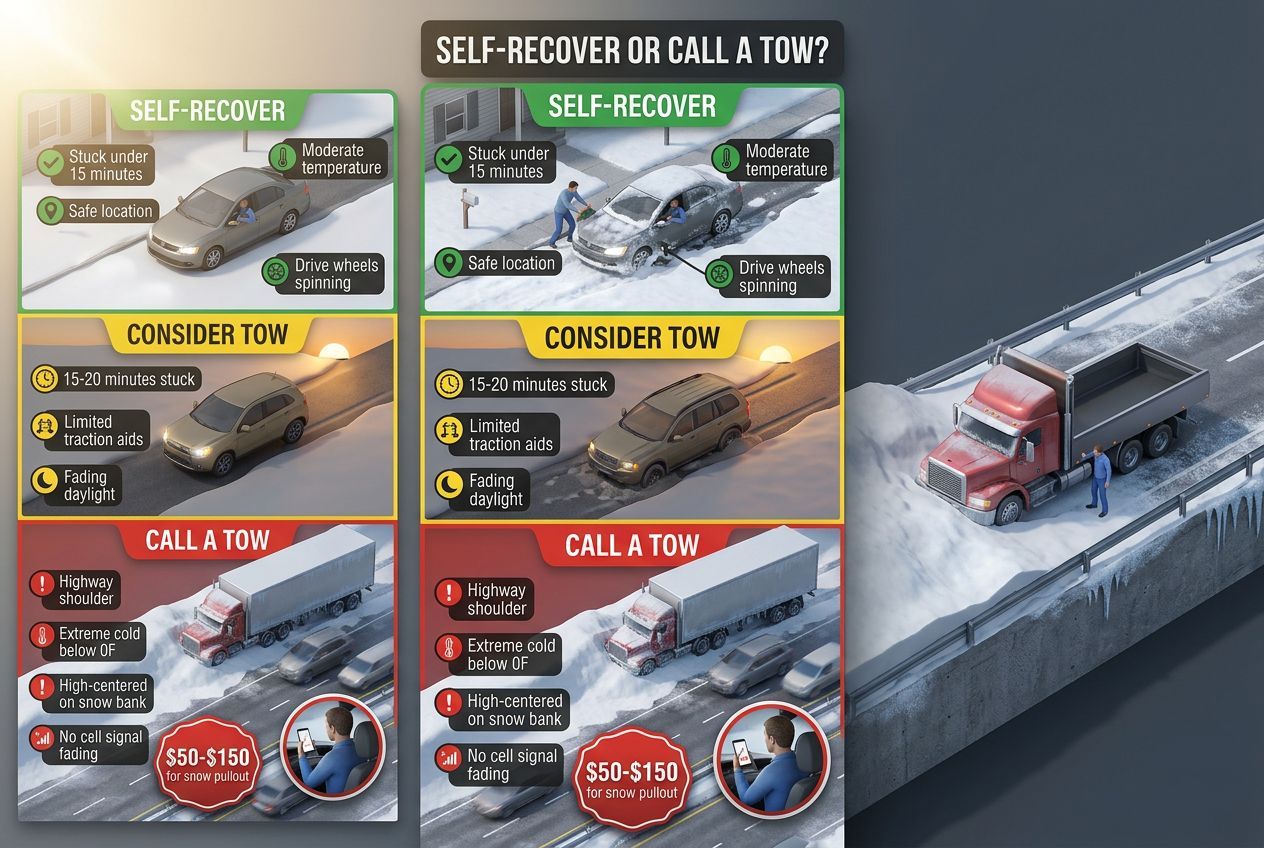
- Call a tow truck after 15-20 minutes of failed attempts — pullout costs $50-$150
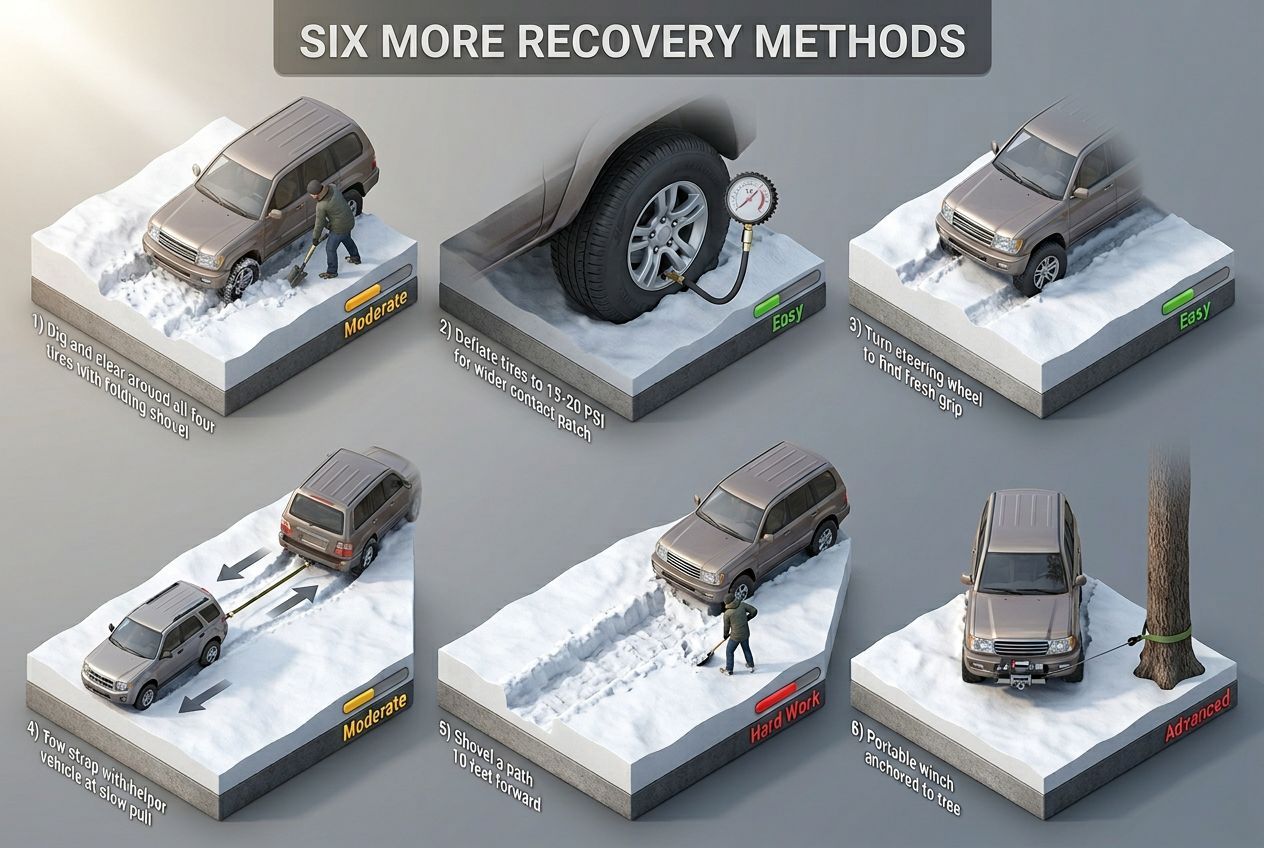
Getting stuck in snow happens to everyone eventually — it doesn't require a blizzard. A slightly icy parking lot, an unplowed residential street, or a packed-down rut at the end of your driveway can trap a vehicle in seconds. The good news is that most snow-stuck situations are recoverable without a tow truck. The key is using the right technique for your specific situation and knowing when to stop trying before you make things worse.
If self-recovery fails or conditions are dangerous, roadside assistance or a tow truck's winch-out service typically costs $50-$150 for a snow pullout.
How Does the Rocking Technique Work?
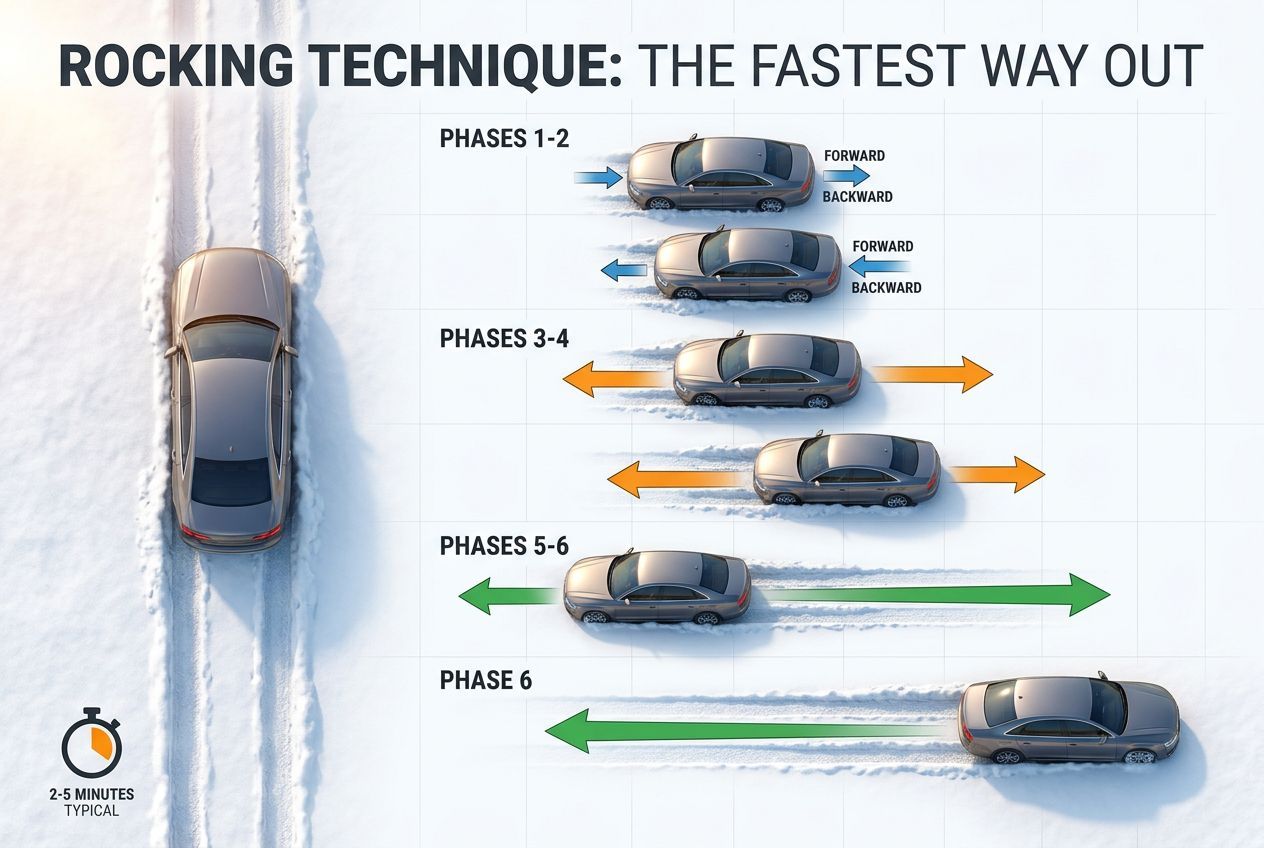
The rocking method is the most effective no-equipment technique for getting a car unstuck from snow. It uses the vehicle's own momentum to gradually work free from the stuck position.
Step 1: Clear snow from around the drive wheels as much as possible with your hands, a scraper, or a small shovel. The less snow the tires need to push through, the easier the recovery.
Step 2: Turn off traction control. Traction control cuts power when it detects wheel spin, which prevents the controlled momentum building that rocking requires. There's usually a button on the dashboard or center console labeled "TC," "ESC," or a car-with-wavy-lines icon.
Step 3: With the engine at idle or barely above, shift into drive and gently press the gas. Don't floor it — you want the wheels turning slowly, not spinning wildly. Let the car move forward as far as it will naturally go, then immediately release the gas.
Step 4: As the car starts to roll backward from its own momentum, shift into reverse and gently apply gas. Let it roll back as far as it goes. Then shift back to drive and repeat.
Step 5: Each rock cycle extends the forward and backward motion slightly. After 3-8 cycles, the motion builds enough momentum to carry the vehicle out of the rut and onto firmer ground.
Step 6: Once free, turn traction control back on immediately.
Common Mistake: Spinning the tires at high RPM. This digs the tires deeper into the snow, melts the surface into ice, and makes the situation worse. Low RPM, gentle throttle, and patience. If the tires are spinning freely without the car moving, you're giving too much gas.
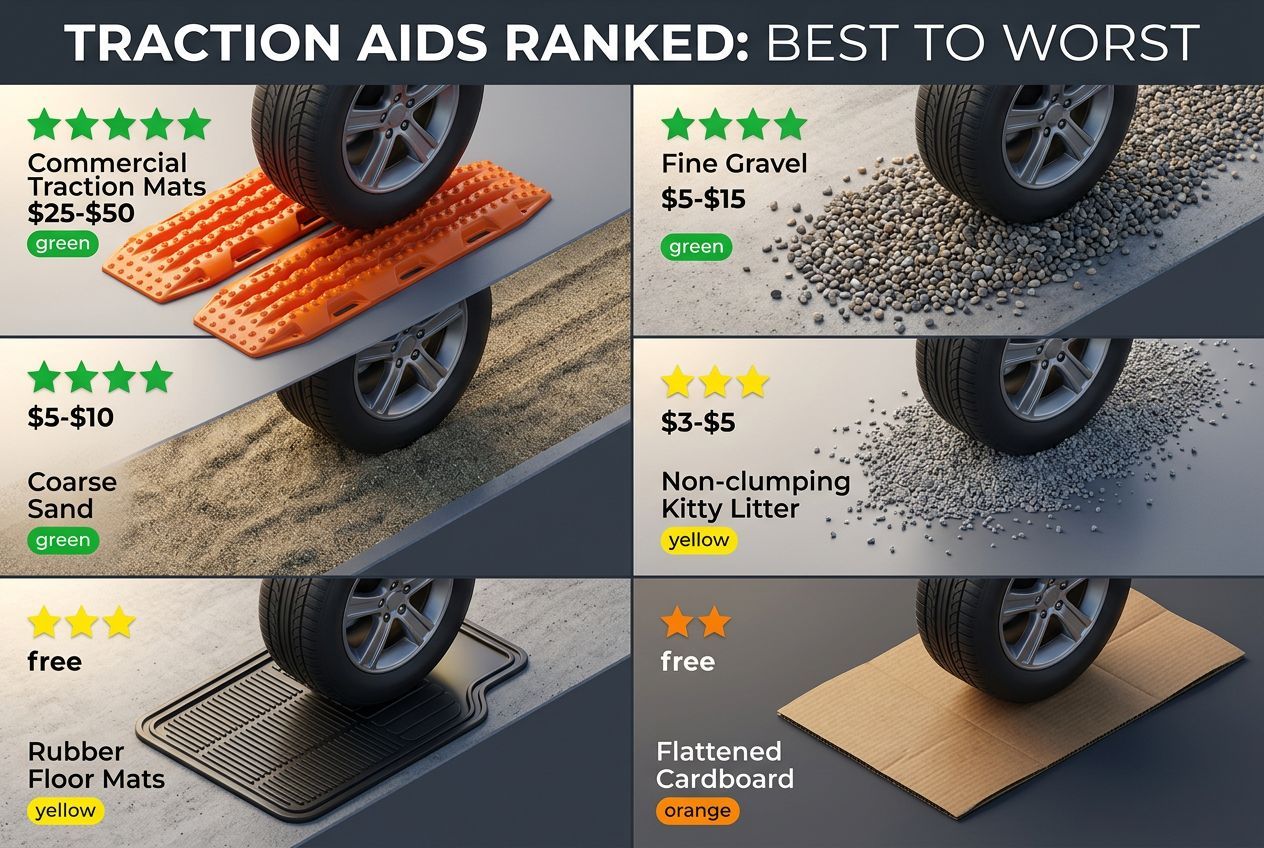
What Can You Put Under the Tires for Traction?
When rocking alone doesn't work, adding a traction surface under the drive wheels gives the tires something to grip. Use whatever's available — effectiveness matters more than elegance.
Best traction aids (ranked by effectiveness):
-
Dedicated traction mats ($20-$50) — purpose-built rubber/polymer mats with aggressive grip surfaces. Keep a pair in the trunk all winter.
-
Sand or road salt — spread a generous layer in front of and behind the drive wheels. Sand provides physical grit; salt melts the ice layer. A 10 lb bag of each costs under $10 at any hardware store.
-
Non-clumping kitty litter — clay-based kitty litter creates a gritty surface similar to sand. Non-clumping is important — clumping litter turns to paste when wet and makes things worse.
-
Floor mats — place rubber floor mats directly under the drive wheels, rubber side up. The textured surface provides traction. You may destroy the mats, but they got you out.
-
Cardboard — flattened cardboard boxes placed under the drive wheels provide surprising traction on packed snow. Not as durable as rubber but works for a single recovery.
-
Fine gravel or dirt — if you can find exposed gravel or dirt nearby, shovel it under the wheels. Even a thin layer dramatically improves traction on ice.
Know which wheels are your drive wheels. Front-wheel-drive (most sedans and crossovers) — place traction aids under the front wheels. Rear-wheel-drive (most trucks) — under the rear. AWD/4WD — under all four, but prioritize the front.
Pro Tip: Carry a 10 lb bag of non-clumping kitty litter in the trunk during winter. It costs $4, adds helpful weight over the rear axle (good for RWD vehicles), and gives you a traction aid in any snow-stuck situation. Replace it annually — old litter absorbs moisture and clumps.