Skip to content
🚐 RV & BOAT TOWING

How Much Does a Boat and Trailer Weigh? (By Boat Size)

Published · Updated · 11 min read
MarkUpdated May 10, 2026NHTSA

💡 Key Takeaway:

  • Combined boat and trailer weight ranges from ~1,000 lbs for a small Jon boat to over 12,000 lbs for a 26–30 ft cabin cruiser
  • Always use wet weight (fuel + gear + motor), not dry weight, when comparing to your tow vehicle's capacity
  • Tongue weight should be 10–15% of total trailer weight — too little causes sway, too much overloads your hitch
  • Fiberglass hulls run 30–40% heavier than comparable aluminum hulls, which changes your tow vehicle requirements significantly
  • If your loaded rig tops 9,900 lbs, a half-ton truck won't cut it — you need at least a ¾-ton

💰
RV & BOAT TOWING

How Much Does a Boat and Trailer Weigh on Average?

Typical Recreational Setups: The average boat and trailer weight for most recreational setups falls between 2,500 and 8,000 pounds. A typical 17–19 ft fiberglass bowrider on a single-axle trailer weighs approximately 4,000–5,500 lbs once you add fuel and gear. Actual combined boat and trailer weight depends on hull material, engine size, and whether you're running a single- or tandem-axle trailer.

Real-World Example: Here's a real-world example that catches a lot of first-time buyers off guard, illustrating how quickly weight adds up:

✅ Pro Tip: When calculating your boat's real-world towing weight, always factor in all fluids and gear, not just the manufacturer's dry weight.

  • You buy a 19 ft bowrider listed at 3,200 lbs dry weight.
  • Add a 150-HP outboard: roughly 450 lbs.
  • Add 30 gallons of fuel: at 6.1 lbs per gallon, that's ~183 lbs.
  • Add safety gear, a cooler, and four life vests: approximately 150 lbs.
  • Boat total (wet): ~4,000 lbs.
  • Throw on a single-axle roller trailer: 650 lbs.
  • Total Towing Weight: You're already at 4,650 lbs before you've added passengers or cargo to the tow vehicle.

That's a number your midsize SUV might technically handle — but you'll be near its ceiling.

For a complete framework on matching your rig to the right truck, check our boat towing guide.
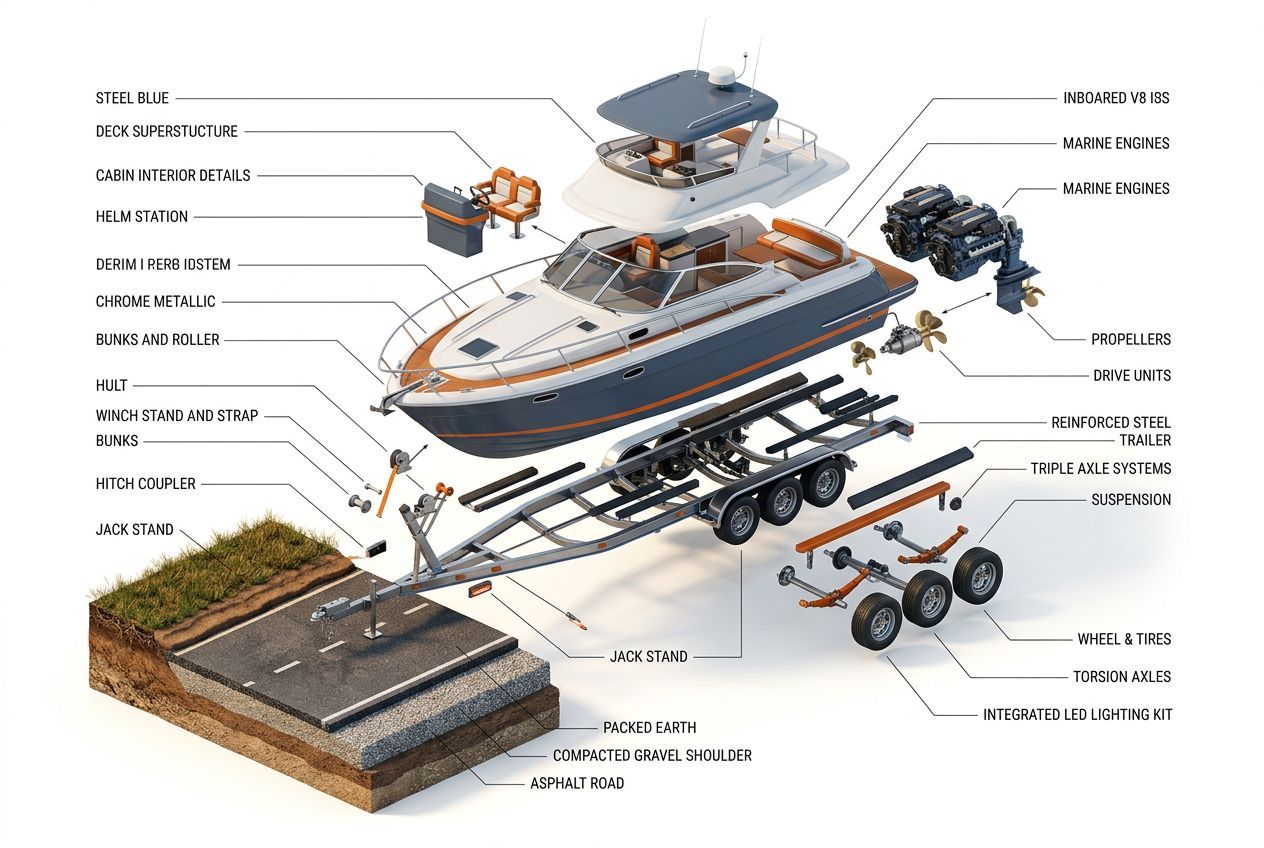

Exploded diagram of boat and trailer weight components by boat size
📊
RV & BOAT TOWING

How Much Does a 20-Foot Boat and Trailer Weigh?

Understanding the 20-Foot Class: A 20-foot boat and trailer combined weight typically lands between 4,500 and 6,500 pounds. Fiberglass hulls sit at the upper end of that range, while aluminum boats of the same length come in around 3,800–5,000 lbs with trailer. A full fuel tank and outboard motor alone can push the total 500–1,000 lbs beyond the manufacturer's dry spec.

Tow Vehicle Considerations: The 20 ft class is one of the most popular search queries on this topic — and for good reason. It's right at the inflection point where some SUVs tap out and half-ton trucks take over.

⚠️ Warning: A 2026 Ford Explorer's maximum tow rating is 5,600 lbs. A loaded 20 ft fiberglass boat rig at 6,200 lbs exceeds that by 600 lbs — which according to NHTSA safety guidelines means you're operating outside the vehicle's tested envelope. That's not a gray area. That's a liability and a safety issue.

If you're shopping trucks for a boat in this size class, our guide to best trucks for RV and boat towing breaks down which half-tons have enough headroom.


🔧
RV & BOAT TOWING

What Is a Boat and Trailer Weight Chart by Size?

Decoding the Weight Chart: A boat and trailer weight chart organizes combined weights by hull length, making it easy to match your rig to the right tow vehicle. Weights below represent typical loaded combinations — hull, motor, trailer, fuel, and minimal gear. These are not dry weights.

Use our RV and boat tow estimator to check your specific setup against your vehicle's rated capacity.

What Is a Boat and Trailer Weight Chart by Size? — data table
Boat Length Typical Boat Type Combined Weight (Loaded) Trailer Type Recommended Tow Vehicle
12–14 ft Jon boat / kayak trailer 800–1,500 lbs Single-axle Most SUVs / midsize trucks
14–16 ft Aluminum fishing boat 1,500–2,500 lbs Single-axle Midsize SUV or crossover
16–18 ft Bass boat / ski boat 2,800–4,200 lbs Single-axle Full-size SUV or half-ton truck
18–20 ft Fiberglass bowrider 4,000–5,500 lbs Single-axle Half-ton truck (F-150, Ram 1500)
20–22 ft Pontoon / deck boat 4,200–6,500 lbs Single or tandem-axle Half-ton truck
22–24 ft Deck boat / walkaround 5,500–7,500 lbs Tandem-axle Half-ton truck (higher trim)
24–26 ft Walkaround / cuddy 6,500–8,500 lbs Tandem-axle ¾-ton truck (F-250, Ram 2500)
26–30 ft Cabin cruiser 8,000–12,000+ lbs Tandem-axle 1-ton truck minimum

Source: Weight ranges compiled from manufacturer spec sheets and Kelley Blue Book vehicle listing data. Individual weights vary by builder and configuration.
Try Our Free RV/Boat Tow Weight Estimator

Plug your specific boat and trailer combination into our RV and boat tow estimator to instantly see whether your tow vehicle has enough capacity — including tongue weight and payload headroom.


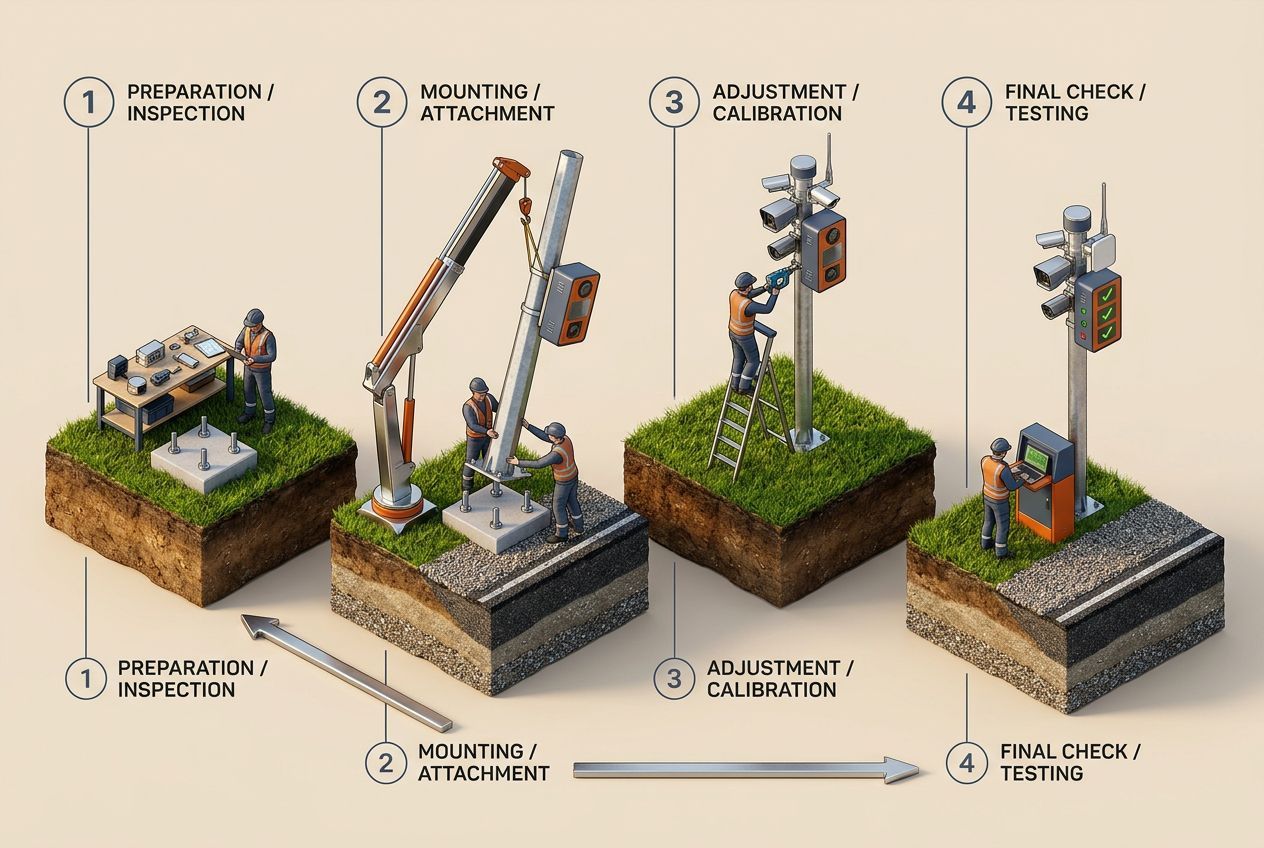
Step-by-step guide to calculating combined boat and trailer weight
🛡️
RV & BOAT TOWING

How Much Does a Pontoon Boat and Trailer Weigh?

Pontoon Weight Ranges: A pontoon boat and trailer weigh between 3,500 and 7,000 pounds for most recreational models. A standard 20 ft pontoon with a 115-HP outboard on a single-axle bunk trailer averages around 4,200 lbs dry — add fuel and gear and you're looking at 4,600–5,000 lbs realistically. Tri-toon models with larger outboards and tandem-axle trailers push well past 6,000 lbs.

Pontoons Can Be Deceiving: Pontoons are deceiving. Their wide aluminum decks look light, but once you factor a 200–250 HP outboard (which can weigh 550+ lbs) plus a heavier tandem-axle trailer (~1,200 lbs), the math changes fast.

💡 Key Takeaway: A 24 ft tri-toon rig can hit 7,200–7,500 lbs loaded — territory that requires at minimum a well-specced half-ton truck, and realistically a ¾-ton like a Chevrolet Silverado 2500HD or Ford F-250.

⚠️ Warning: If you're in Connecticut or Massachusetts, state law requires trailer brakes on any trailer exceeding 3,000 lbs gross weight. A loaded pontoon rig almost always clears that threshold. Check towing laws by state before you hitch up.


📋
RV & BOAT TOWING

How Do You Calculate Boat Tongue Weight for Towing?

The Importance of Tongue Weight: Boat tongue weight should be 10–15% of the total loaded trailer weight for safe, stable towing. On a 5,000-lb rig, that's 500–750 lbs pressing down on your hitch ball. Too little tongue weight causes trailer sway — especially at highway speeds or when a semi passes you. Too much overloads your truck's rear axle and kills steering response.

✅ Pro Tip: Measuring Tongue Weight To measure tongue weight without a dedicated scale: place a bathroom scale on a block of wood at hitch height, rest the trailer coupler on it, and read the number. Multiply a lever-arm reading if needed for heavier loads. A proper tongue weight scale (Sherline, Blue Ox) runs about $30–$50 and gives you a direct readout at the coupler.

✅ Pro Tip: Adjusting Tongue Weight Adjust tongue weight by sliding cargo forward or backward on the trailer. On a boat trailer, a heavier outboard already pulls weight to the stern — counteract that by positioning the boat slightly forward on the bunks if your trailer allows it.

⚠️ Warning: According to FMCSA cargo securement guidelines, improper weight distribution is a leading factor in trailer-related accidents. Getting tongue weight right isn't just about ride quality — it's a safety issue. Use our towing capacity lookup tool to confirm your vehicle's tongue weight rating before you load up.


Boat and trailer weight comparison across different boat sizes and types
⚙️
RV & BOAT TOWING

What Tow Vehicle Do I Need for My Boat and Trailer?

Matching Vehicle to Rig: The right tow vehicle depends on your total boat and trailer weight — including passengers and cargo in the cab. A midsize SUV like a Toyota Highlander handles rigs up to about 5,000 lbs. Half-ton trucks (F-150, Ram 1500, Silverado 1500) manage 6,000–9,900 lbs depending on configuration. Beyond that, you need a ¾-ton or 1-ton truck.

Understanding Towing Limits: Here's the honest caveat: the F-150 tops out at 9,900 lbs, and that ceiling is firm. If your loaded fiberglass cuddy or center console hits 10,500 lbs, a half-ton isn't your truck.

📊 Quick Fact: A 2026 Ram 2500 with a 6.4L HEMI is rated to 16,550 lbs — more than enough headroom, with real margin for mountain grades and hot summer days.

⚠️ Warning: Towing at Altitude At 7,000 feet in Colorado or Utah, a naturally aspirated engine loses roughly 3% of its power per 1,000 feet above sea level. That means a half-ton towing near its rated capacity in the Rockies is working with effectively 15–20% less power than its sea-level spec. Give yourself margin. Our towing in mountains guide covers this in depth.

✅ Pro Tip: Don't Forget Payload! A truck rated to tow 9,000 lbs might only have 1,400 lbs of payload. With a 700-lb tongue weight, two passengers, and a full fuel tank, you can burn through that budget fast. Use our payload calculator to check before you commit to a rig. For a broader look at matching trucks to trailers, see our towing capacity guide.


🚛
RV & BOAT TOWING

What Is the Difference Between Dry Weight and Wet Weight for Boats?

Dry vs. Wet: A Critical Distinction: Dry weight is the boat's factory weight with no fuel, water, or equipment onboard. Wet weight — sometimes called "ready-to-run" weight — includes all fluids, the battery, and typical onboard gear. The gap between the two is often 500–1,500 lbs, sometimes more on larger boats with livewells, baitwells, or built-in fuel tanks.

Why Wet Weight Matters: Manufacturers advertise dry weight because it's the lowest number they can publish. But you'll never tow a dry boat.

💡 Key Takeaway: A 22 ft walkaround with a 150-gallon fuel capacity at full load adds 913 lbs of gas alone (150 × 6.1 lbs/gallon). Add two fishermen's worth of gear, a trolling motor, an anchor, and dock lines — you're looking at a real-world weight that's 1,200–1,500 lbs heavier than the spec sheet shows.

When you're comparing boats to your tow vehicle's capacity, always start with wet weight plus trailer weight. If you can't find wet weight in the manufacturer's documentation, add 15–20% to the dry figure as a conservative buffer. Our camper and boat towing capacity guide walks through this calculation for multiple vehicle classes. For a broader look at trailer weight considerations, see our dedicated piece on how much a boat trailer weighs.


Safety inspection points for towing a boat and trailer safely

Sources & Methodology

  1. 1.
    NHTSA — Vehicle safety ratings and weight specifications used to validate tow vehicle recommendations: https://www.nhtsa.gov
  2. 2.
    FMCSA — Cargo securement and trailer weight distribution guidelines referenced for tongue weight safety section: https://www.fmcsa.dot.gov
  3. 3.
    Kelley Blue Book — Manufacturer spec sheets and listed vehicle weights cross-referenced for boat and trailer weight ranges: https://www.kbb.com
  4. 4.
    Edmunds — Tow vehicle ratings and configuration-specific towing capacity figures used for vehicle matching section: https://www.edmunds.com
  5. 5.
    Ford, Ram, Chevrolet manufacturer towing guides — Published GVWR, GCWR, and tongue weight limits for specific model year trucks cited throughout: https://www.ford.com | https://www.ramtrucks.com | https://www.chevrolet.com

Weight ranges in the data table represent averages compiled from published manufacturer dry weights, trailer builder specifications, and fuel/gear load estimates. Individual configurations will vary. Always verify your specific rig's weight on a certified scale before towing.

TowingServiceHub is reader-supported: we may earn money from ads and from some links on this page. See our editorial policy.

Mark — Founder & Editor

Mark

Founder & Editor

Mark is the founder and editor of TowingServiceHub, which he launched in 2026 after struggling to find clearly sourced towing costs and truck specs. He works in enterprise technology and tows his own boats, trailers, and equipment, so he knows the questions drivers actually ask.

Read full bio →

Need a tow truck right now?

Browse vetted local providers in your area. Real Google ratings, verified business info, free to use.

Or browse all 50 states from our directory

Frequently Asked Questions

Most first-time buyers purchase 16–20 ft boats, putting their loaded boat and trailer weight between 3,000 and 5,500 lbs. A half-ton truck or full-size SUV handles this range comfortably, but always verify your specific vehicle's tow rating and payload capacity before purchase.

Yes — fiberglass hulls typically run 30–40% heavier than comparable aluminum hulls. A 17 ft aluminum fishing boat and trailer might weigh 2,800 lbs loaded, while a similar-length fiberglass model hits 3,800–4,200 lbs. That difference can determine whether a midsize SUV works or a truck becomes necessary.

A bass boat and trailer combination typically weighs 2,800–4,200 lbs loaded. A 17 ft fiberglass bass boat with a 150-HP outboard on a single-axle aluminum trailer usually runs around 3,400–3,800 lbs with fuel — well within a half-ton truck's towing capacity with margin to spare.

Most states require trailer brakes when gross trailer weight exceeds 3,000 lbs. Some states set the threshold at 1,500 lbs. Since most boat trailers in the 18 ft-and-up class exceed 3,000 lbs loaded, brakes are typically required. Check the towing laws by state tool for your specific jurisdiction.

Generally, no — not safely. A loaded 24 ft walkaround or cuddy cabin and trailer weighs 6,500–8,500

Related Articles

Explore More Towing Guides

Browse all 157 expert guides and 10 free tools.