🔧
TOW TRUCK TYPES & METHODS
What Vehicles Can You Tow with a Tow Dolly?
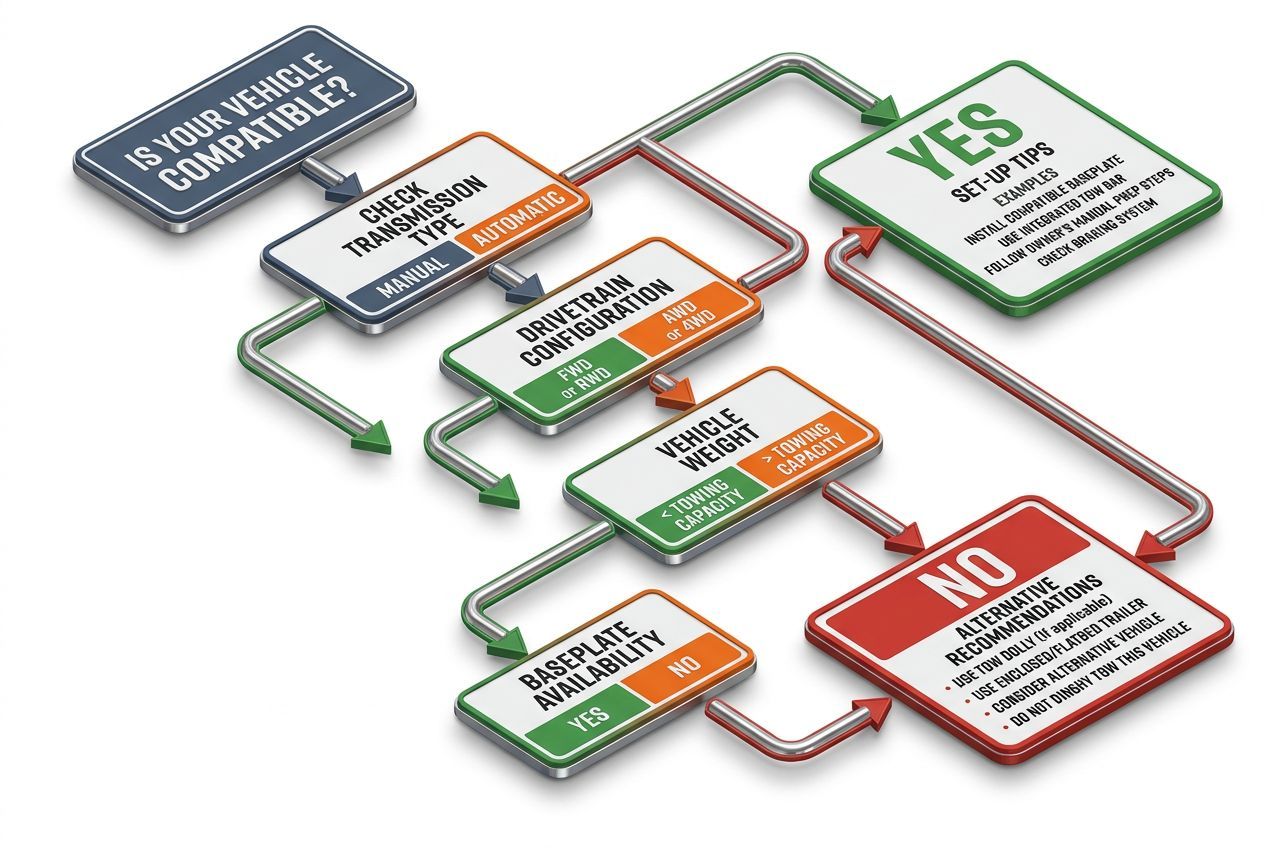
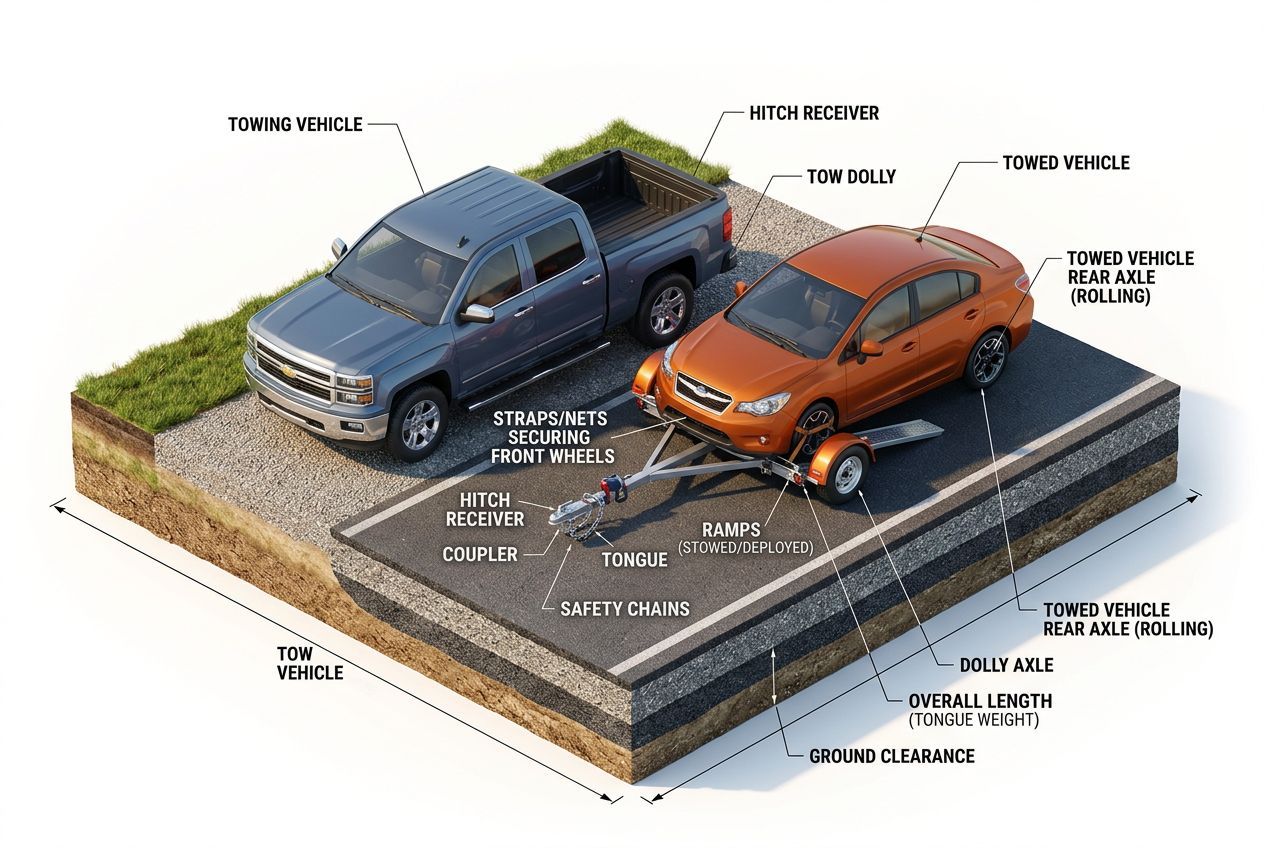
Compatibility Guidelines: A tow dolly is designed to safely handle front-wheel-drive (FWD) cars and some small trucks. The vehicle's weight must be under 3,500 to 5,000 pounds, depending on the dolly's specific Gross Vehicle Weight Rating (GVWR) stamped on its frame. Most compact and midsize FWD sedans, such as the Honda Civic, Toyota Corolla, Chevrolet Malibu, or Ford Fusion, typically qualify. Many FWD crossovers may also fall within range, but always verify the curb weight against the dolly's rating.
Worked Example:
✅ Pro Tip: Always perform a quick weight check. If you're dolly-towing a 2022 Honda Civic Sport weighing 2,877 lbs and your dolly is rated 5,000 lbs GVWR with an empty weight of 600 lbs, your gross load on the hitch would be approximately 3,477 lbs. This is well within range for a Class III receiver rated at 6,000 lbs GTW. Remember to also check your tow vehicle's payload and tongue weight ratings.
Limitations and Exclusions:
- Rear-Wheel-Drive (RWD) Vehicles: While technically possible, towing RWD vehicles with a dolly requires disconnecting the rear driveshaft. This adds complexity and a significant risk of damage if overlooked.
- Trucks and Full-Size SUVs: These vehicles frequently exceed standard dolly weight limits and typically necessitate a full car trailer or flatbed setup.
- Electric Vehicles (EVs): Most EVs feature All-Wheel Drive (AWD) and regenerative braking systems that are not designed for passive rolling on a dolly. A flatbed trailer is almost always the recommended and safest option for EVs.
🛡️
TOW TRUCK TYPES & METHODS
Can You Use a Tow Dolly with an AWD or 4WD Vehicle?
Critical Warning for AWD/4WD: You absolutely cannot safely use a standard tow dolly with All-Wheel Drive (AWD) or 4-Wheel Drive (4WD) vehicles. When the front wheels are lifted, the rear wheels spin on the road. In most AWD and 4WD systems, these rear wheels are mechanically connected to the front through a transfer case and differential. Spinning the rear axle without the engine running means the transmission and rear differential operate without essential oil circulation.
⚠️ Warning: According to AAA repair data, this type of drivetrain damage can cost $3,000–$8,000 to fix, far exceeding the cost of alternative towing methods. This is not a gray area; it's a firm incompatibility.
Approved Options for AWD/4WD Vehicles: If your vehicle is AWD or 4WD, you have only a few safe options:
- Flatbed Trailer: This method lifts all four wheels off the ground, ensuring zero drivetrain rotation and eliminating any risk of damage.
- Flat Towing (Dinghy Towing): This involves towing the vehicle with all four wheels on the road, but it only works for vehicles that the manufacturer explicitly approves for flat towing.
- Supplemental Lubrication Pump: This is a rare, expensive, and highly vehicle-specific solution used in certain situations to provide lubrication during towing.
The flat towing guide covers which vehicles are manufacturer-approved for dinghy towing and what equipment you need. If you're not sure which method fits your situation, the choosing the right tow method guide walks through the decision tree clearly.
📋
TOW TRUCK TYPES & METHODS
How Do You Load and Secure a Car on a Tow Dolly?
Proper Loading is Key: Loading a car onto a tow dolly typically takes about 10–15 minutes when following a consistent and correct sequence. Failing to do so can lead to serious risks, such as the car rolling off mid-trip or the dolly swaying unpredictably at highway speeds.
Step-by-step loading procedure:
- Position the Dolly: Place the dolly on level ground and make sure to chock its wheels to prevent movement.
- Align the Towed Vehicle: Line up the vehicle you intend to tow straight in front of the dolly's ramp entry. Even a slight angle (e.g., 5 degrees) can make centering much more difficult.
- Drive onto Ramps: Drive slowly forward until both front tires are fully seated in the ramp cradles. It's highly recommended to have a spotter to watch tire placement.
- Center the Vehicle: Ensure the vehicle is centered left-to-right, with the middle of the front axle aligning with the dolly's center pin.
- Secure the Tires: Engage ratchet straps or basket tie-downs over each front tire. Tighten them snugly, but avoid overtightening, as this can deform tire sidewalls.
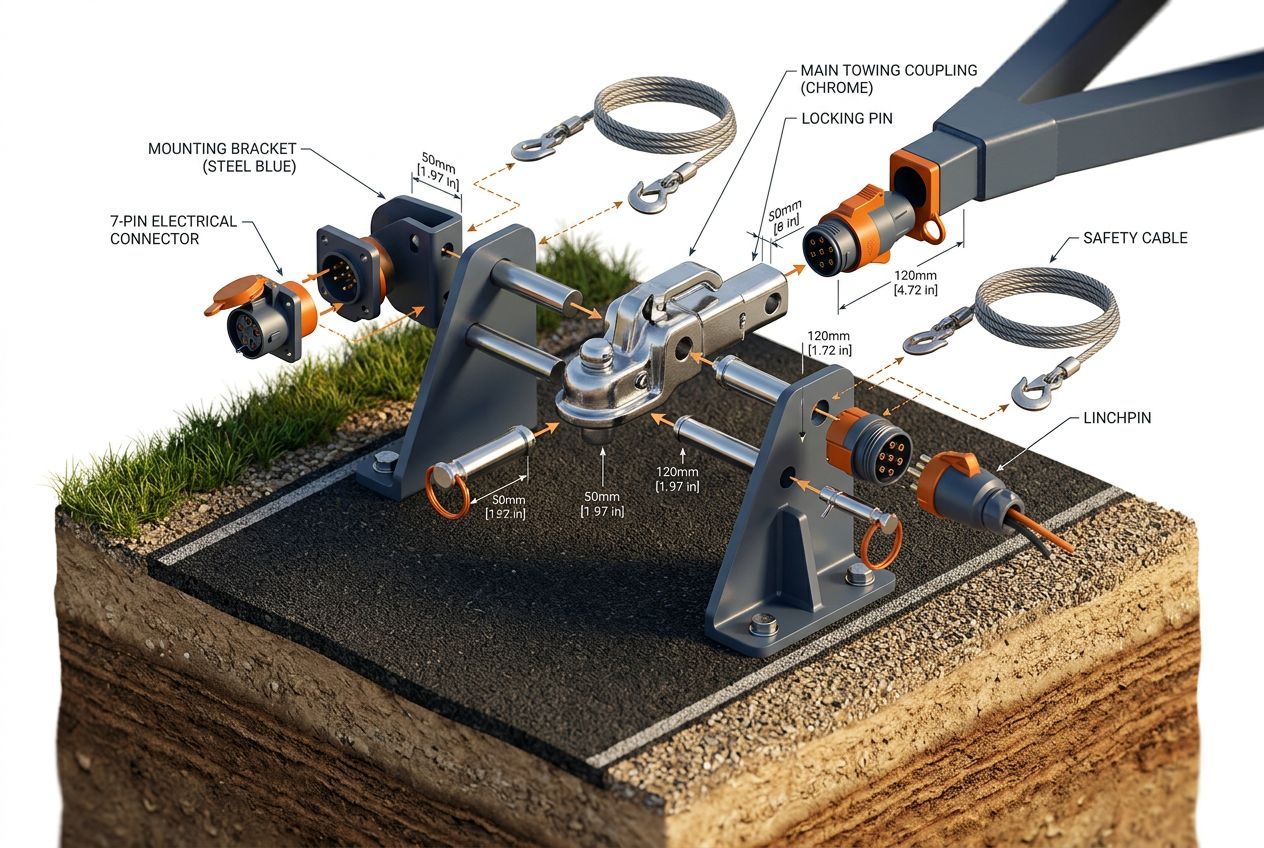
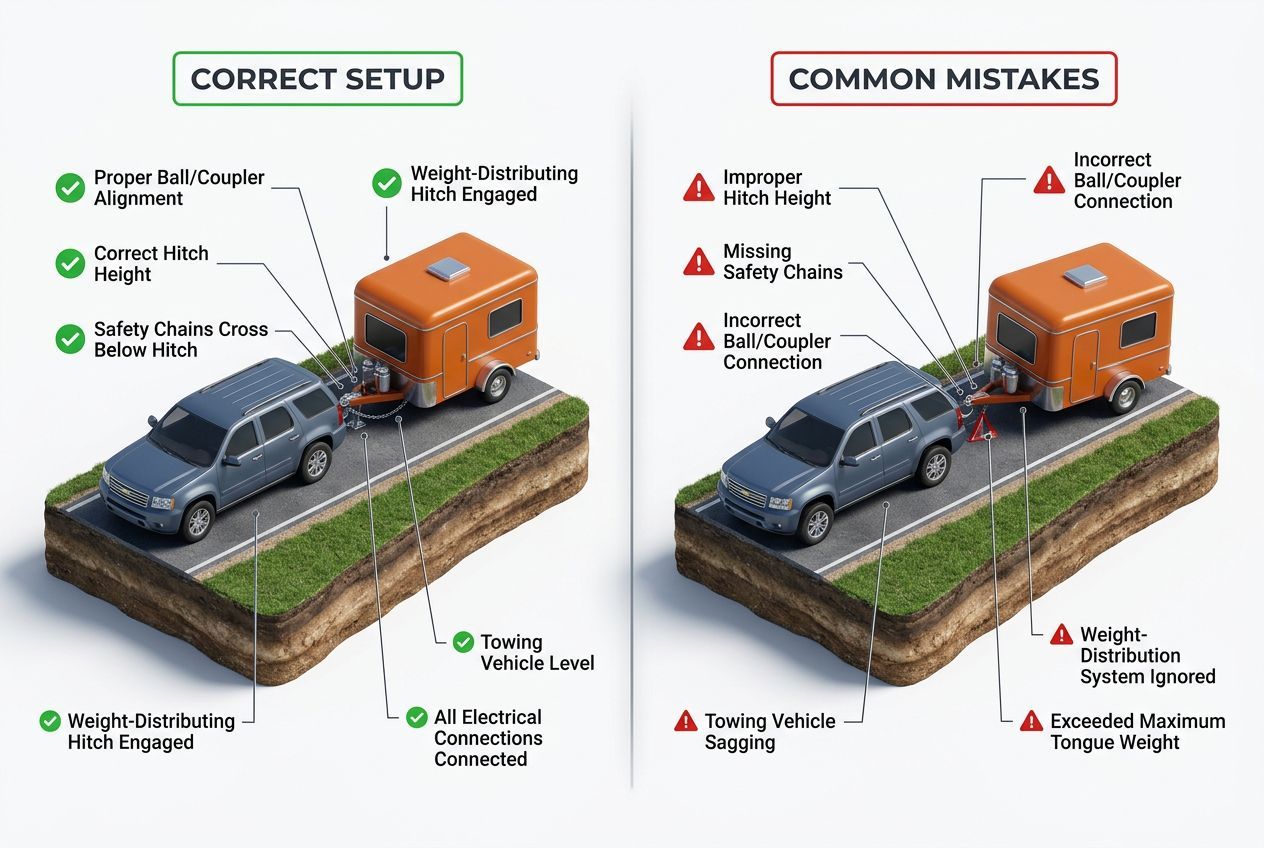
- Attach Safety Chains: Connect safety chains in a crossing X-pattern from the dolly frame to the tow vehicle's chain hooks.
- Connect Lighting Harness: Plug in the 4-pin or 7-pin lighting harness and verify that the brake lights, turn signals, and running lights are all functional.
- Set Towed Vehicle: Place the towed vehicle in neutral (not Park) and release the parking brake. Leaving it in Park will lock the wheels and can cause tire flat-spotting on longer trips.
- Final Walk-Around: Before pulling out, perform a complete walk-around, visually inspecting all connections and giving each strap a firm tug to confirm security.
Considerations for Rear-End Exposure: One inherent limitation of tow dollies is that they leave the towed car's rear end largely exposed. This means the rear bumper and exhaust can be vulnerable to road debris, particularly on gravel or uneven surfaces. For classic cars or low-clearance vehicles, a flatbed trailer eliminates this risk entirely. The flatbed vs wheel-lift comparison is worth reviewing if you are weighing both options.
⚙️
TOW TRUCK TYPES & METHODS
Tow Dolly vs Car Trailer: Which Is Better?
Tow Dolly Advantages: A tow dolly often wins in terms of cost, weight, and storage convenience. A full car trailer adds a significant empty weight of 1,500–3,000 lbs, costs considerably more to rent, and demands more parking space for storage. For occasional towing of a light FWD sedan across a few states, a dolly rental is typically the more practical and budget-friendly choice.
Car Trailer Advantages: A car trailer, however, offers superior versatility and a greater margin of safety. With all four wheels off the ground, drivetrain damage is impossible, regardless of the vehicle type. This allows you to safely tow AWD crossovers, RWD muscle cars, heavier trucks, and higher-value vehicles without the compatibility concerns. The dolly towing guide overview sits alongside the full tow truck types pillar if you want to compare every method side by side.
Quick Comparison:
Tow Dolly vs Car Trailer: Which Is Better? — data table
| Feature |
Tow Dolly |
Car Trailer (Flatbed) |
| Cost |
Lower rental/purchase cost |
Higher rental/purchase cost |
| Weight |
Lighter empty weight |
Significantly heavier empty weight |
| Storage |
Requires less parking space |
Requires more parking space |
| Vehicle Type |
Best for FWD vehicles (under 5,000 lbs) |
Versatile (AWD, RWD, heavy, high-value vehicles) |
| Drivetrain |
Risks for AWD/4WD, RWD (if driveshaft not removed) |
No drivetrain risk (all wheels off ground) |
| Clearance |
Rear end exposed to road debris |
All vehicle parts protected from road debris |
The Short Version:
- Use a tow dolly for budget-conscious, occasional towing of light FWD vehicles.
- Use a trailer when the vehicle is AWD, RWD, heavy, or high-value.
🚛
TOW TRUCK TYPES & METHODS
Do You Need a Special License or Insurance to Use a Tow Dolly?
Licensing Requirements: Most drivers do not need a special license to tow with a dolly. According to FMCSA regulations (www.fmcsa.dot.gov), a Commercial Driver's License (CDL) is only required when the gross combined weight rating exceeds 26,001 lbs—a threshold that a personal tow dolly setup will almost never approach.
Registration and Lighting: Registration and lighting requirements, however, vary significantly by state. Roughly 20+ states, including California, Texas, and Florida, mandate that a tow dolly must have its own license plate and registration. Many Midwestern states, conversely, exempt dollies under a certain weight.
✅ Pro Tip: Before you hitch up, always check the towing laws by state tool for your specific state's requirements. Operating an unregistered dolly where registration is required can result in a roadside citation or a failed inspection, particularly when crossing state lines.
Insurance Coverage: Many standard personal auto policies cover the tow vehicle but do not automatically extend coverage to the vehicle being transported on a dolly. This is a separate consideration from trailer liability.
⚠️ Warning: Always call your insurer before your trip to confirm what is covered and specifically inquire about the dolly-towed vehicle. If your policy has a gap, a short-term endorsement or the rental company's damage waiver can provide crucial coverage.
Importance of Surge Brakes: For mountain routes, a dolly equipped with surge brakes is a worthwhile investment, whether renting or buying. Surge brakes engage automatically when the tow vehicle decelerates, effectively cutting stopping distance by 20–30% compared to brakeless dollies. This difference can be critical on steep descents in challenging terrains like Colorado or the Appalachians.
Key Considerations for Dolly Users: To summarize the remaining points worth knowing:
- Used dolly shopping often peaks in winter when off-season pricing tends to be softer.
- RV owners often prefer dollies for FWD "toad" vehicles towed behind a motorhome, especially since flat-tow approval lists are limited.
- Electric vehicle owners should almost always default to flatbed-only towing given the prevalence of AWD configurations and sensitive drivetrain electronics.
- Always cross-reference the towing capacity guide to confirm your tow vehicle can safely handle the dolly's loaded weight before you hook up.