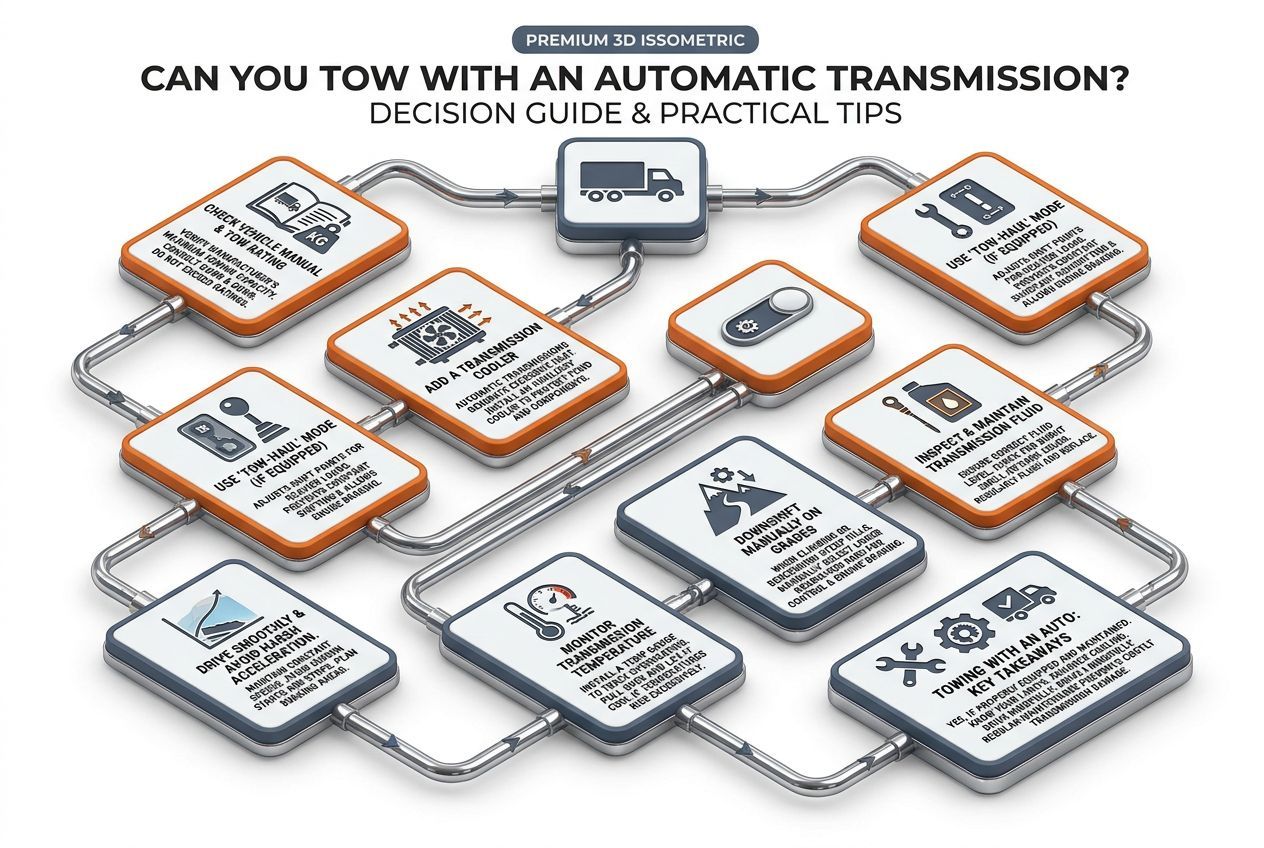
- Most automatic transmissions are NOT safe to flat tow — the engine-driven oil pump stops circulating fluid when the engine is off
- Only vehicles with a two-speed transfer case featuring a true neutral position are typically approved for flat towing with an automatic
- Towing a non-approved automatic in neutral can destroy the transmission in as few as 10–15 miles at highway speed
- A tow dolly lifts the drive wheels clear of the road and is the correct solution for most FWD automatic cars
- Replacement of a damaged automatic transmission runs $3,500–$7,500+, which makes getting this right the first time non-negotiable
Understanding the Challenge: About 98% of new cars sold in the U.S. in 2024 came with automatic transmissions, which means this question matters to nearly every driver who's planning to tow behind an RV or haul a dinghy vehicle. Before you buy a tow bar or hook anything up, you need to understand exactly why this is trickier than it sounds. Our flat towing guide covers the full picture — this article focuses specifically on automatic transmission risks and solutions.
Can You Flat Tow a Car with an Automatic Transmission?
Yes, you can flat tow certain automatic transmission vehicles, but only when the manufacturer explicitly approves four-wheels-down towing for that specific model, trim, and year. The critical factor is whether the drivetrain has a transfer case with a true neutral position that disconnects the driveshaft from the transmission output. Without it, the output shaft, planetary gears, and torque converter rotate with the wheels while the oil pump sits dead.
💡 Key Takeaway: Always check your vehicle's owner's manual for flat towing approval. Do not rely on forum posts or general advice.
Approved Automatic Transmission Vehicles
Popular factory-approved examples include the Jeep Wrangler, Ford Bronco, Chevrolet Colorado 4WD, and Ram 1500 4WD. Each of these uses a two-speed transfer case that isolates transmission internals from driveshaft rotation when placed in the transfer case neutral:
- Jeep Wrangler: NV241 Rock-Trac
- Ford Bronco: BorgWarner TC44
The Jeep Wrangler flat towing guide covers that specific setup in detail.
Vehicles That Cannot Be Flat Towed
What won't work: FWD sedans and crossovers — think Camry, Civic, or Mazda CX-5 — almost never qualify. They have no transfer case to shift to neutral, so the transmission output shaft turns with the front wheels no matter what. Even if you shift the selector to neutral, the internals still rotate dry. Don't do it.
Does Towing Damage an Automatic Transmission?
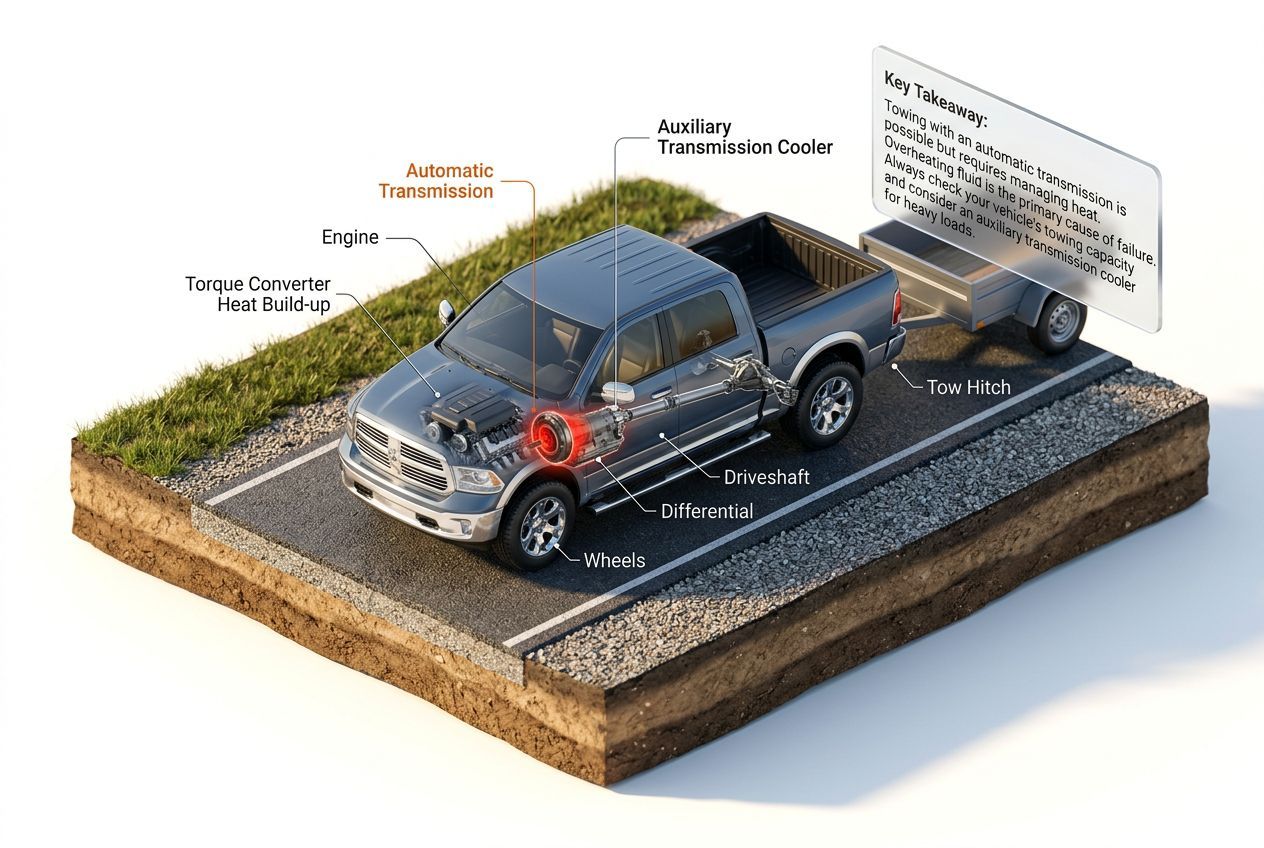
Yes, towing can destroy an automatic transmission if the vehicle isn't approved for flat towing. The hydraulic oil pump that lubricates every automatic is bolted to the front pump housing and driven directly by the torque converter, which is bolted directly to the engine crankshaft. Engine off means pump off — full stop. With the pump dead, planetary gears, clutch packs, and bearings spin at road speed on metal-to-metal contact.
⚠️ Warning: Overheating is one of the primary failure modes in automatic transmissions. According to NHTSA vehicle safety data at nhtsa.gov, transmission fluid can reach damaging temperatures within minutes without proper lubrication.
The Cost of Damage: That $5,000 repair bill for a replacement 8-speed automatic on a mid-size crossover isn't hypothetical — it's a common outcome when someone assumes "neutral means safe." It doesn't, not in an automatic.
The Auxiliary Lube Pump Exception
The one exception: vehicles with a supplemental transmission lubrication pump (sometimes called an auxiliary lube pump). Aftermarket units like the ones made by Remco run $300–$600 installed and use a 12V motor to circulate fluid when the engine is off. Some manufacturers fit these from the factory. If your owner's manual says the vehicle requires an auxiliary pump for flat towing, that's not optional — it's the reason the approval exists.
What Happens If You Tow an Automatic Car in Neutral?
Shifting to neutral does not protect an automatic transmission during flat towing. This is the most dangerous misconception in dinghy towing, and it catches people out every season.
The Mechanical Reality of "Neutral"
Here's the mechanical reality: in a traditional automatic, the "N" selector position disconnects the clutch packs from torque output, but the output shaft — the shaft that connects to the driveshaft or front axle — still rotates with the wheels. The torque converter, input shaft, and pump are stationary, but everything downstream of the valve body is spinning freely. No fluid is being pumped, but components are still moving. At 55 mph, that's roughly 1,500–2,000 rpm on the output shaft with zero lubrication.
The safe call for any non-approved automatic: use a tow dolly or flatbed trailer.
Which Automatic Vehicles Can Be Flat Towed?
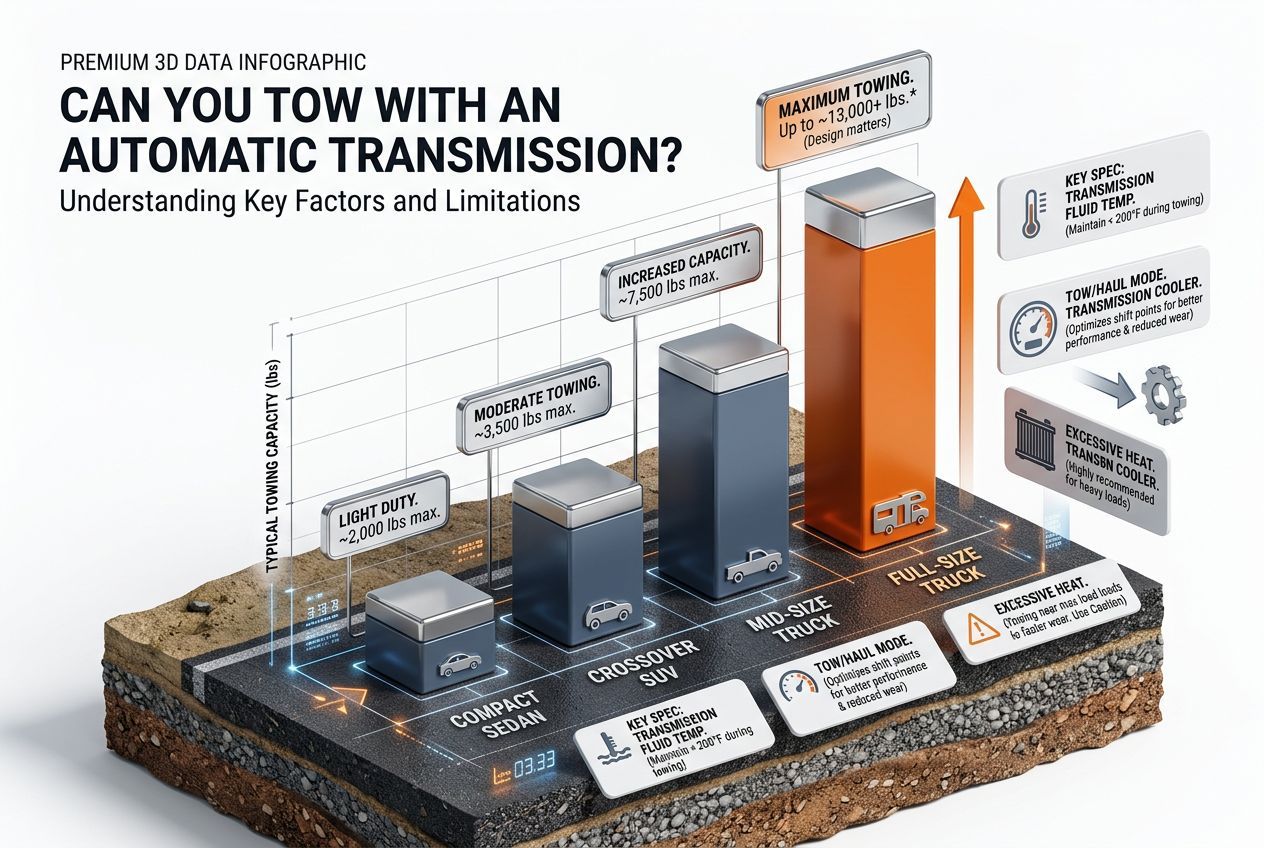
Several automatic transmission vehicles are factory-approved for flat towing, and they share a common trait: a two-speed transfer case with a verified neutral that mechanically decouples the driveshaft from the transmission output shaft. Here's a snapshot of commonly approved models.
| Vehicle | Transfer Case | Transmission | Flat-Tow Approved | Source |
|---|---|---|---|---|
| Jeep Wrangler JL (2018–2025) | NV241 Rock-Trac | 8HP75 8-speed auto | Yes | Jeep Owner's Manual |
| Ford Bronco (2021–2025, 4WD) | BorgWarner TC44 | 10R60 10-speed auto | Yes | Ford Owner's Manual |
| Chevrolet Colorado 4WD (2023–2025) | Autotrak II | 8-speed auto | Yes | GM Trailering Guide |
| Ram 1500 4WD (select trims) | NV244 Active Transfer | 8HP75 8-speed auto | Yes | Ram Owner's Manual |
| Toyota Camry FWD (any year) | None | 8-speed auto | No | Toyota Owner's Manual |
Source: Manufacturer owner's manuals and towing supplements; compiled by TowingServiceHub editorial team, March 2026.
⚠️ Warning: Note that AWD crossovers — even ones with more capable AWD systems — rarely qualify. Vehicles like the RAV4 AWD or Subaru Outback AWD use clutch-based AWD systems that have no true neutral, meaning all four outputs still spin with the wheels. According to Toyota's towing documentation, the RAV4 explicitly prohibits four-wheels-down towing in any drivetrain configuration.
Stay Updated: The most current flat-towable vehicles list is published annually. Our flat-tow compatible vehicles page keeps that list updated by model year.
Do You Need a Tow Dolly for an Automatic Transmission Car?
A tow dolly is the right solution for most automatic transmission cars that aren't approved for flat towing. The dolly cradles the front (drive) wheels off the pavement, which means the transmission output shaft and front axle shafts stop rotating entirely. No spinning components, no lubrication needed.
Tow Dolly for FWD Automatics
For a front-wheel-drive automatic — the most common configuration on sedans and compact crossovers — a tow dolly under the front wheels is both practical and cost-effective.
- Purchase prices run $1,200–$3,500.
- Rental costs from U-Haul are roughly $50–$100 per day.
✅ Pro Tip: For FWD cars, lifting the front wheels (the driven wheels) completely protects the transmission.
Tow Dolly for AWD Automatics
AWD vehicles are a different story. If you lift only the front wheels of an AWD vehicle, the rear wheels (which remain on the ground) may still drive the rear differential and propshaft — potentially back through the transfer case into the transmission. Many AWD manufacturers explicitly prohibit tow dolly use for this reason. A full flatbed trailer is the only compliant option for most AWD cars that aren't approved for flat towing. You can compare your options in detail at our tow bar vs tow dolly breakdown.
Can Vehicles with Automatic Transmissions Be Flat Towed?
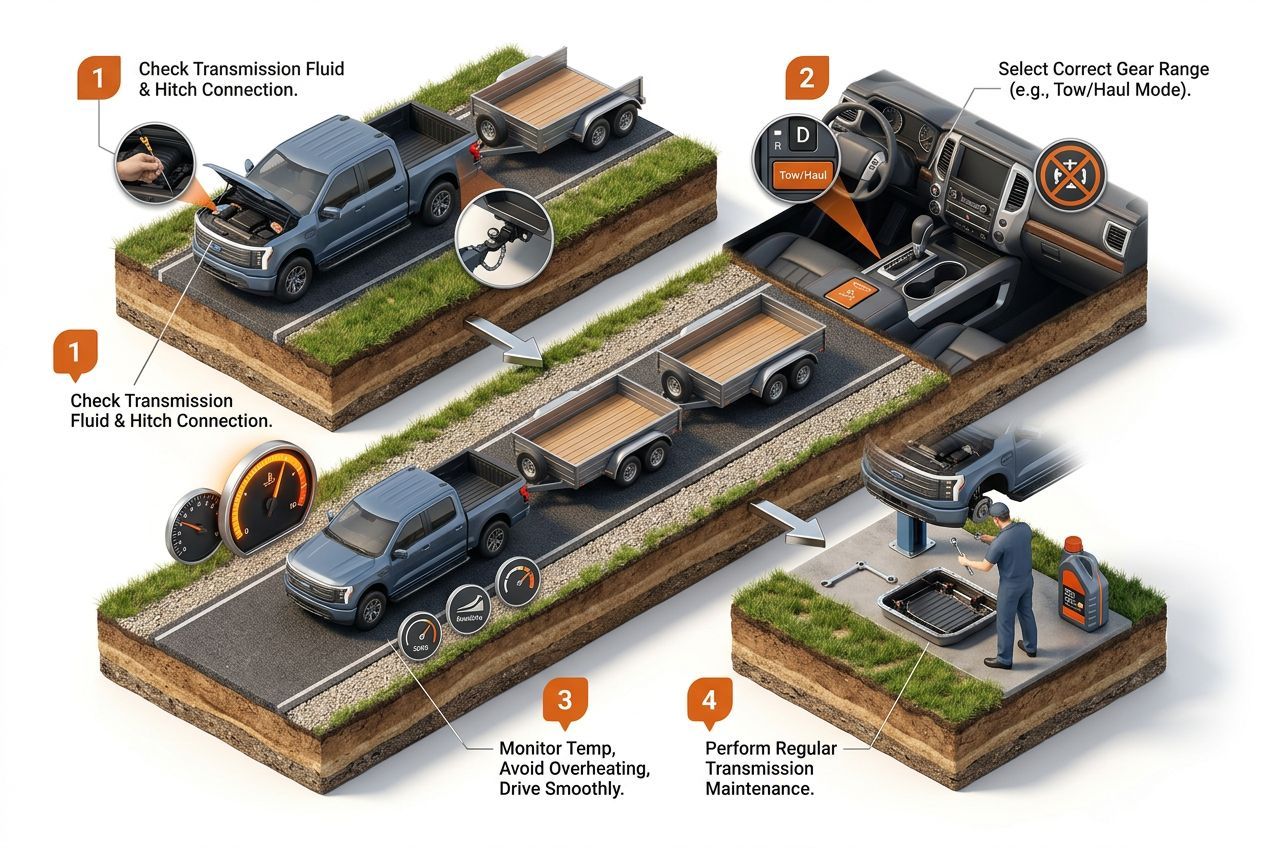
Only a subset of automatic vehicles can be flat towed legally and safely. Enter your vehicle below to get an instant answer based on manufacturer-approved towing data.