Key Takeaways
- Document everything before you pay: photos, receipts, timestamps, and the driver's name and license plate.
- File with at least two agencies simultaneously — your state attorney general's consumer protection division and the licensing body that regulates tow operators in your state.
- Small claims court is a realistic and attorney-free option for vehicle damage or overcharge disputes up to $5,000–$10,000 depending on your state.
- An illegal tow includes improper signage, no valid authorization, and fees above state-mandated maximums — not just unauthorized removal.
- Complaints with strong documentation are resolved in the consumer's favor roughly 60–70% of the time, according to consumer protection agency data.
Getting towed is already a bad day. Getting towed illegally — or hit with inflated fees you can't explain — makes it worse. The good news is that tow companies are one of the most regulated service industries in the U.S., and there are real agencies with real enforcement power waiting to hear from you. You just need to know who to call and in what order.
💰
TOWING LAWS & REGULATIONS
How Do I File a Complaint Against a Tow Company?
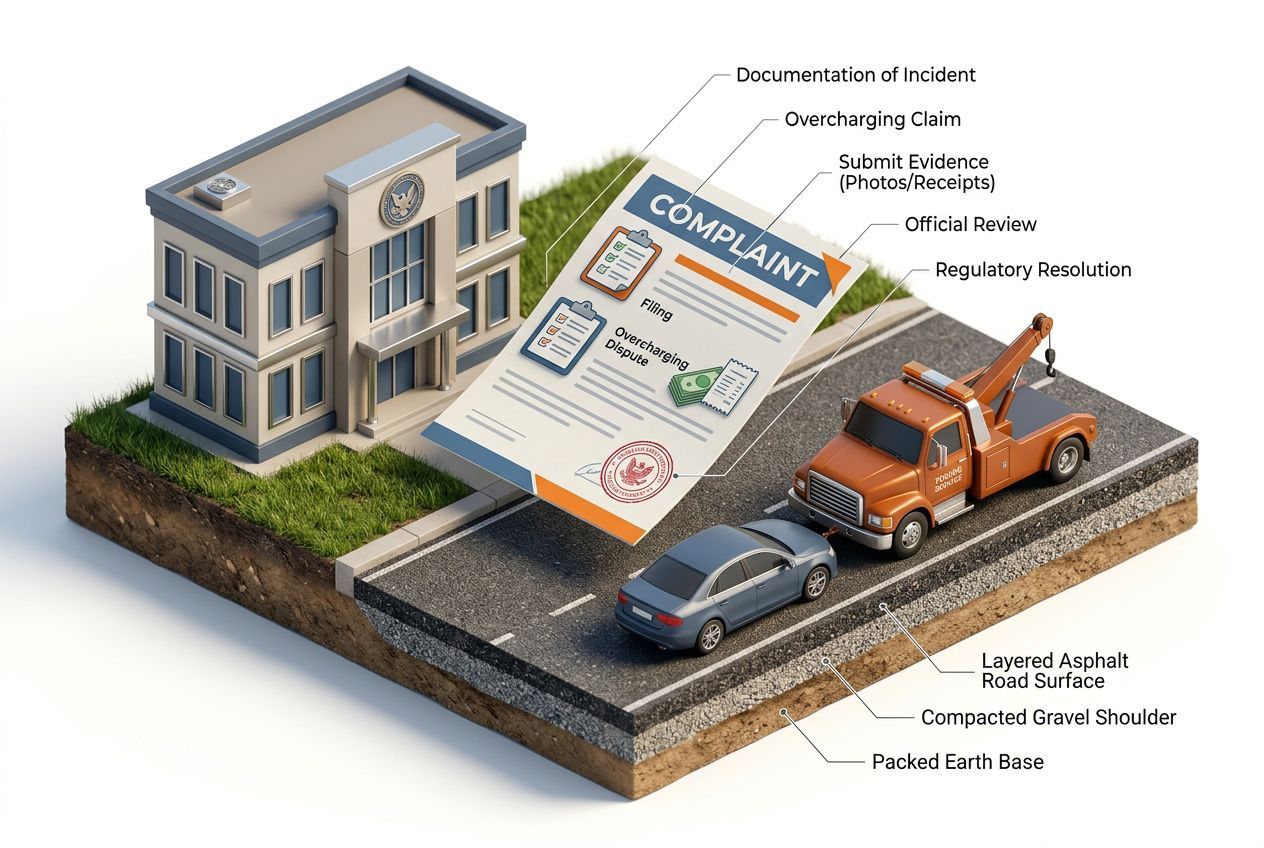
File a complaint against a tow company by gathering all documentation first, then submitting formal complaints to your state attorney general's consumer protection division and the state agency that licenses tow operators — often the Department of Transportation, Department of Motor Vehicles, or a public safety board. Filing with both simultaneously creates parallel records and accelerates enforcement action.
Here's what that process actually looks like step by step:
-
Collect your evidence before anything else. Take timestamped photos of your vehicle's condition, the signage at the tow location (or the lack of it), the impound lot upon arrival, and any damage you notice. Save every receipt. Write down the tow truck's license plate, the driver's name if given, and the exact time of the tow. If you can get a copy of the dispatch record, request it in writing.
-
Request an itemized receipt from the tow company. Many states legally require tow companies to provide one. If they refuse, that refusal itself becomes evidence in your complaint.
-
Identify your state's regulatory body. In California, that's the California Highway Patrol for nonconsensual tows. In Texas, it's the Texas Department of Licensing and Regulation. In Florida, complaints go through the Department of Agriculture and Consumer Services. Check your state's specific towing laws by state to find the right agency — it varies more than most people expect.
-
File with multiple agencies at once. Submit to your state attorney general's consumer protection division, the tow company's licensing board, and your local police if unauthorized removal is involved. You can also file with the Better Business Bureau to create a public record, though the BBB has no enforcement authority.
-
Send a formal demand letter to the tow company. Give them 10–14 days to respond before escalating to small claims court. Keep a copy with proof of delivery.
📊
TOWING LAWS & REGULATIONS
Where Do You Report Illegal Towing?
Report illegal towing to your local police department's non-emergency line first — in many states, unauthorized vehicle removal meets the legal definition of theft or conversion. Then escalate to your state attorney general and the tow company's licensing board. Federal agencies like the FMCSA handle complaints about interstate or commercial tow operators.
For most private-property nonconsensual tows, the chain looks like this:
- Local police non-emergency line — Get a report number. This matters if you need to take legal action later.
- State attorney general consumer protection division — Most have online complaint portals. Georgia, California, and Illinois all have active towing-specific enforcement programs.
- State tow licensing board — This is where license suspension or revocation threats live. A complaint here has real teeth.
- FTC Consumer Sentinel — The Federal Trade Commission's complaint database doesn't investigate individual cases, but your entry contributes to the pattern data used in enforcement actions.
- Better Business Bureau — Low enforcement power, but useful for creating a public record other consumers can see.
If you experienced what you believe is predatory towing — being towed from a lot where the signage was inadequate, the authorization was dubious, or the fees were wildly above market — the attorney general complaint is your most powerful tool.
🔧
TOWING LAWS & REGULATIONS
What Is Considered an Illegal Tow?
An illegal tow occurs when a vehicle is removed without proper authorization, compliant signage, legally required notice to the vehicle owner, or a valid request from law enforcement or the property owner. Charging fees above state-mandated maximums, refusing to release a vehicle upon full payment, and towing from zones without proper "tow-away" signage all qualify as illegal towing under most state statutes.
Here's a practical breakdown of the most common violations:
- Missing or non-compliant signage. Texas state law requires tow-away signs to be at least 18"×24", posted at each entrance, and illuminated if the lot operates at night.
- No valid authorization. Private property tows must be authorized by the property owner or their designated agent. A tow company can't self-authorize a removal. See our full breakdown of private property towing rules for state-by-state nuances.
- Fees above the legal cap. Most states set maximum rates for nonconsensual towing. If your receipt exceeds those limits, that's a statutory violation — not just a disagreement.
- Refusing to accept payment. In most states, a tow company must release your vehicle once you've paid the required fees, even if there's a dispute pending.
- Towing a vehicle that qualifies for special protections. Vehicles displaying disabled placards have additional protections in many states. Towing one from a compliant accessible space can trigger separate civil rights complaints.
⚠️ Warning: A sign that's too small, blocked, or missing entirely often makes the tow illegal regardless of who authorized it.
For a deeper look at what crosses the legal line, our guide on nonconsensual towing rights covers the statutory requirements by state.
🛡️
TOWING LAWS & REGULATIONS
How Do I Dispute a Towing Charge?
Dispute a towing charge by requesting an itemized receipt immediately, then comparing each line item against your state's published maximum towing fee schedule. Submit a written dispute to the tow company citing the specific statute they violated. If the company doesn't respond or refuses to adjust, escalate to your state consumer protection office or small claims court.
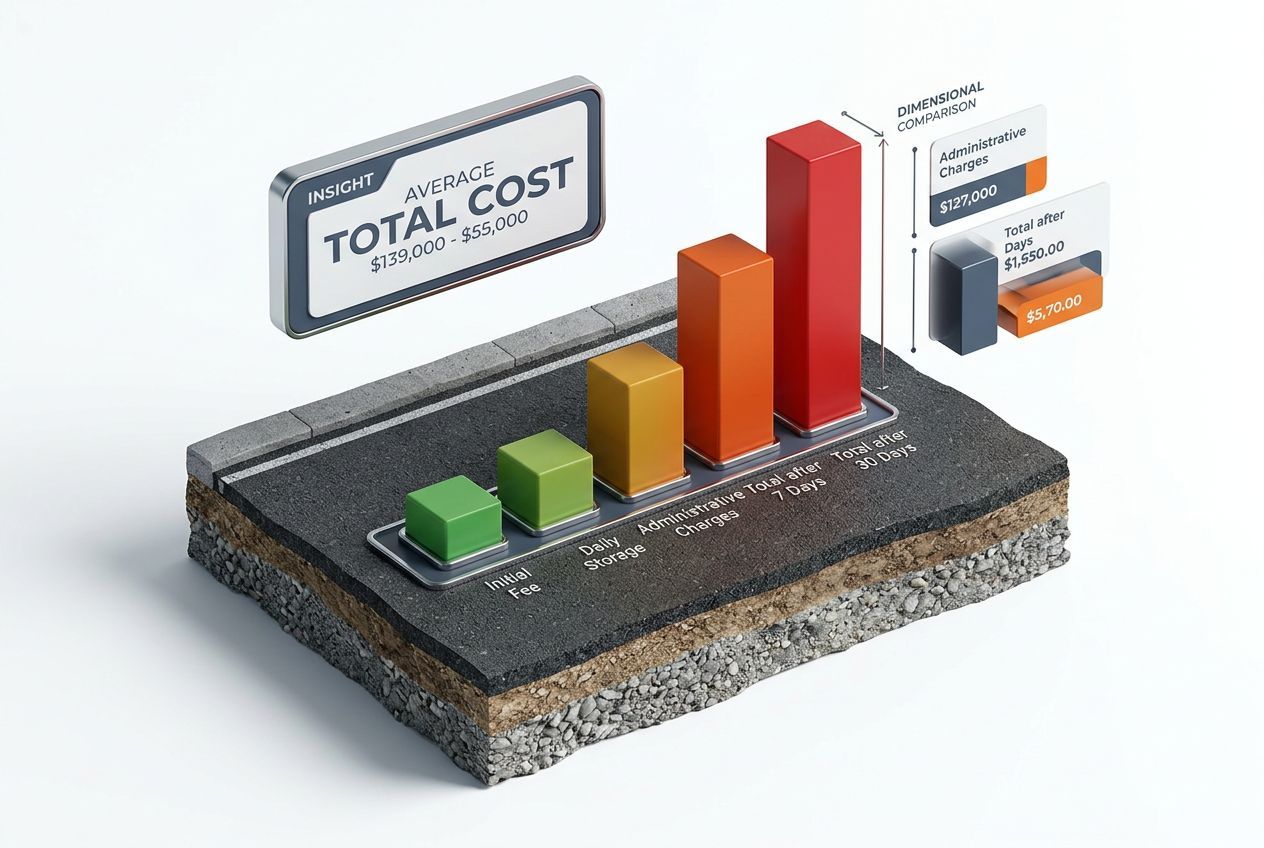
Here's a real example: Say your car was towed 3 miles to a private impound lot in Los Angeles. The bill comes back at $850, broken into a hook-up fee, mileage, gate fee, storage, and an administrative charge. California's maximum base rate for a light-duty nonconsensual tow is regulated under California Civil Code §3068.1. If any individual line item exceeds the rate schedule, you have grounds for a written dispute and a regulatory complaint.
Our towing cost guide breaks down what average and maximum rates look like across states — useful context before you write that dispute letter.
How Do I Dispute a Towing Charge? — data table
| Dispute Channel |
Authority Level |
Timeline |
Cost to File |
| Direct demand letter to tow company |
None (negotiation only) |
10–14 days |
$0 |
| State attorney general complaint |
License enforcement power |
30–90 days |
$0 |
| State tow licensing board |
License suspension/revocation |
30–90 days |
$0 |
| Better Business Bureau |
Reputational only |
Varies |
$0 |
| Small claims court |
Legal judgment, collectible |
30–70 days |
$30–$75 filing fee |
Sources: State consumer protection agency websites; individual state court filing fee schedules.
📋
TOWING LAWS & REGULATIONS
Can I Sue a Tow Company for Damages to My Car?
Yes — you can sue a tow company for vehicle damage in small claims court in every U.S. state, and you don't need a lawyer to do it. Document all damage with timestamped photos before you drive the vehicle away from the lot, get a written repair estimate from a licensed shop, and send the tow company a formal demand letter before filing. Small claims courts handle disputes typically up to $5,000–$10,000 depending on the state.
One important caveat: small claims court works best for clear-cut damage with a documented paper trail. If your claim exceeds your state's small claims ceiling — or if the tow company disputes liability in a complicated way — you may need a consumer protection attorney. Many take towing damage cases on contingency if state statutes allow for fee-shifting (meaning the tow company pays your legal fees if you win).
📊 Quick Fact: Average vehicle damage claims from towing run $500–$2,500, according to insurance industry data. That range puts most cases squarely in small claims territory. Motorcycles, lowered vehicles, and all-wheel-drive vehicles towed with the wrong equipment tend to hit the higher end of that range — or beyond it.
✅ Pro Tip: Before you file, check whether your auto insurance covers tow-related damage. Some comprehensive policies include it; others treat it as a separate claim subject to your deductible. It's worth a 10-minute call to your insurer before you spend $50 on court filing fees.
⚙️
TOWING LAWS & REGULATIONS
What Government Agency Regulates Tow Companies?
Tow companies are regulated primarily at the state level, most commonly by the Department of Transportation, Department of Motor Vehicles, or a public safety licensing board — and the right agency varies by state. For commercial or interstate tow operators, the Federal Motor Carrier Safety Administration (FMCSA) has jurisdiction. Many major cities layer additional municipal licensing requirements and fee caps on top of state rules.
📊 Quick Fact: There are approximately 35,000+ FMCSA-registered tow operators in the U.S., but the vast majority of consumer complaints fall under state jurisdiction, not federal. The DOT towing regulations page covers the federal layer in detail.
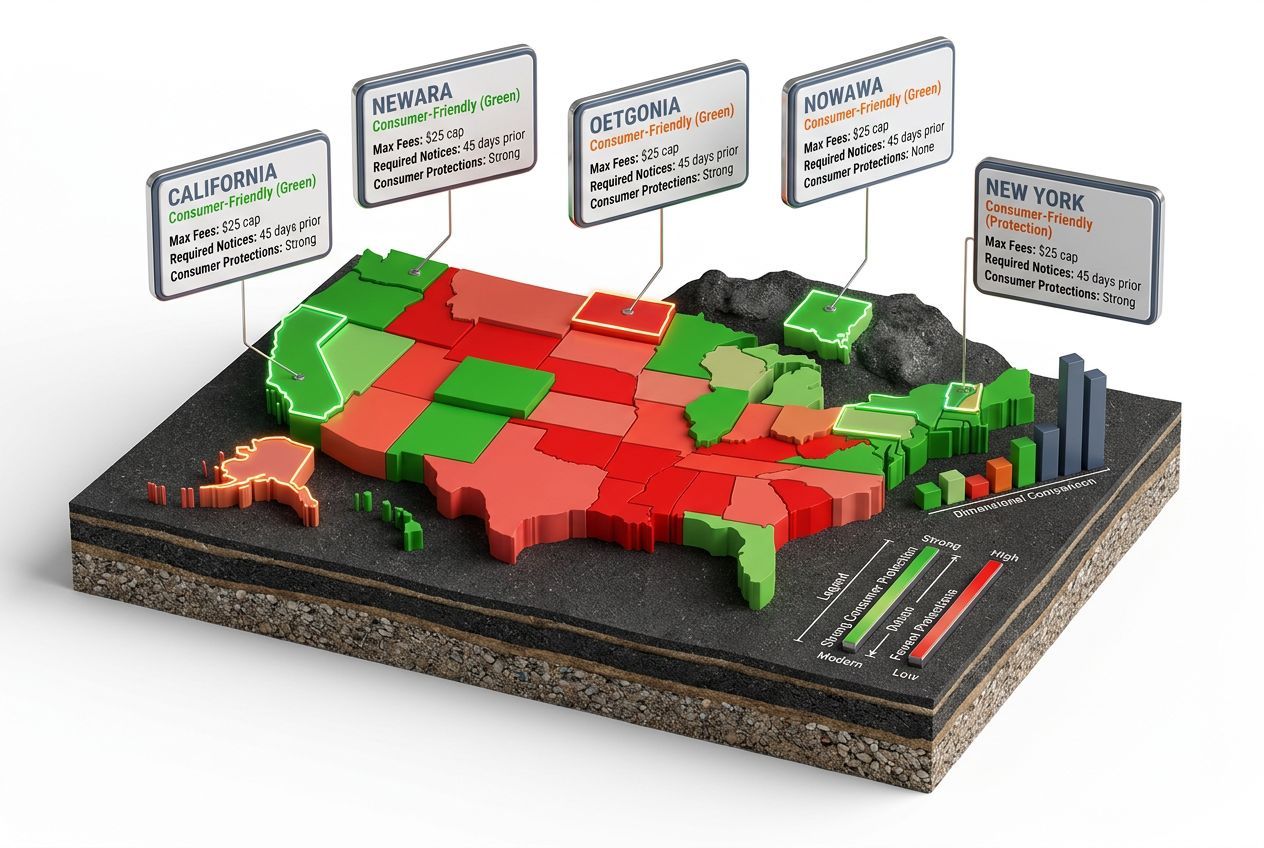
State-level regulation ranges significantly. California has some of the strongest nonconsensual towing consumer protections in the country. Wyoming and Montana have minimal statutory fee caps or licensing requirements by comparison.
💡 Key Takeaway: If you're in a state with weaker regulations, your strongest option may be tow truck license requirements enforcement at the county level, or escalating directly to small claims court.
🚛
TOWING LAWS & REGULATIONS
How Do You File a Towing Complaint in Your State?
Your state's specific complaint channels — agency names, form links, and fee caps — are the most critical part of this process, and they change. Use the lookup tool below to get current information for your state directly.