🔧
VEHICLE SAFETY & RECOVERY
Can Towing a Locked Car Cause Damage?
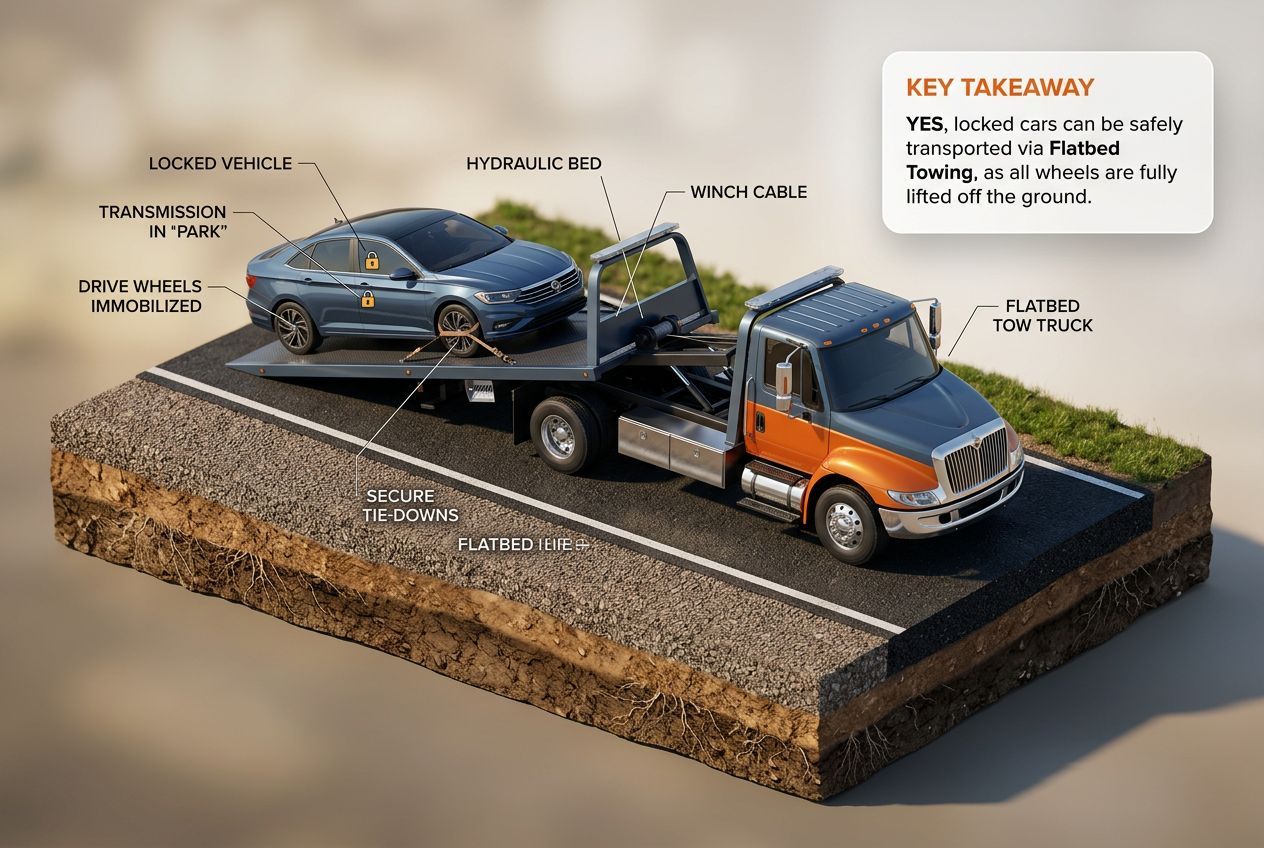
Improper towing can lead to significant repair costs. While proper technique eliminates most of the risk, improper towing of a locked car can cause real and expensive damage.
The most common failure points and potential damages include:
- Transmission Damage: Dragging the drive wheels while the car is in park can shear the parking pawl. Repair costs for most automatic transmissions typically range from $800 to $2,500.
- Steering Column Stress: Forcing a locked steering wheel to turn while towing can crack the column housing or damage the rack. This can result in a $600–$1,800 repair, depending on the vehicle.
- Transfer Case Damage (AWD/4WD): Towing a locked AWD vehicle with any wheels down forces torque through the transfer case at zero engine RPM, a condition it's not designed for. NHTSA technical service bulletins on several AWD platforms specifically prohibit wheel-down towing.
- Cosmetic Damage: Chain contact, improper strap placement, and rough winching can scratch body panels, dent bumper covers, or crack plastic trim.
⚠️ Warning: Damage claims from improper towing average $1,500–$5,000 depending on severity. If you suspect your car was damaged during towing, photograph everything before you move the vehicle — that documentation is your leverage.
Our guide on whether towing damages your car covers exactly what to look for and how to file a claim.
🛡️
VEHICLE SAFETY & RECOVERY
Is It Legal to Tow a Locked Car Without the Owner's Permission?
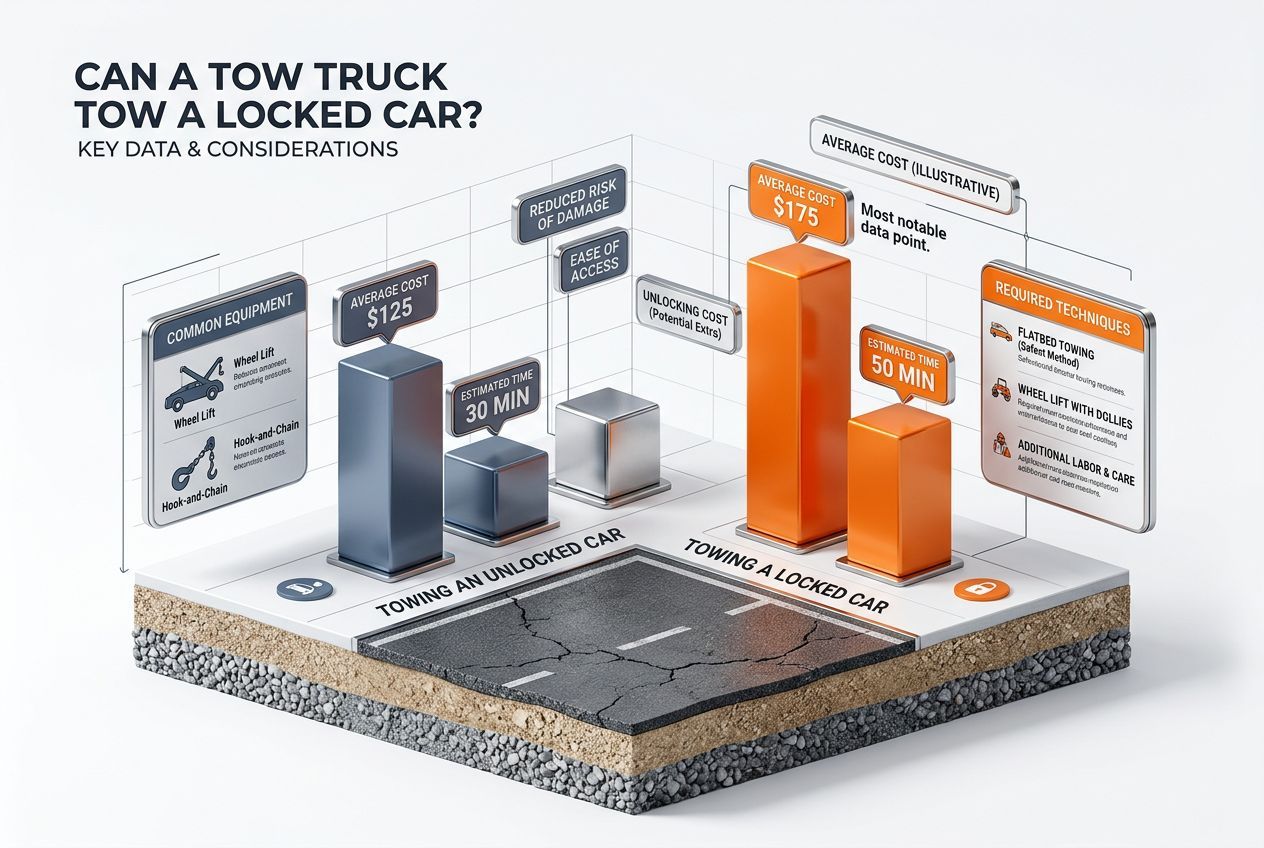
Towing without consent is legal only under specific, regulated circumstances. It is illegal when those conditions are not met.
When Towing a Locked Car is Legal
- Private Property Towing: A property owner or manager can authorize towing of unauthorized vehicles. Most states — including California (Vehicle Code §22658), Texas (Occupations Code Chapter 2308), and Florida (Statute §715.07) — require posted signage at every entrance with the tow company's name and phone number. No sign? Potentially an illegal tow.
- Repossession: A lienholder with a valid repossession order can authorize towing a vehicle. Roughly 2 million repo tows happen in the US annually. The repo agent doesn't need your permission, but they cannot breach the peace (e.g., blocking a driveway or physically confronting an owner) as this crosses the legal line in most states.
- Law Enforcement: Police can order a vehicle towed from a public road for violations, accidents, or abandoned vehicle status. No owner consent is required in these situations.
When Towing a Locked Car is Illegal
Predatory towing is a serious offense. This includes towing a car from a lot where signage requirements weren't met or towing a vehicle that was not in violation. Such actions carry fines of $500–$10,000 depending on jurisdiction. Some states also allow vehicle owners to recover attorney's fees in civil suits against illegal towers.
If you think your locked car was towed without proper legal basis, our article on tow truck scams covers how to spot the patterns and what to do next.
📋
VEHICLE SAFETY & RECOVERY
Most professional tow drivers don't need to unlock a car to tow it. While some tow operators carry lockout tools like slim jims, air wedge kits, and long-reach rods, unlocking is generally a separate service, not a standard part of towing operations.
Lockout Services vs. Standard Towing
- Roadside Assistance Lockout Call: In this scenario, the operator's entire job is to gain entry to your car. They will typically use an air wedge to create a small gap in the door frame, then thread a long-reach tool through to hit the unlock button or pull the door handle. This usually takes 2–5 minutes on most passenger vehicles.
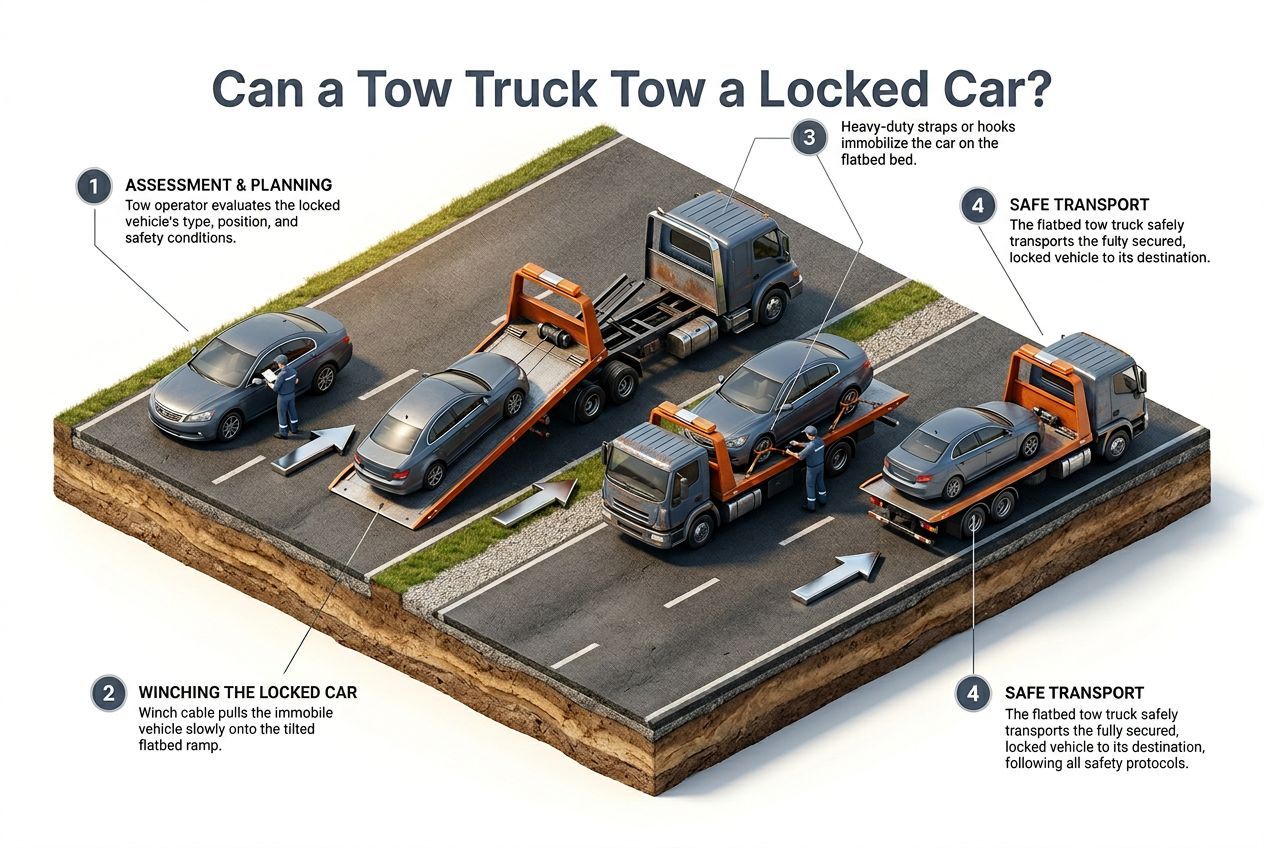
- Standard Tow (Repo, Private Property, Accident Recovery): During a standard tow, the driver has no reason to enter the vehicle. Loading a locked car onto a flatbed is faster and cleaner without ever touching the door.
⚠️ Warning: Unauthorized entry into a vehicle by a tow driver — outside of a lawful repossession order or a lockout service call you specifically requested — can constitute criminal trespass or unauthorized access in many states. A legitimate tow operator will not break into a car they are simply moving.
⚙️
VEHICLE SAFETY & RECOVERY
What Should You Do if Your Locked Car Was Towed?
Act quickly if your locked car is gone — storage fees begin to accumulate immediately. Work through this sequence to address the situation effectively:
- Look for posted tow-away signs: California §22658 requires them at every entrance. If they weren't posted at your point of entry, this is your first legal argument.
- Call the local police non-emergency line: Provide them with your license plate number. They will inform you if law enforcement ordered the tow and, if so, which company has your car.
- Contact the tow company: Before heading to the impound lot, get the address, hours, and a detailed fee schedule. Bring your driver's license, vehicle registration, and payment (confirm if cash or card is accepted).
- Inspect and photograph the vehicle: Before you drive away, walk around the entire vehicle and photograph every panel, wheel, and undercarriage angle. Document any new scratches, dents, or damage on the spot.
- Note damage on release paperwork: If you discover damage, make sure to document it on the release paperwork before signing. Writing "Vehicle received with damage to [location]" protects your rights.
✅ Pro Tip: Most states cap daily storage fees at $20–$75 and require impound lots to release vehicles within specific business hours. If fees seem inflated or access is being denied, consult our guides on impound lot fees and how to get your car out of impound for a step-by-step understanding of your rights.
For a quick estimate of what the total bill might look like before you get there, run the numbers with the towing cost calculator.
🚛
VEHICLE SAFETY & RECOVERY
Does the Type of Tow Truck Matter for a Locked Vehicle?
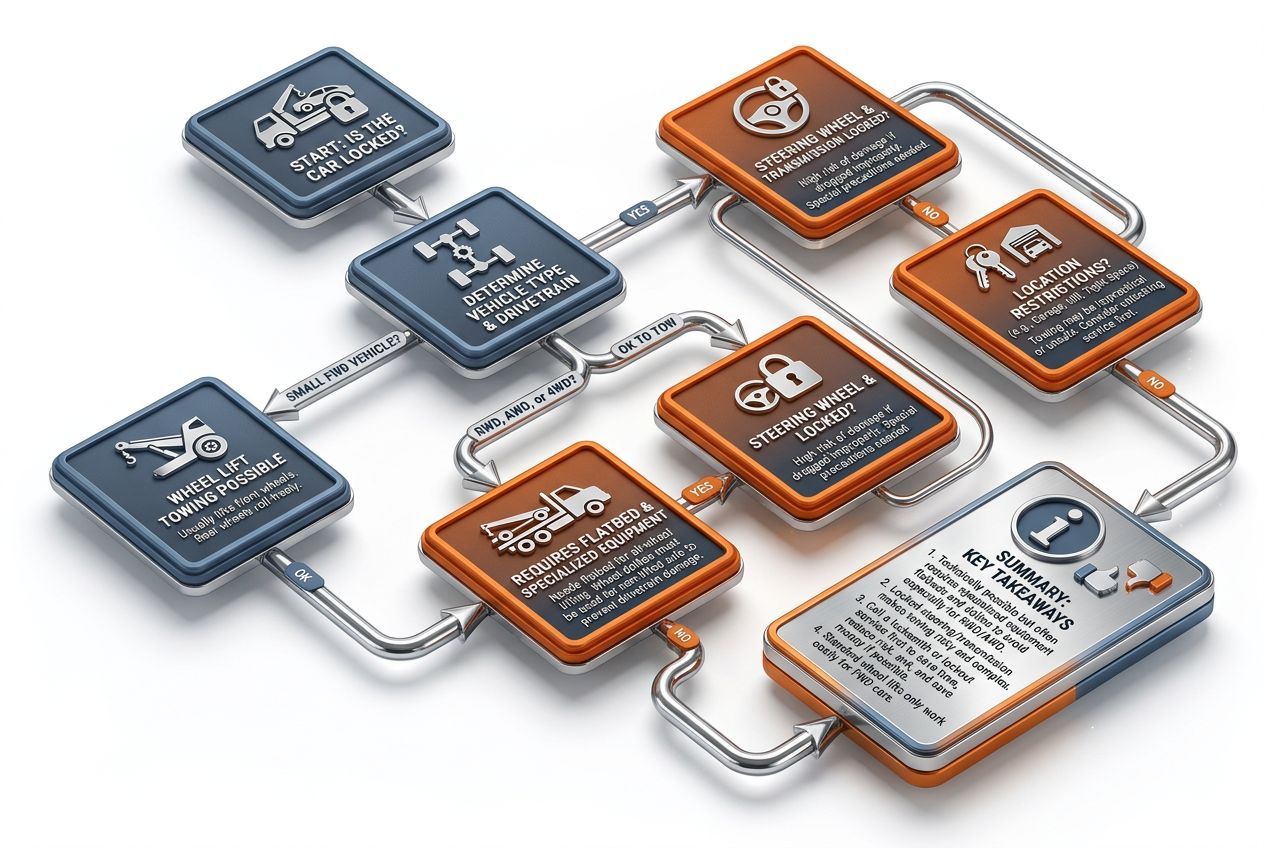
The type of tow truck significantly impacts the safety of towing a locked vehicle. Choosing the wrong one, especially for a modern vehicle, can result in expensive damage.
Does the Type of Tow Truck Matter for a Locked Vehicle? — data table
| Tow Method |
Locked Vehicle Risk |
Best For |
Avoid For |
| Flatbed (rollback) |
Lowest — all wheels off ground |
AWD, 4WD, EVs, luxury vehicles |
Nothing — universally safe |
| Wheel-lift (2-wheel) |
Low if drive wheels lifted |
FWD and RWD vehicles |
AWD/4WD without dollies |
| Tow dolly |
Moderate — front wheels on dolly |
FWD flat towing |
AWD, 4WD, locked steering |
| Hook-and-chain |
High — chain contact risk |
Largely obsolete |
Any modern vehicle |
| Go-jacks / skates |
Low — used as supplement |
Tight lots, lateral moves |
Standalone transport |
Source: NHTSA owner's manual towing guidance
Specific Considerations for AWD/4WD Vehicles
AWD and 4WD locked vehicles almost always require flatbed transport. Towing vehicles like a Subaru Outback, Audi Quattro, or Jeep Wrangler with any wheels rolling while the engine is off forces the transfer case to work against a stationary differential. NHTSA has flagged this issue across multiple model lines, and a transfer case repair on an AWD system typically runs $1,200–$3,500.
Specific Considerations for Electric Vehicles (EVs)
Electric vehicles present unique towing challenges. Tesla's owner documentation, for example, explicitly warns against towing Model 3, Model Y, and Model S vehicles with wheels down. The regenerative braking system can back-feed current through the drive motors during unpowered rolling, risking inverter damage. For EVs, flatbed-only towing is essential.
Specific Considerations for Luxury Vehicles
Luxury vehicles with electronic parking brakes require specialized handling. Brands like BMW, Mercedes-Benz E-Class, and Audi A6 require operators who know how to release the Electronic Parking Brake (EPB) without power to the vehicle. Some operators carry a battery jump pack specifically for this step before loading.
If you're doing your own towing research on a specific vehicle, the towing capacity lookup tool and the flat tow checker can confirm what your vehicle's manufacturer allows.
📝
VEHICLE SAFETY & RECOVERY
Worked Example: AWD Sedan, Private Lot, After Hours
Consider this scenario with an AWD vehicle. Say you park your 2023 Subaru Outback in a private shopping center lot at 6 PM to grab dinner next door. The lot has a tow-away sign — but it's posted only at the main entrance, not the secondary entrance you used. A tow company contracted by the lot hooks up your locked Outback with a wheel-lift truck, lifting the rear axle only, and drags it three miles to the impound lot.
Understanding the consequences and your rights. When you retrieve it the next morning, you owe $185 for the tow plus $45 for overnight storage — a total of $230. But you also notice a whining noise from the front differential on the drive home. What went wrong: Lifting only the rear on an AWD Outback left the front wheels spinning against a locked transfer case. The front drive unit is now showing early failure signs — a $900–$1,800 repair. What you can do: Because the sign wasn't posted at the entrance you used, California §22658 may entitle you to recover your tow fee. The drivetrain damage claim goes through the tow company's insurance (required by most state licensing) or small claims court if they refuse. Document everything. Learn more about your rights after a car accident tow or unauthorized tow.