Key Takeaways
- 15 trailer types cover everything from yard work to cross-country freight
- Utility trailers are the most versatile entry point at $500-$1,500 new
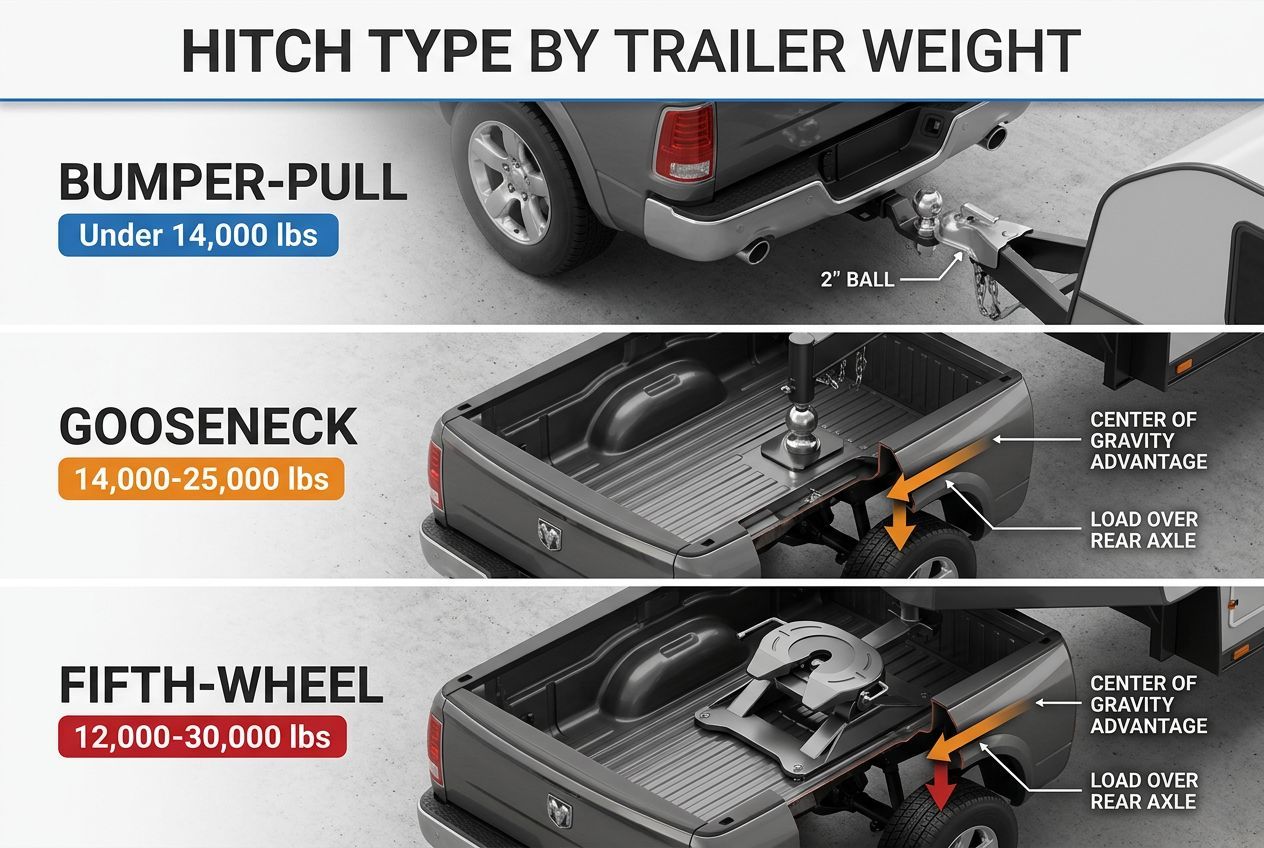
- Bumper-pull trailers work up to ~14,000 lbs GVWR; heavier loads need gooseneck or fifth-wheel
- Enclosed trailers weigh 30-50% more than equivalent open trailers
- Always match the trailer to your tow vehicle's GCWR, not just towing capacity
Choosing the wrong trailer type wastes money and creates safety problems. An open utility trailer can't protect expensive equipment from rain. A bumper-pull car hauler at 10,000 lbs loaded pushes most half-ton trucks past their limits. And a full-size enclosed trailer behind a midsize SUV is a recipe for a trailer sway incident. This guide breaks down every common trailer type with real weights, typical costs, and the tow vehicles that match each one.
What Are the Different Types of Consumer Trailers?
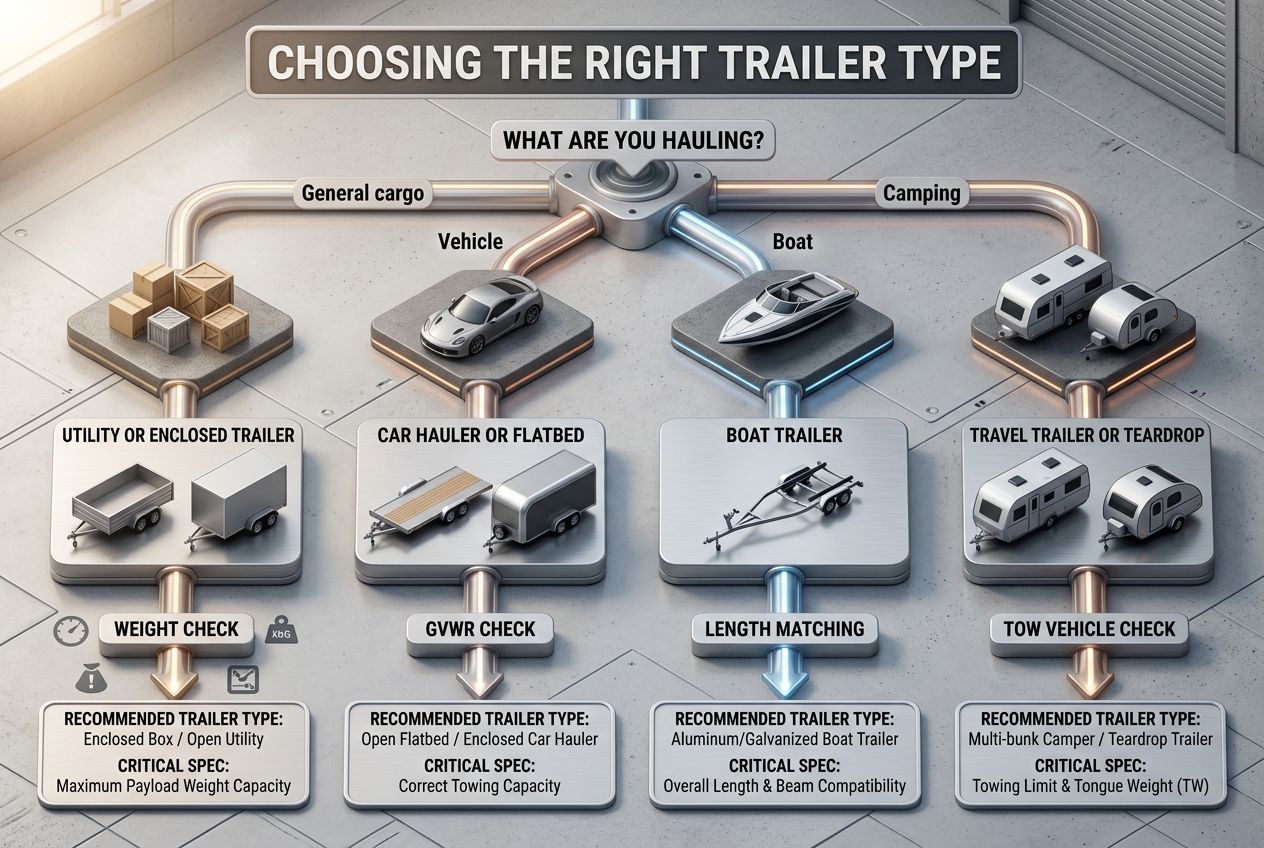
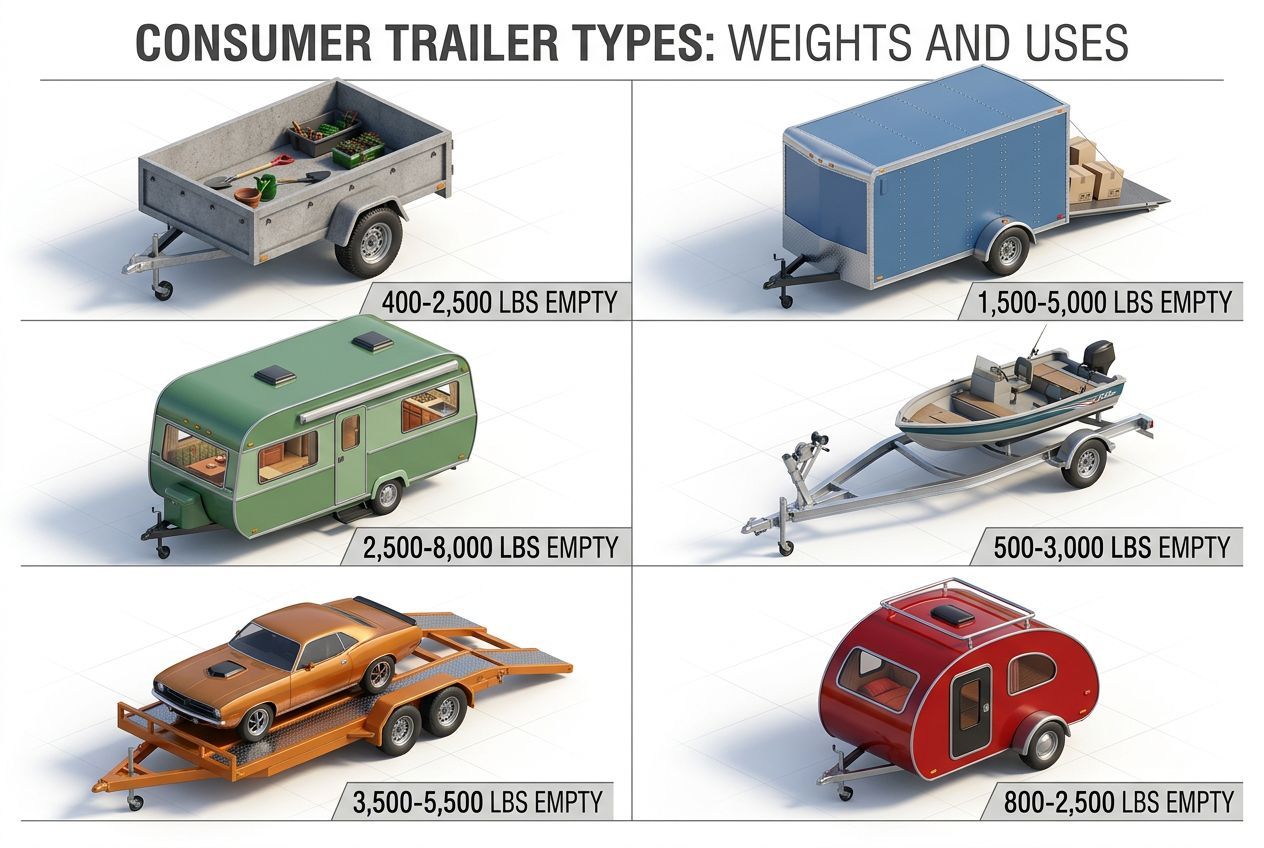
Consumer trailers fall into six main categories: utility, enclosed cargo, travel/camping, boat, car hauler, and specialty. Each is designed around a specific use case.
| Trailer Type | Typical Empty Weight | Typical GVWR | Common Sizes | Price Range (New) |
|---|---|---|---|---|
| Utility (Open) | 400-2,500 lbs | 1,500-7,000 lbs | 4x6 to 7x16 | $500-$4,000 |
| Enclosed Cargo | 1,200-4,500 lbs | 2,990-14,000 lbs | 5x8 to 8.5x24 | $2,500-$15,000 |
| Travel Trailer | 2,500-8,000 lbs | 3,500-12,000 lbs | 16-35 ft | $15,000-$60,000 |
| Boat Trailer | 300-3,000 lbs | 1,500-10,000 lbs | 12-30 ft | $800-$8,000 |
| Car Hauler (Open) | 2,000-3,500 lbs | 7,000-14,000 lbs | 16-22 ft | $2,000-$6,000 |
| Teardrop/Pop-Up Camper | 500-2,500 lbs | 1,000-3,500 lbs | 8-16 ft | $5,000-$25,000 |
Source: NATM standards, Carry-On Trailer, RVIA data
Utility trailers are the Swiss army knife of trailers. A single-axle 5x8 handles landscaping supplies, furniture, appliances, ATVs, and general hauling. Add mesh sides for yard waste, a ramp gate for equipment, or stake sides for lumber. Most half-ton trucks and even some SUVs can tow the smaller models.
Enclosed cargo trailers add walls, a roof, and a locking door to the utility trailer concept. They protect tools, equipment, and materials from weather and theft. The trade-off is weight — an enclosed 6x12 weighs 1,800-2,500 lbs empty versus 800-1,200 lbs for an open utility trailer of the same size.
Travel trailers are the most popular RV type, outselling motorhomes and fifth-wheels combined. They range from minimalist 16-foot models towable by an SUV to 35-foot triple-slide units that need a heavy-duty truck. Read our travel trailer towing guide for detailed matching advice.
Pro Tip: Aluminum utility trailers cost 20-40% more than steel but weigh 30-50% less. If you have a lighter tow vehicle, the weight savings can mean the difference between being within capacity and being overloaded. Aluminum also doesn't rust, which extends the trailer's lifespan by decades.
What Types of Trailers Need Gooseneck or Fifth-Wheel Hitches?
Most consumer trailers use a bumper-pull (receiver hitch) connection, but larger and heavier trailers require a gooseneck or fifth-wheel hitch mounted in the truck bed. The dividing line is roughly 14,000 lbs GVWR.
Bumper-pull trailers (receiver hitch at the rear bumper):
- All utility trailers up to 7,000 lbs GVWR
- Enclosed cargo trailers up to 14,000 lbs GVWR
- Travel trailers up to 10,000 lbs GVWR
- Boat trailers (virtually all)
- Open car haulers up to 14,000 lbs GVWR
Gooseneck trailers (ball in the truck bed):
- Flatbed gooseneck trailers (14,000-25,000 lbs GVWR)
- Large equipment trailers
- Car haulers over 14,000 lbs
- Livestock trailers
- Large dump trailers
Fifth-wheel trailers (pin-and-plate coupling in the truck bed):
- Fifth-wheel RVs (10,000-20,000 lbs GVWR)
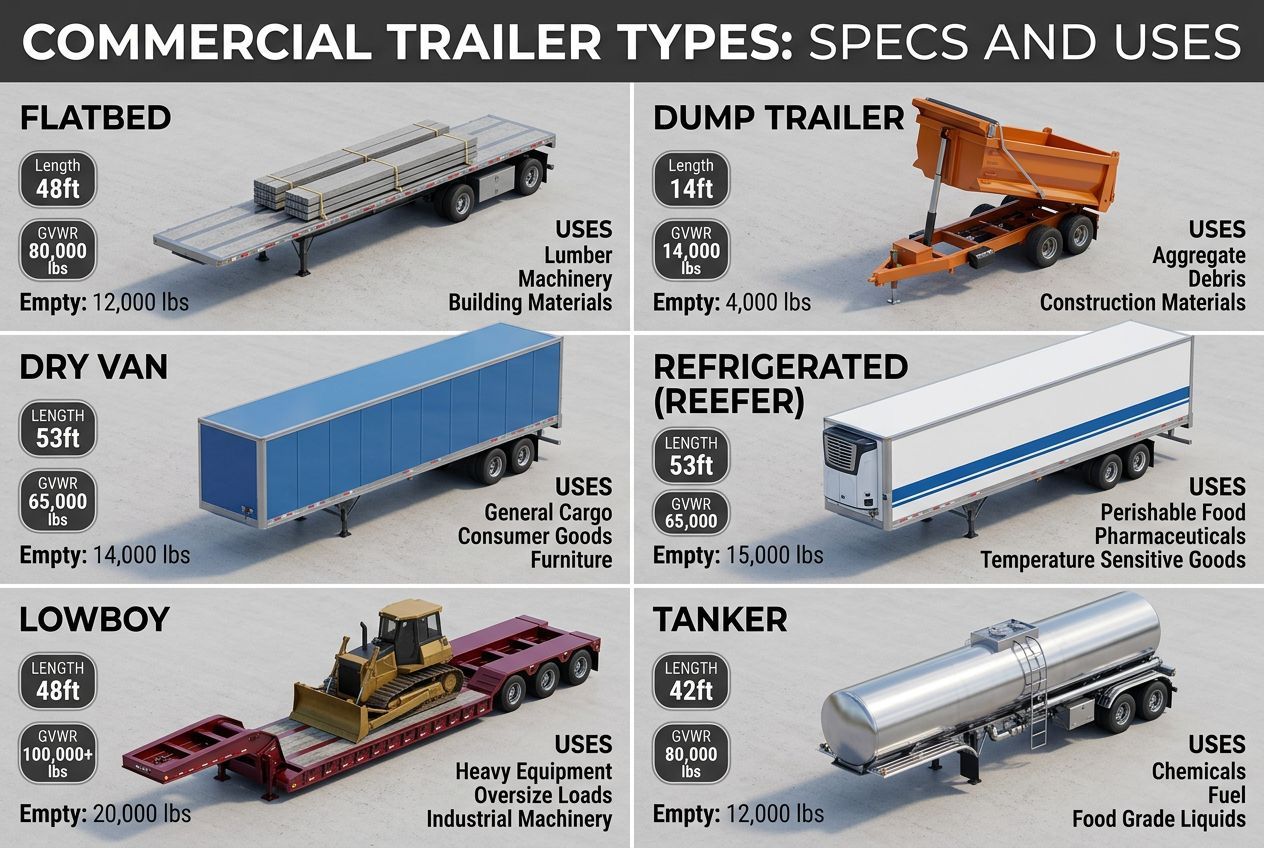
- Commercial semi-trailers (up to 80,000 lbs GCWR)
The advantage of gooseneck and fifth-wheel hitches is the coupling point sits directly over the rear axle instead of behind the bumper. This moves the tongue weight closer to the truck's center of gravity, improving stability, reducing sway, and allowing higher tow ratings. Most 3/4-ton and 1-ton trucks are rated for significantly more weight with a gooseneck hitch than with a receiver hitch.
Key Insight: A gooseneck hitch requires a truck bed — you can't install one on an SUV, van, or car. If you need to tow over 14,000 lbs, you need a pickup truck. This is why heavy equipment trailers, large livestock trailers, and big flatbeds are almost exclusively pulled by 3/4-ton and 1-ton pickups.